Category: Bible and Theology

Michael Matheson Miller
posted by on Monday, March 11, 2013

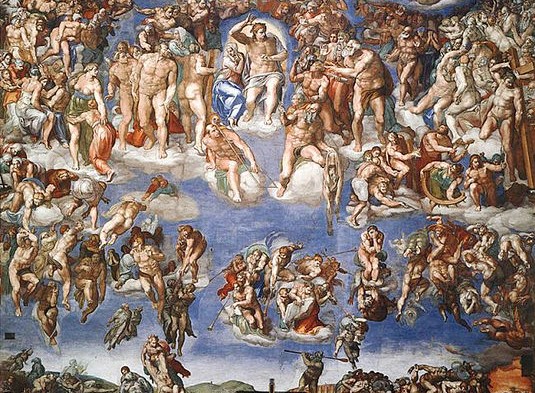
The conclave to elect the new pope is scheduled to begin tomorrow afternoon after the public Missa pro Eligendo Pontifice (Mass for the Election of the Roman Pontiff) which is scheduled at 10am Rome time.   It was at this mass in 2005 after the death of John Paul II that the then Cardinal Ratizinger famously spoke of the “dictatorship of relativism.”   At 4:30 pm Rome time, the cardinals wearing full choir dress will enter the Sistine Chapel singing the hymn Veni Creator Spiritus (Come Holy Spirit).  Cardinals will enter into conclave (from the Latin cum clave, meaning “with key”) and they will be locked away from the world with no access to television, newspapers, or mobile phones until they have elected the new pope.

As the Conclave gets underway and the world waits to see who will be the next pope, here are some helpful hints for making your way through the media storm that is already underway.

1. The papal election is not a U.S.- or European-style political event.

In our hyper politicized world where almost everything is reduced to politics it is hard for our imagination to process a public event like the election of a new pope outside of the structures of politics.  That’s not to say there’s no politics in the Church.  There’s too much of it.  Way too much. And it’s always a factor.  Nevertheless trying to understand the papal election if the light of the American political system or interest and lobbying groups will not be of much help. Read more on A Guide to the Conclave…

Dylan Pahman
posted by on Friday, March 8, 2013

In the video below, Ralph Baer, the “father of video games,” explains why he still invents at 90 years old. “What do you expect me to do?” he asks. He likens invention to the work of a painter. Would someone ask why a painter doesn’t retire? It’s what they love to do! Indeed, it is a calling.

Read more on Ralph Baer and the Art of Innovation…

Political activism  by religious took a relatively new twist during the last presidential election cycle when the Nuns on the Bus initiative hit the road. The Roman Catholic sisters insisted they backed neither candidate, but were vehemently opposed to Sen. Paul Ryan’s (R-WI) proposed budget.

The election has long since been decided, but the progressive crusade of Nuns on the Bus and its parent organization Network continues apace not only on the nation’s highways and byways, but as well in corporate boardrooms. This last is precipitated by proxy resolutions by “social justice” activists who are elbowing their way into annual shareholder meetings, courtesy of retirement funds invested in stocks or tax-deductible stock donations made to such organizations as Network.

On its website, Network asserts: “Gifts of stock are a great way putting the stock market to work for justice!” However, Network’s concepts of justice don’t necessarily align with the faith that all nuns have taken vows to uphold. Read more on ‘Social Justice’ Nuns Throw Doctrine Under the Bus…

On the website of Crisis Magazine, Acton Research Director Samuel Gregg looks at the “tsunami of unsolicited advice from pop atheists, incoherent playwrights, angry ex-priests, and celebrity theologians that has erupted since Benedict XVI’s abdication.” Then there’s Hans Küng’s article in the New York Times:

Read more on Samuel Gregg: Catholicism, True Reform and the Next Pope…

Jordan J. Ballor
posted by on Wednesday, February 27, 2013

Adam-eve-priest-animals-riverIn today’s Acton Commentary, I explore the Christian conception of law as a necessary palliative to the anti-social effects of sin. “Since we do not always govern ourselves as we ought to, in accord with the moral order, there must be some external checks and limits on our behavior,” I write.

Read more on Legal Constraint and True Liberty…

I have recently accepted the honor of becoming a contributing editor at Ethika Politika, and I begin my contribution in that role today by launching a new channel (=magazine section): Via Vitae, “the way of life.” In my introductory article, “What Hath Athos to Do With New Jersey?” I summarize the goal of Via Vitae as follows:

Read more on Seeking the Meeting Point Between the Kingdom of God and the Common Good…

Joe Carter
posted by on Tuesday, February 26, 2013

While the Christian Left tends to be skeptical of appeals to scripture, one Biblical author they do favor is James. The book of James is often used to justify appeals to social justice. But as David Nilsen realized, James wouldn’t necessarily support their position:

In the course of dialoging with my friend about federal welfare programs, I quoted from James, perhaps to establish my social justice cred, and also to preemptively rebut potential accusations that I don’t think Christians have a duty to care for the poor.  When I looked up the passage I had in mind, to quote it accurately, I was a little surprised.  James 1:27 reads,

Religion that is pure and undefiled before God, the Father, is this: to care for orphans and widows in their distress, and to keep oneself unstained by the world. (NRSV)

Now, I always hear about the orphans and widows, but rarely hear about remaining unstained by the world, to the point that I forgot it was even part of the verse.  This prompted a thought.  While I believe it is certainly possible for Christians to support social welfare programs that demand more and more tax revenue and ever increasing government power, what happens when James 1:27a butts heads with James 1:27b?  In other words, what happens when our attempt at following the first half of James’ instruction ultimately forces us to compromise on the second half?  When Christians place the necessary responsibility of caring for widows and orphans in the hands of an increasingly secular entity whose goals are frequently in opposition to other important Christian beliefs, this dilemma is sure to follow.

Read more on True Religion And The Welfare State…

Joe Carter
posted by on Wednesday, February 20, 2013

Being made in the image of God, says Art Lindsley, is a powerful concept for finding our vocations and living a purposeful life.

imago-dei

While the image of God remains after the Fall, it is certainly marred and defaced. As we are redeemed, what will we look like when the process is completed?

As God restores us, our unique design in the image of God will shine even more brightly, and our gifts will reach their full potential. We will also look like Christ. Romans 8:29 reminds us that we are being “conformed to the image of his Son.” Jesus is the perfect representative of the image of God, and we are being made like him.

Read more on The Image of God and the Dignity of Work…

On January 31, the Interfaith Center on Corporate Responsibility issued a press release, announcing the organization’s “2013 Proxy Resolutions and Voting Guide.” A quick read of the release and ancillary materials, however, reveals that these resolutions have very little to do with issues of religious faith and everything to do with the progressive political agenda.

The ICCR guide “features 180 resolutions filed at 127 companies” that call on shareholders to “promote corporate responsibility by voting their proxies in support of investor proposals that advance social, economic and environmental justice.”

The ICCR boasts that “nearly one third” of this year’s resolutions (52) focus on lobbying and political spending, with the remainder aimed at “health care, financial and environmental reform.” The release ominously asserts: “Shareholders have a right to know whether company resources are being used to impact elections and public policy, including regulatory legislation.”

Whatsoever the ICCR resolutions have to do with the respective tenets of their member denominations is left to the readers’ imagination. Read more on How Far Does Faith-Based ‘Shareholder Right to Know’ Go?…

Benedict XVI has resigned, effective February 28, 2013.On April 19, 2005, Joseph Ratzinger was elected to become the next Pope after John Paul II. Several Acton Institute analysts wrote articles looking ahead to what kind of papacy the world could expect from Benedict XVI. Take a look and let us know how we did. (We’ve added links where they are still available).

Read more on Looking Back: Acton Experts on Benedict XVI’s Election…

Acton PowerBlog RSS

Google Plus

Twitter Feed

Facebook Fan Page

Support the Acton Institute

The Acton Institute is funded through the generous contributions of individuals such as yourself. Learn more about how you can advance the cause of freedom and virtue.