Category: Bible and Theology

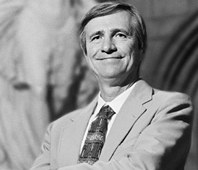
Brian Fikkert, a Professor of Economics and Community Development at Covenant College and the Executive Director of the Chalmers Center for Economic Development, takes a look at Arthur Brooks’ The Road to Freedom: How to Win the Fight for Free Enterprise in this week’s edition of CPJ’s Capital Commentary.

Read more on More than a Moral Case for Free Enterprise…

In the current issue of Books & Culture, artist, writer, speaker, and cultural influencer Makoto Fujimura has written a review of Wisdom & Wonder: a fresh translation of the last 10 chapters of Volume 3 in the Common Grace set. Volume 1 is slated to be released in early 2013.

Fujimura begins the review expressing his indebtedness to Kuyper whose experiences cover a variety of areas reminiscent of Fujimura’s upbringing and are still very much relevant today though they were written more than a century ago:

As an artist of Christian faith with a father as a research scientist, brother as a Silicon Valley entrepreneur, mother as an educator, grandfather as a governmental official in the education department of postwar Japan (he was asked to document the aftereffects of the atomic destruction in Hiroshima two weeks after the bombing), and wife as a psychotherapist, I am indebted to Abraham Kuyper. Who else could cover the range of disciplines, as in a vast sweep of historical reflections, to integrate them and begin to make sense of the way they cohere?

One of Kuyper’s distinctives was addressing the modern day “secular vs. Christian” debate. He did not advocate for any division in areas of life in terms of their ownership. In fact, one of Kuyper’s most famous quotes is, Read more on Breathing Eden’s Air: A Review by Makoto Fujimura…

EcclesiastesThe Preacher says that God “has set eternity in the human heart” (Ecclesiastes 3:11 NIV). This is within the broader context of his discussion of the paradox of exploring the wonder of God’s creation and the vanity of human striving in a fallen world.

Read more on God Has Set Eternity in the Human Heart…

In a follow up interview to “Is Capitalism Immoral?,” Joseph E. Gorra on the Patheos Evangelical channel talks with Rev. Robert A. Sirico, Acton Institute president and co-founder, about the publication of his new book, Defending the Free Market: The Moral Case for a Free Economy. Gorra begins the interview by observing that “within Western societies today there appears to be a kind of fact/value dichotomy that operates as an assumption in much of our discourse, where questions of ‘economics’ (and the sciences in general) are in the category of knowledge and facts and therefore tend to trump questions of theology.”

Read more on Interview: Rev. Sirico responds to ‘Does Capitalism Promote Greed?’…

Elise Hilton
posted by on Monday, June 18, 2012

We have just wrapped up Acton University, our annual conference that focuses on integrating Christian theology and sound economic thinking. In light of that, it was interesting to read this post at Patheos.com, “America’s Premier Heresy,” where Scot McKnight takes a look at the Prosperity Gospel, especially as presented by Pastor Joel Osteen.

Read more on The Heresy of the Prosperity Gospel…

John Luther is pierced for Jenny's transgressions.

An essay of mine on the wonderful and difficult BBC series “Luther” is up over at the Comment magazine website, “Get Your Hands Dirty: The Vocational Theology of Luther.”

Read more on DCI John Luther: Secular Authority…

Elise Hilton
posted by on Thursday, June 7, 2012

“I do my religion on Sundays.”

That was House Minority Leader Nancy Pelosi’s answer to a press conference question on the Catholic Church’s stance on contraception, according to The Washington Examiner. Pelosi has consistently backed the Obama administration’s call to force employers to offer abortion, sterilization and birth control as part of employee health care, despite many organizations’ ethical, moral and religious objections (Acton’s PowerBlog offers more here on this topic.)

Read more on Only a Sunday Believer?…

John Couretas
posted by on Thursday, May 31, 2012

The Holy Monastery of the God-trodden Mount Sinai, Saint Catherine’s Monastery

The Egypt Independent has a fascinating account of the process underway now to digitize the first-millennium manuscripts housed at St. Catherine’s Monastery on the Sinai Peninsula. Writer James Purtill interviewed the librarian, a native Texan named Father Justin, about the task of preserving thousands of priceless books and the new library under construction, which he hopes to write about on the monastery blog when it opens.

Read more on A Digital Scriptorium on Mt Sinai…

Does God side with the poor and oppose the rich? Glenn Sunshine looks at what the Bible says about the issue:

So why are the poor described as blessed? The issue isn’t poverty per se, but rather the attitude of humility and reliance on God that it can produce in us, which is why Matthew’s version of the beatitude isn’t just “Blessed are the poor,” but “Blessed are the poor in spirit.” Reliance on personal wealth or government help (Ps. 146, esp. vs. 3-4, 7-10) for security is foolish, because they do not last. Rather, we need to place our hope in God alone.

Read more on Does God Always Side With the Poor and Oppose the Rich?…

Income inequality has been around as long as humans have had incomes, yet over the past year it has been presented as one of our economy’s greatest injustices. With so much shoddy zero-sum reasoning being presented, it’s refreshing to find an economist who can apply both sound economic and Biblical thinking to the topic.

Anne Bradley, Vice President of Economic Initiatives at the Institute for Faith, Work & Economics, has a blog series summarizing her research report, “Why Does Income Inequality Exist? An Economic and Biblical Explanation” In her latest post, Bradley explains what the Bible has to say about income inequality: Read more on What Does the Bible Say About Income Inequality?…

Acton PowerBlog RSS

Google Plus

Twitter Feed

Facebook Fan Page

Support the Acton Institute

The Acton Institute is funded through the generous contributions of individuals such as yourself. Learn more about how you can advance the cause of freedom and virtue.