Category: Environmental Stewardship

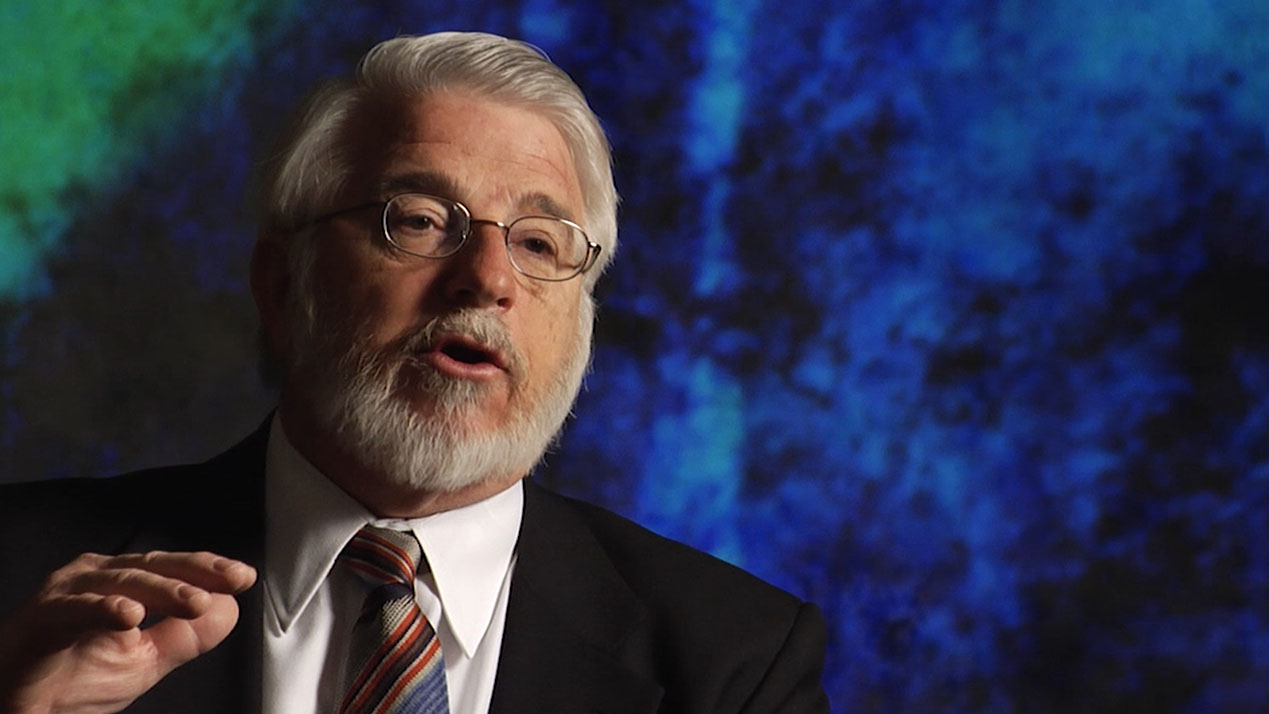
Today, George Cardinal Pell delivered a lecture at the invitation of the Global Warming Policy Foundation titled “Eppur’ si muove, or ‘yet it moves:’ One Christian Perspective on Climate Change.” He insisted that a scientific consensus is a lazy basis for the making of policy, and that before states impose drastic environmental regulations, an analysis of their demonstrable costs and benefits must be undertaken.

Read more on Cardinal Pell: Climate Hysteria is Hubristic…

The Manhattan Institute’s Proxy Monitor project is aimed at “shedding light on the influence of shareholder proposals on corporations.” It provides a thorough analysis of proposals made from 2008 – 2011 by activist investors — and believe it or not, only 35 percent of those proposals were related to corporate governance. Most of the shareholder proposals that these companies deal with are attempts to direct the company in a more green or pacific or fair direction, and they come from small shareholders who do this to dozens of companies.

Read more on Shareholder Activism on the Rise – from Nuns and Unitarians…

John Baden, chairman of the Foundation for Research on Economics & the Environment in Bozeman, Mont., wrote a column for the August 19 Bozeman Daily Chronicle about the Circle of Protection and Christians for a Sustainable Economy and how each has formulated a very different faith witness on the federal budget and debt debate. Baden says that the CASE letter to President Obama is “quite remarkable for it reads like one written by respected economists and policy analysts.”

Read more on Religions’ reactions to financial realities…

As citizens await state decisions on new state EPA “fracking” regulations, many are worried radical environmentalist may compromise a promising opportunity in the development of gas reserves.

Natural gas advocates say radical environmentalists have long demonized the oil industry in their fight against free enterprise. Environmental groups claim fracking techniques to extract natural gas threatens the cleanliness of ground water, but their attacks contradict EPA studies that report there are no proven cases where fracking has contaminated water.

Read more on Perpetual Demonization of the Oil Industry…

In the current issue of the Journal of Markets & Morality (14.1), Brian K. Strow and Claudia W. Strow challenge the economic impact of our definition of society in their article, “Social Choice: The Neighborhood Effect.” It occurred to me that Ecumenical Patriarch Bartholomew implicitly challenges our definition of society on a different, though similar, level than Strow and Strow.  Strow and Strow analyze the changing results of economic utility functions based upon one’s definition of human society. In his book Encountering the Mystery (2008), His All-Holiness, however, broadens our definition of society not merely on the basis of relationship, geography, or voluntary associations, but on the basis of ontological groupings. This is not to say that he would equate a human child and a dog (or a dog and a flower, for that matter), but that, for the Patriarch, society includes the entire ontological hierarchy of all creation.

Read more on Cosmos as Society in the Work of Ecumenical Patriarch Bartholomew…

In this week’s Acton Commentary I briefly survey the prospects for urban gardens and farming in the city of Detroit. As Aaron M. Renn wrote in New Geography a few years ago, Detroit represents one of the places where significant urban innovation is possible. “It may just be that some of the most important urban innovations in 21st century America end up coming not from Portland or New York, but places like Youngstown and, yes, Detroit,” writes Renn.

Read more on Acton Commentary: Little Plots of Liberty…

My commentary this week focuses on the how the rise in prices at the pump is impacting the poor. Currently, in many areas of the country a gallon of gas is now priced over $4. I also argue that we need a more coherent energy policy coming from leaders in Washington. Part of the argument against drilling in ANWR (Arctic Refuge) over a decade ago was that the oil wouldn’t hit the market for 10 years. That’s a very shortsighted way of thinking about meeting our energy needs. We need leaders in Washington to work for us not against us.

Read more on Acton Commentary: High Gas Prices Devastating to Poor…

I’ll admit – it’s been a long time since I’ve posted a Global Warming Consensus Alert because, frankly, any “consensus” that existed was blown apart by the release of the University of East Anglia Climate Research Unit e-mails, which revealed a whole bunch of underhanded activity on the part of scientists promoting the anthropogenic global warming hypothesis. What’s the point anymore? The unshakeable climate “consensus” has been shown to be the fraud that it always was, and the catastrophic climate change scare is receding as a political issue. It seemed like the time was right to retire the Consensus Watch series.

Read more on Global Warming Consensus Alert: KILL ‘EM ALL…

Jordan J. Ballor
posted by on Tuesday, July 13, 2010

Here’s OpenMarket:

Plain and simple economics — not the alleged machinations of Big Oil or Congress’s unwillingness to put a price on carbon – explains why America remains dependent on petroleum.

We are still not beyond petroleum. In fact, we’re quite a ways away.

Read more on Still not Beyond Petroleum…

Jordan J. Ballor
posted by on Tuesday, July 6, 2010

Some may recall that before BP’s recent disaster (public relations and otherwise), there was a period of rebranding the company from ‘British Petroleum’ to ‘Beyond Petroleum.’

Beyond Petroleum

I’ve long argued that the opportunities afforded us by the use of fossil fuels are best spent seeking long-term sustainable and reliable sources of energy. These sources must include, and indeed in the nearer term be largely based upon, nuclear energy.

Read more on Beyond Petroleum…

Acton PowerBlog RSS

Google Plus

Twitter Feed

Facebook Fan Page

Support the Acton Institute

The Acton Institute is funded through the generous contributions of individuals such as yourself. Learn more about how you can advance the cause of freedom and virtue.