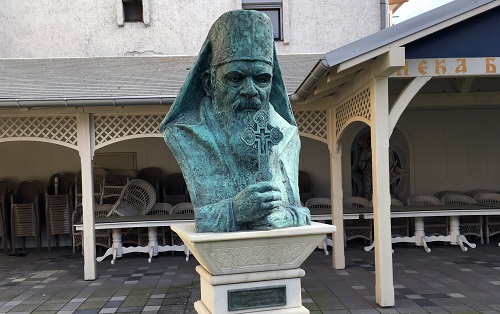
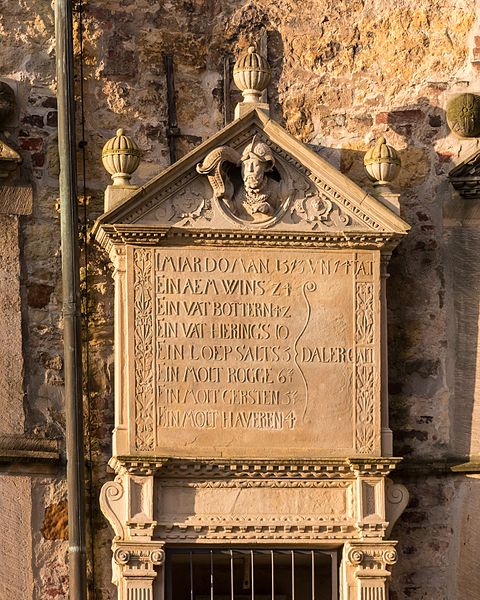
The Holy Monastery of the God-trodden Mount Sinai, Saint Catherine’s Monastery
The Egypt Independent has a fascinating account of the process underway now to digitize the first-millennium manuscripts housed at St. Catherine’s Monastery on the Sinai Peninsula. Writer James Purtill interviewed the librarian, a native Texan named Father Justin, about the task of preserving thousands of priceless books and the new library under construction, which he hopes to write about on the monastery blog when it opens.
Our friends at the Foundation for Research on Economics & the Environment (FREE) in Bozeman, Mont., have put together another strong slate of summer programs for clergy, seminary professors and other religious leaders with the aim of deepening their understanding of environmental policy. In its description of the program, FREE notes that many in faith communities “see an inherent conflict between a market economy and environmental stewardship.”
Major religious groups assert that pollution, deforestation, endangered species, and climate change demonstrate a failure of stewardship that requires reform. And of course they are correct—what, however, are the incentives and information generated by alternative reform policies? Some policies can have profoundly negative impacts on social well-being.
FREE’s goal is to help increase the understanding of religious leaders as they approach environmental policy. These leaders are influential nodes in a network of congregations, providing a conduit to disseminate market-based environmental ideas, potentially to millions of Americans.
FREE will help religious leaders understand the political economy dimensions of environmental policy reform. We will explain how basic economic principles can help achieve green goals with minimum sacrifice to social welfare. Together we will explore how a culture that values America’s founding ideals, secure property rights, and responsible prosperity, can also foster a healthy environment and promote social justice.
I’ve been to a number of these FREE events and have been impressed with the content — and that’s from someone who has grown “seminar averse” over the years. At FREE, faith leaders get the economic insights that are necessary for a deeper understanding of environmental stewardship. On the other side, policy analysts — including some of the FREE lecturers — get the faith insights that they do not ordinarily have access to in their own specialized fields. Yes, it is possible to bring together economic and moral thinking.
For PowerBlog readers, we’re posting the video from Andrew Morriss’ April 26 Acton Lecture Series talk in Grand Rapids, Mich., on “The False Promise of Green Energy.” Here’s the lecture description: “Green energy advocates claim that transforming America to an economy based on wind, solar, and biofuels will produce jobs for Americans, benefits for the environment, and restore American industry. Prof. Andrew Morriss, co-author of The False Promise of Green Energy (Cato, 2011), shows that these claims are based on unrealistic assumptions, poorly thought out models, and bad data. Rather than leading us to an eco-utopia, he argues that current green energy programs are crony capitalism that impoverishes American consumers and destroys American jobs.”
Gleaning is the traditional Biblical practice of gathering crops that would otherwise be left in the fields to rot, or be plowed under after harvest. The biblical mandate for the practice comes from Deuteronomy 24:19,
When you reap your harvest in your field and forget a sheaf in the field, you shall not go back to get it. It shall be for the sojourner, the fatherless, and the widow, that the LORD your God may bless you in all the work of your hands.
Gleaning provided the poor with a way to use their own labor to provide for their needs. For us today, the practice provides a useful Biblical model for how we can help others to help themselves. “Those with wealth are to provide opportunities for the poor to rise out of poverty,” writes Marvin Olasky, in Renewing American Compassion, “the typical starting point in the Old Testament was gleaning.”