Category: Vatican

Sarah Stanley
posted by on Tuesday, March 19, 2013

Michael Severance, operations manager of the Istituto Acton in Rome, recently wrote an article for the World Catholic Report explaining why Pope Francis was a historic choice and examining  what we can expect from his papacy.

He points out that “this past week proved a historic week of firsts:”

We now have the first Jesuit pope. And the first pope named Francis. He is the first non-European pope since Gregory III, an eighth-century Syrian. And we now have the very first pope from the Americas.

We have also witnessed a pope who is shunning what some critics perceive as Vatican tinsel and niceties during these economic hard times.

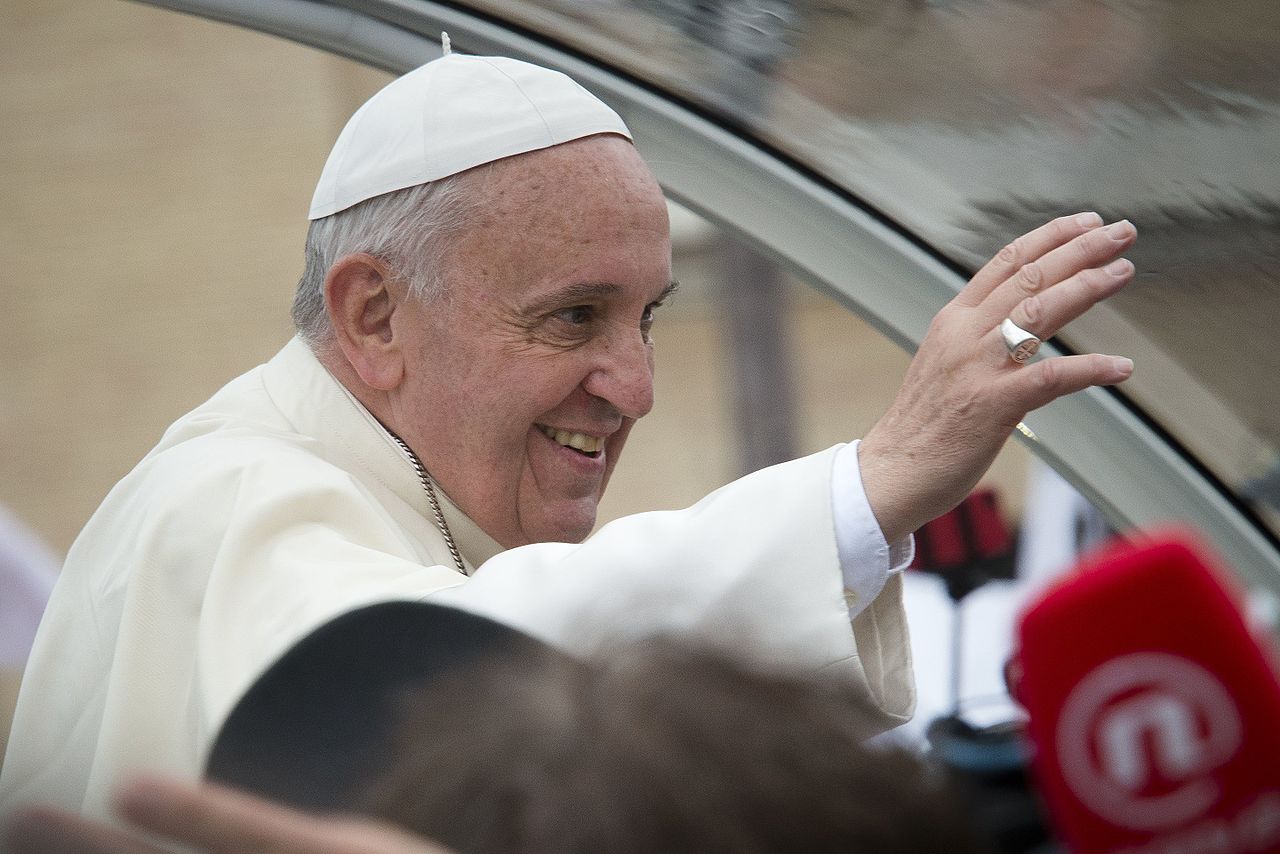
Francis has refused to ride in the pope’s private car (preferring the shuttle bus) or to wear red shoes and a fur-lined cape, or mozzetta, opting for ordinary black shoes and a white cassock.

This is the first time in a very long while that we have listened to a pope who readily quips in public and frequently includes off-script interjections to prepared remarks—at his first Mass with his brother cardinals, then a second time during his first press conference with journalists on Saturday, then a third time during his Sunday sermon at the Vatican parish of St. Anne, and again only a few hours later at his noontime Angelus, when he preached from his apartment above St. Peter’s Square. Not even John Paul II was at such ease with humor and his own words so early on in his pontificate.

Since Cardinal Jorge Bergoglio was somewhat unknown before he was elected Pope, Severance has compiled a brief profile of Pope Francis, focusing the pope as a pastor, thinker, and advocate for the poor. Read more on What We Can Expect from Pope Francis…

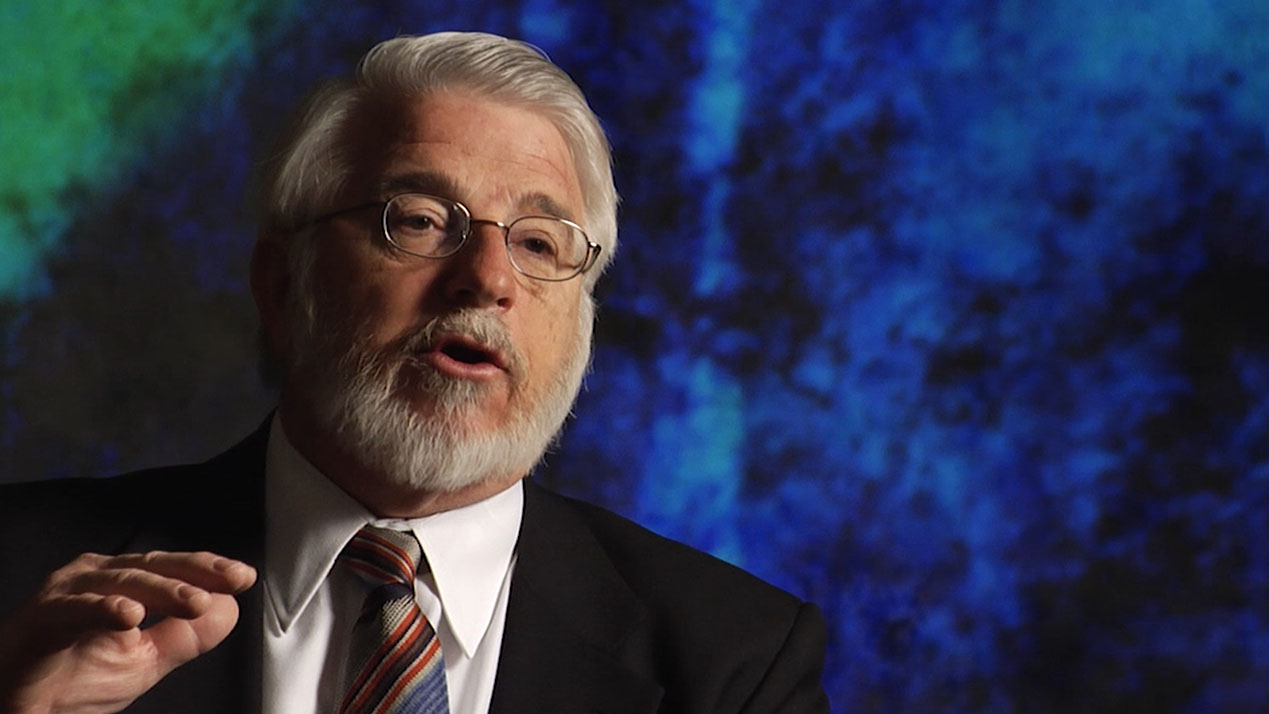
Rev. Robert A. Sirico, President of the Acton Institute, spoke from Rome with WJR’s Warren Pierce on Sunday morning about the new pontificate of Pope Francis. Sirico takes some time to discuss the character and style of Francis, and notes the following:

Read more on Audio: Rev. Robert A. Sirico on Pope Francis and Service to the Poor…

Jordan J. Ballor
posted by on Monday, March 18, 2013
Billy Graham meets John Paul II in 1981.

Billy Graham meets John Paul II in 1981.

Carl Trueman of Westminster Seminary makes some salient points about why Protestants should pay any attention at all to the doings in Vatican City (HT: Justin Taylor):

Read more on Protestants and the Roman Pontiff…

Joe Carter
posted by on Friday, March 15, 2013

Will Pope Francis promote a leftist view of economics? Hot Air’s Ed Morrissey asked that question of Kishore Jayalaban, Director of Acton’s Rome office. Jayalaban says the impression that Francis will push economic arguments to the left is a misunderstanding of both Catholic economic thought and the economic situation in Argentina—where capitalism is much more rife with cronyism and corporatism than in the US.

Read more on Will Pope Francis Go Left on Economics?…

Pope Francis

Pope Francis

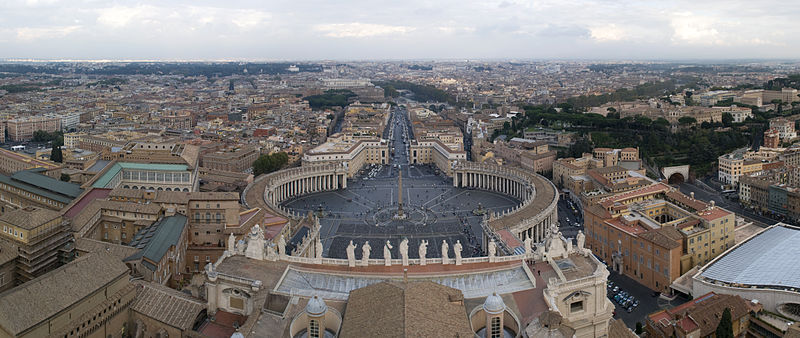
Surprise was the reaction in Rome on hearing of the elevation of Cardinal Jorge Mario Bergoglio, Archbishop of Buenos Aires, to the Papacy. My colleagues in Rome told me that the Plaza was unusually quiet as the people tried to figure out what was going on.  I guess the Cardinals showed that they elect the pope on their own terms, and now everyone is wondering who Pope Francis is, how he will lead, and what will characterize his pontificate.

Intra and Extra: Challenges for the Pope in the Church and the World

The Pope’s main role is to preach the Gospel of Jesus Christ. In his first homily as Holy Father he asserted just this. “We can walk as much as we want,” he said  “we can build many things, but if we do not confess Jesus Christ, nothing will avail. We will become a compassionate NGO, but not the Church, the Bride of Christ.”  He also has a Church to govern—and he’ll face serious challenges on both fronts.  On the inside, the Church continues to reel from scandals and abuse. The curia needs to be reformed and the bureaucracy cleaned up. On the outside, Pope Francis faces a growing and hostile secularism, religious persecution from a number of fronts, dwindling number of believers in traditionally Catholic lands, including Latin America, and increasing ignorance of the basic tenets of Christianity. But there are also some real positives. The Church continues to grow in the Global South—especially in Africa and Asia. Belief is still high in Latin America, though many Catholics are leaving for the Pentecostals or evangelicals. Among U.S. Catholics, Hispanics are now the majority.  And while the Church in the West may be getting smaller, it is also more vibrant and serious. Younger Catholics are orthodox and evangelical, and dissenters like Hans Kung are aging and less influential each day. Pope Francis also has the advantage of following Blessed John Paul II and Benedict XVI, whose interpretation of Vatican II and whose intellectual and spiritual guidance set out a framework for the New Evangelization.

Francis brings several important things to his papacy. The most obvious are that he is a Latin American, and not a member of the Roman Curia. The Curia needs reform, and being an outsider with experience of diocesan dysfunction will serve him well. Further, as Archbishop of Buenos Aires he not only dealt with extreme poverty, corruption, lack of rule of law, and social and economic volatility that is common in the developing world, he also has had to contend with virulent and aggressive secularism that is common in the West.  He has been a fearless defender of human life and family, has called abortion the “death penalty for the unborn,” and has been unafraid to clash with political leaders over corruption, reminding them that social corruption is rooted in personal sin.

He also brings a long record of engagement with the poorest of the poor. Read more on Pope Francis: For the Church, the City, and the World…

In this week’s Acton Commentary, “A Passion for Government Leads to Neglect of Our Neighbor,” I examine how the disconnect between desires and deeds with reference to helping the needy among us perpetuates unbalanced budgets and spending on debt to the detriment of future generations. I highlight how St. John the Baptist came to “turn the hearts of fathers to their children” (Luke 1:17) by exhorting people to look to their neighbors and the small but practical ways they can serve them in love:

During his ministry, John’s message to everyday people, according to Luke, was remarkably simple: “He who has two tunics, let him give to him who has none; and he who has food, let him do likewise.” To the tax collector, he warns not to take more than is due, and to the soldier his counsel is “be content with your wages” (cf. Luke 3:10-14). This was “the way of the Lord”?

I conclude by recommending the same for us today. The problem is not that people do not care, it is that we have forgotten with whom responsibility for the work of caring for the needy among us lies first of all. Read more on How Bearing Each Other’s Burdens Can Lighten Our Burden of Debt…

Pope Francis

Pope Francis

At National Review Online, Acton Research Director Samuel Gregg talks about the “profound illustration of the limits of applying secular political categories to something like the Catholic Church.” He goes on to discuss the “particular concerns” that Pope Francis has regarding economic issues, including materialism and consumerism, and the poor, all reflected through his life of asceticism. Gregg then places these reflections in the context of modern day Argentina. More:

Read more on Samuel Gregg: Is Pope Francis a Man of the Left?…

Yesterday, Cardinals choose Jorge Bergoglio of Argentina to be the new pope.  A The Detroit News editorial points out that  “[t]hirty-nine percent of the world’s Catholics live in Latin America, making this pope a fitting choice for many Catholics.”

Read more on Pope Francis ‘provides Catholics with fresh guidance’…

Joe Carter
posted by on Wednesday, March 13, 2013

Early today, Cardinal Jorge Mario Bergoglio of Buenos Aires, Argentina was elected as the 266th pope of the Catholic Church. Here are nine things you should know about Pope Francis.

pope-francis1. Bergoglio was born in Buenos Aires in 1936. His father was an Italian immigrant.

2. He’s the first pope from South America. The only remaining continents that have never had a pope come from their lands are Australia, Antarctica, and North America.

3. He’s the first Jesuit pope.

4. He only has one lung. His other lung was removed due to infection when he was a teenager.

5. Bergoglio is known for his personal simplicity. In Argentina he lived in a simple apartment rather than the archbishop’s palace, cooked his own meals, and gave up his chauffeured limousine in favor of taking the bus to work.
Read more on 9 Things You Should Know About Pope Francis…

With the election of Pope Francis, the Cardinal Jorge Mario Bergoglio of Buenos Aires, Argentina, the Rev. Robert A. Sirico released the following statement.

“Pope Francis is a man of great spirituality who is known for his commitment to doctrinal orthodoxy as well as for his simplicity of life,” Rev. Sirico said. “Like Benedict XVI, he combines concern for the poor with an insistence that it’s not the Church’s responsibility to be a political actor or to prescribe precise solutions to economic problems. In that regard, he’s a model for all Catholic bishops and clergy throughout the world.”

Read more on Acton Institute’s Rev. Robert A. Sirico Comments on the Election of Pope Francis…

Acton PowerBlog RSS

Google Plus

Twitter Feed

Facebook Fan Page

Support the Acton Institute

The Acton Institute is funded through the generous contributions of individuals such as yourself. Learn more about how you can advance the cause of freedom and virtue.