Archived Posts July 2010 » Page 3 of 4 | Acton PowerBlog

Ray Nothstine
posted by on Monday, July 19, 2010

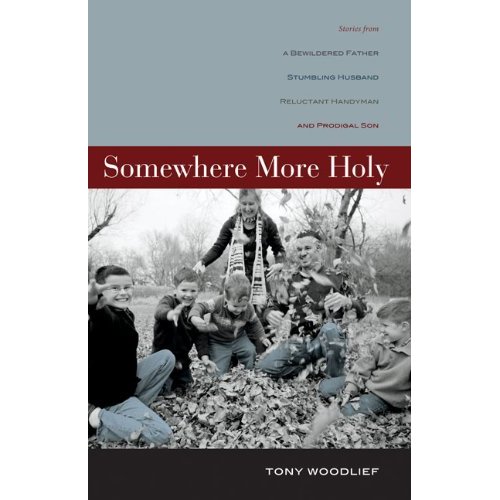
In Somewhere More Holy, Tony Woodlief offers a serious account about tragedy, God, family, and grace. He also spins a great spiritual yarn which can move you from laughing to tears in mere moments. One of the strengths of this book is that it is not another bland self help book that promises “Your Best Life Now.” I’ve always wondered anyways about Christians who do not even realize their best life is in Glory. This is a very honest confessional book that really contrasts itself with the prosperity gospel and the kind of superficial Christianity that eschews a theology of suffering.

Read more on Review: Somewhere More Holy…

Jordan J. Ballor
posted by on Monday, July 19, 2010

The NYT Freakonomics blog notes that the Fair Trade movement does not exist independently of the laws of economics:

But the problem with Fair Trade coffee is that as the program scales up, the alternative market ethics it wants to sustain collapse. Inevitably, the Fair Trade market becomes subject to the same laws that drive the conventional commodities market. When the price of coffee drops, the appeal of Fair Trade’s price support lures growers into the cooperatives that sell coffee under the Fair Trade label. As poor growers rush into Fair Trade agreements, the supply of Fair Trade coffee rises. Protected by the price floor, the Fair Trade coffee remains inflated despite flagging demand. What Fair Trade importers thus end up doing with the excess Fair Trade coffee is dumping it—upwards of 75 percent of it!—on the conventional market.

This is a huge problem for Fair Trade. Essentially, to be successful, it must, as I have stated in the past, “argue for a complete standardization of its price-fixing methods.”

Read more on Fair Trade: Rhetoric and Reality…

Kevin Schmiesing
posted by on Friday, July 16, 2010

A little while ago, and in the context of the health care reform debate, Sam Gregg observed in this space that the American Catholic hierarchy had, to the detriment of church and country, neglected the importance of subsidiarity.

Read more on Subsidiarity in New Jersey…

There’s a reason why history is important. History is about knowing the truth about our past and therefore about ourselves. Not surprisingly, those who meddle with it usually do so from less-than-noble motives. In the latest edition of First Things, Princeton University’s McCormick Professor of Jurisprudence Robert P. George suggests that the American Constitution Society for Law and Policy has been the latest to attempt to re-write – or, more accurately, erase – history by reprinting Lincoln’s Gettysburg address and omitted the words “under God” in their reprinting. Professor George observes:

Read more on God, Gettysburg, and Sins of Omission…

John Couretas
posted by on Thursday, July 15, 2010

Also this week in Acton Commentary, Acton Research Director Samuel Gregg observes that “Europe’s declining birth-rate may also reflect a change in intellectual horizons.”

Europe’s Choice: Populate or Perish

Read more on Europe’s Choice: Populate or Perish…

Ray Nothstine
posted by on Wednesday, July 14, 2010

My commentary this week touches on the spiritual and cultural significance of the largest U.S. oil spill in history. I was a resident of the Mississippi Gulf Coast for 11 and a half years. I worked in the Gulfport district office of U.S. Congressman Gene Taylor (D-Miss) before leaving for seminary. I was a Katrina evacuee and returned to see unbelievable decimation. It reminded me of the pictures of Hiroshima in textbooks after the dropping of the nuclear bomb. I always think it is fascinating when I hear people observe the Gulf Coast on the news after a tragedy and say how the people should just move. I wonder where they would go when the water is such an integral part of their subsistence and heritage? The people on the Gulf have much more culturally in common with individuals on the Gulf in neighboring states than they do with those living inland in their own state. Louisiana, especially, has one one of the most uniquely diverse cultures in this country. A key theme in my piece is that BP can compensate them economically, but there is an important cultural and spiritual aspect to their labor that is above financial compensation. The text of my piece is also printed below:

Read more on Spiritual Labor and the Big Spill…

Jordan J. Ballor
posted by on Tuesday, July 13, 2010

Here’s OpenMarket:

Plain and simple economics — not the alleged machinations of Big Oil or Congress’s unwillingness to put a price on carbon – explains why America remains dependent on petroleum.

We are still not beyond petroleum. In fact, we’re quite a ways away.

Read more on Still not Beyond Petroleum…

Jordan J. Ballor
posted by on Tuesday, July 13, 2010

You often hear that Europe is much more secular than America. Just take a look at the Netherlands, for instance. How much more secular can you get?

But one place in which this stereotype rings false is in terms of academic institutions. You can pursue (as I currently am) a degree in theology at a European public university. Can you imagine that in the United States?

No, here we have departments of “religious studies” in public colleges and universities (if we cover religion there at all, and to be sure, “theology” and “religion” aren’t identical). My friend Hunter Baker might point to this difference not as secularism in a strict sense, but rather an institutional separation between state and church (for more on his definition of secularism, check out his book, The End of Secularism).

And thus from accounts of the institutional differences between the academic study of religion and theological study in America, you might easily get the impression of a kind of intellectual or academic secularism. After all, to study theology in America, you have to go to a private college or seminary (as I also am currently doing). This perspective from the Chronicle of Higher Education is representative, “The Ethics of Being a Theologian,” in which K.L. Noll writes, in part,

I do not presume to tell theologians how to be theologians, and I will not attempt to define the value of theology. I simply request that theologians fulfill basic ethical obligations, such as the affirmation that theology is not knowledge and must position itself apart from those academic disciplines that try to advance knowledge, such as history, anthropology, religious study, and (perhaps especially) the natural sciences.

Meanwhile, in secular Europe, as ENI’s Stephen Brown reports, “European theology faculties warn of shift to religious studies.” Read the rest of Brown’s story after the break.
Read more on Secularism in Academe…

Join us in Grand Rapids on Thursday for the next Acton Lecture Series with Jordan Ballor, Research Fellow and Executive Editor, Journal of Markets & Morality. The lecture should be of interest to anyone whose church is a member or observer of ecumenical organizations.

Read more on Acton Lecture Series: Ecumenical Ethics & Economics…

Jordan J. Ballor
posted by on Monday, July 12, 2010

Some of the assumptions built into the mainstream international aid and development movement are puzzling. Among them is the faulty assumption that the comparison that matters most is how the developing world is doing in relation to the developed. Not surprisingly, this kind of comparison tends to make the gains in developing countries seem small, inscrutable, or nonexistent, and end up reinforcing the myth that progress is never achieved.

Read more on Walk, Pedal, Drive…

Acton PowerBlog RSS

Google Plus

Twitter Feed

Facebook Fan Page

Support the Acton Institute

The Acton Institute is funded through the generous contributions of individuals such as yourself. Learn more about how you can advance the cause of freedom and virtue.