Archived Posts December 2010 » Page 3 of 4 | Acton PowerBlog

John Couretas
posted by on Thursday, December 16, 2010

In “Human Nature and Capitalism” on AEI’s The American, Arthur C. Brooks and Peter Wehner look at three different “pictures” of what it means to be human and point to the one, foundational understanding that has undergirded the flourishing American culture of democratic capitalism:

Read more on Understanding Human Behavior…

Jordan J. Ballor
posted by on Thursday, December 16, 2010

In this week’s commentary I say that part of the reason less money is being given to local churches is that it is reflective of a broader trend of distrust towards institutions.

Read more on Loss of Institutional Faith…

Ray Nothstine
posted by on Wednesday, December 15, 2010

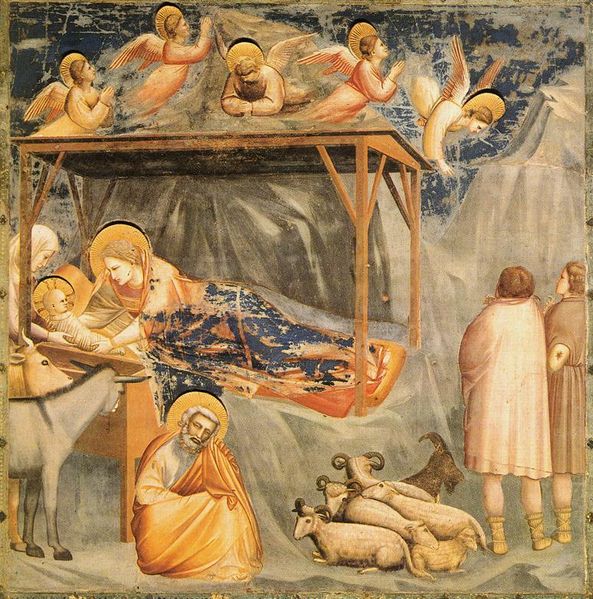
Increasingly the Nativity tends to be associated with the political, as the crèche and other overtly religious symbols are banished from the public square by public pressure or the courts. To some that communicates a baby savior with so little power he can’t even defeat the secular legal authorities who seek his removal. If God is out there, “He must be pretty weak,” could be a common refrain today.

Read more on Why the Nativity?…

John Couretas
posted by on Wednesday, December 15, 2010

Video: Hundreds of protesters clashed with riot police across central Athens on Wednesday, smashing cars and hurling gasoline bombs during a nationwide labour protest against the government’s latest austerity measures. The former Development Minister Costis Hatzidakis was attacked by protesters outside a luxury hotel. He was escorted, bleeding from the scene as his attackers yelled “thieves” at him. Source: Russia Today

Read more on In the ‘pressure cooker’…

Jordan J. Ballor
posted by on Wednesday, December 15, 2010

Steve Connor in The Independent (HT: RealClearReligion) speculates about some happenings at the Vatican with regard to genetically-modified (GM) food. It’s important to note, as is the case in this article, that things that happen in various committees and study groups at the Vatican do not by default have some kind of papal endorsement.

Read more on The Morality of GM Food…

In today’s Acton Commentary I argue that “Christian Giving Begins with the Local Church.”

I note some statistics that show that American Christians are increasingly looking beyond their local congregations and churches as outlets for their charitable giving, in spite of the fact that giving to religiously affiliated and religiously focused charities is increasing.

Read more on Christian Giving Begins with the Local Church…

Jonathan Witt
posted by on Tuesday, December 14, 2010

John Couretas
posted by on Monday, December 13, 2010

Jordan’s post on hunger raises a timely question, on a day when First Lady Michelle Obama was on hand to watch the president sign the $4.5 billion “Healthy, Hunger-Free Kids Act” at a Washington elementary school. Despite the media coverage and White House spin that points to this in part as a hunger fighting piece of legislation, the measure is really about obesity. Because in America, the real problem with food is superabundance and waste, not scarcity and hunger.

As Bloomberg noted today:

Almost 20 percent of 6- to 11-year-olds were considered obese in 2007-2008, according to a study by the Atlanta-based Centers for Disease Control and Prevention. Obese children are more likely to have health issues like Type 2 diabetes and high blood pressure according to the CDC.

A study published last year estimated the cost of treating obesity-related ailments in 2008 at $147 billion. The study, noted the Washington Post, “compared medical costs for normal-weight people to those for obese people, suggests that curbing the obesity epidemic is key not only to ensuring a healthier future for Americans, but also to reining in health costs.”

The Centers for Disease Control helpfully suggests that schools should be located “within walking distance of students’ homes and making it easier for people to get access to healthful foods.” Of course, these tips largely will be ignored, as will most other nanny state directives on eating healthy diets and exercising that have been around for decades. Walking to school? That’s what minivans are for.

Now, you can argue that poor people are consuming too much bad food. You can argue that government farm subsidies foster production of the wrong kinds of food. All that is debatable and subject to honest differences of opinions as to causes and solutions. What doesn’t seem obvious is that millions of Americans are going hungry. This is what we get constantly from the religious left and the U.S. hunger lobby, which sees expansive government welfare programs as the inevitable answer. Read more on Re: The Politics of Hunger…

John Couretas
posted by on Monday, December 13, 2010

On Public Discourse, Acton Research Director Samuel Gregg observes in a new piece that “while moral beliefs have an important impact upon economic life, the manner in which they are given institutional expression also matters. This is illustrated by the different ways in which people’s responsibilities to those in need—what might be called the good of solidarity—are given political and economic form.”

Read more on Samuel Gregg: Socialism and Solidarity…

Jordan J. Ballor
posted by on Monday, December 13, 2010

In an otherwise fine piece focusing on innovative techniques used by food banks to increase efficiency, while at the same time improving service and the recognition of the dignity of those they serve, Bread for the World president David Beckmann uses the opportunity to throw a dose of pessimism into the mix.

Read more on The Politics of Hunger…

Acton PowerBlog RSS

Google Plus

Twitter Feed

Facebook Fan Page

Support the Acton Institute

The Acton Institute is funded through the generous contributions of individuals such as yourself. Learn more about how you can advance the cause of freedom and virtue.