Posts tagged with: art

The High Calling recently posted a helpful video about creativity in the workplace, drawing insights from innovation consultant Barry Saunders.

Saunders notes that, despite our tendency to think of creativity only in terms of artistic expression, creativity is simply about “building ideas.” Pointing to Genesis, he observes that God gave us a clear directive to “go create things,” offering us a “foundational understanding of what we were meant to do and how we were meant to spend our days.”

But getting creative in the workplace can be tough, as Saunders duly notes. Each of us will face unique struggles in bringing our whole selves to the work we do. When it comes to creativity, it means tapping our imaginations, but more fundamentally, it involves aligning those imaginations to the Word of God and the power of the Holy Spirit. Building ideas for our own purposes is one thing, but this next step of obedience and alignment will prove challenging even for the most forward-thinking and out-of-the-box entrepreneurs.

Through this understanding, creativity is ultimately about innovating our way toward better stewardship and sacrifice, submitting our imaginations to the divine and unleashing them toward the service of others. How can we innovate better ways of managing, molding, and growing what God has given us? “All is on loan,” as Lester DeKoster says, so how do we multiply the talents? Read more on Divine Creativity in Business, Art, and Everything Else…

Last week, Barrett Clark summarized some key insights shared at the recent Common Good RVA event in Richmond, Virginia. The event was part of Christianity Today’s This Is Our City project, which seeks to highlight how Christians are “using their gifts and energies in all sectors of public life—commerce, government, technology, the arts, media, and education—to bring systemic renewal to the cultural ‘upstream’ and to bless their neighbors in the process.”

This week, the project moves its focus to Detroit, one of its target cities, where local artist Yvette Rock shares how God is actively using the work of his people to rebuild what has become a broken city. In a moving video interview, Rock discusses the ways in which she integrates faith, work, and community.

Untitled6

Rock’s recent project, “The Ten Plagues of Detroit,” focuses on some of the main issues currently tugging at Detroit—“issues of justice, oppression, violence, and homelessness.” Given that these are issues that “also concern God,” Rock explains, she sees no need to separate “art life” from “faith life” in her daily work. “It’s together,” she says. “It’s combined.” Read more on The Art of Restoration: Repairing the Breach in Detroit…

In his magnificent reflection on the nature of art, Real Presences, polymath George Steiner invites us to make a thought experiment: What if we lived in a city where all talk about art, mere talk about art, was prohibited? In other words, what would follow if we did away with artistic criticism qua criticism, an activity derivative by nature and one Steiner calls “high gossip”? In this posited city, what Steiner calls the Answerable City, the only permitted response to a work of art would be another work of art. Thus participation in the “art scene” could never launch itself from the risk-free loft of criticism, but it must be real participation, a participation that demands that the viewer invest something of his own imaginative capacities. In this city, the word “interpretation” denotes not something exegetical, but something performative; an activity not of professional academics or theater critics, but of actors and directors — as in an actor “interprets a role.” Here, art means incarnation, not judgment.

But such a city is only a thought experiment, and since judgment requires the participant to invest less of himself, it will always be easier to be a critic than to be an artist. And therefore the artist will always be tempted first to pass judgment rather than to respond with his own creativity.

After a decade of trying to walk the slippery ridge between “he who does” and “he who discusses” art, I have tried to avoid criticism these last couple of years to focus only on doing. But I feel the need to again jump into the critical ring, thanks to a recent article in GQ Magazine (it was sent to me by a friend), an article on my own town, Grand Rapids, and its increasingly famous festival, ArtPrize. Read more on The Corruptions of Power: Gossip of the Highest Sort…

Cranach, autoritrattoDaniel Siedell, Director of Cultural and Theological Practice at Coral Ridge Presbyterian Church, Fort Lauderdale, Florida, has a fine review of Steven Ozment’s The Serpent and the Lamb: Cranach, Luther, and the Making of the Reformation in the latest issue of Books & Culture.

Read more on The Reformational Calling of the Artist…

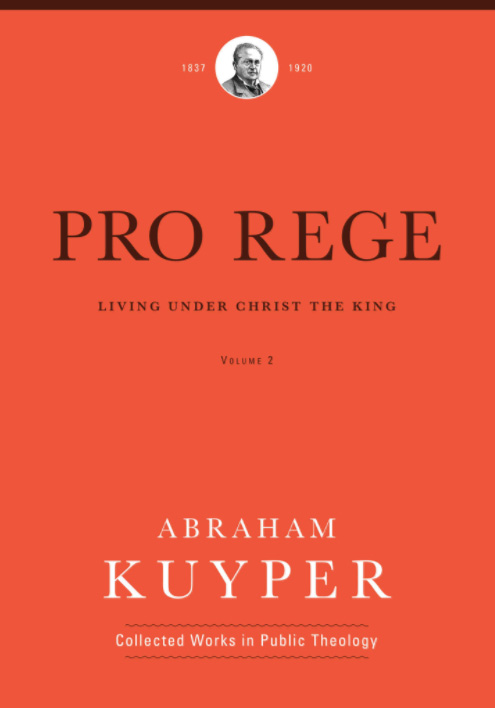
Phillip Long is a professor of Bible and Biblical Languages at Grace Bible College in Grand Rapids, Michigan and blogs over at Reading Acts. Phil does not normally review this kind of book, but was drawn to it due to Abraham Kuyper’s popularity and his contribution to worldview issues today.

Long shares some good observations and this book and its relevance for Christianity today, particularly those with an aversion to the study of science and the pursuit of a career in art.

Read more on When Christianity Was Still Friendly With Science and Art…

Ray Nothstine
posted by on Monday, December 19, 2011

With its subject, use of Scripture, and majestic soaring choruses, George Ferederic Handel’s Messiah is easily the most recognizable musical piece in Western Civilization. It is also perhaps the most widely performed piece of classical or choral music in the West. After hearing a performance of the Messiah, fellow composer Franz Joseph Haydn simply said of Handel, “This man is the master of us all.” Not to be outdone, Beethoven declared, “Handel is the greatest composer who ever lived. I would bare my head and kneel at his grave.”

Read more on Handel, Messiah, and Entrepreneurship…

I’m pleased to announce that the first fruits of the Kuyper Common Grace Translation project are forthcoming, in the form of Wisdom & Wonder: Common Grace in Science & Art. This is the first selection out of the larger three-volume set that will appear in complete translation in English.

Read more on Announcing Wisdom & Wonder: Common Grace in Science & Art

In today’s edition of Capital Commentary, HBU assistant professor of literature Micah Mattix explores the question, “How Might the Arts Be Funded?” He ably and briefly surveys the recent history of politics surrounding the NEA.

Read more on Subsidiarity, Funding, and the Arts…

Charissa Romens
posted by on Monday, October 18, 2010

Inspired by Art Prize, I wrote a blog about culture, technology, and the universal desire for community. This appeared on Ethika Politika‘s blog today and an excerpt can be found below:

Read more on Community, Culture, and Confession…

Acton On TapIf you couldn’t make it to Derby Station in East Grand Rapids last night, there are a couple of things you should know. First of all, you missed a great event and some good conversation. Secondly, you need not worry: we recorded it, and you can listen to David Michael Phelps’ presentation on Art, Patrimony, and Cultural Investment via the audio player below.

Read more on Acton On Tap: Art, Patrimony, and Cultural Investment…

Acton PowerBlog RSS

Google Plus

Twitter Feed

Facebook Fan Page

Support the Acton Institute

The Acton Institute is funded through the generous contributions of individuals such as yourself. Learn more about how you can advance the cause of freedom and virtue.