Posts tagged with: benedict xvi


Comments

John Couretas
posted by on Wednesday, February 8, 2012

“If there was ever any doubt about one of the Obama Administration’s key philosophical commitments,” writes Acton Research Director Samuel Gregg in a new article in the American Spectator, “it was dispelled on Jan. 20 when the Department of Health and Human Services informed the Catholic Church that most of its agencies will be required to provide employees with insurance-coverage for contraceptives, sterilization, and abortifacient drugs: i.e., products, procedures, and chemicals used to facilitate acts which the Church and plenty of others consider intrinsically evil.”

Read more on Samuel Gregg: Obama and the Dictatorship of Relativism…

In the journal Foreign Affairs, Acton Research Director Samuel Gregg offers an analysis of the Vatican’s recent pronouncements on economic policy, most notably the document issued in October titled “Towards Reforming the International Financial and Monetary Systems in the Context of Global Public Authority” (also called “The Note”). The Church, Gregg said, “wanted to attract the attention of world leaders as they assembled to discuss ongoing turmoil in financial markets at the G-20 Summit in Cannes and to add its voice to those arguing for capital controls (such as the “Tobin tax”) to discourage international financial speculation.” But, he argues, advocating a world economic authority could work against the interests of developing nations, including those heavily Catholic:

Read more on Samuel Gregg: The Vatican’s Calls for Global Financial Reform…


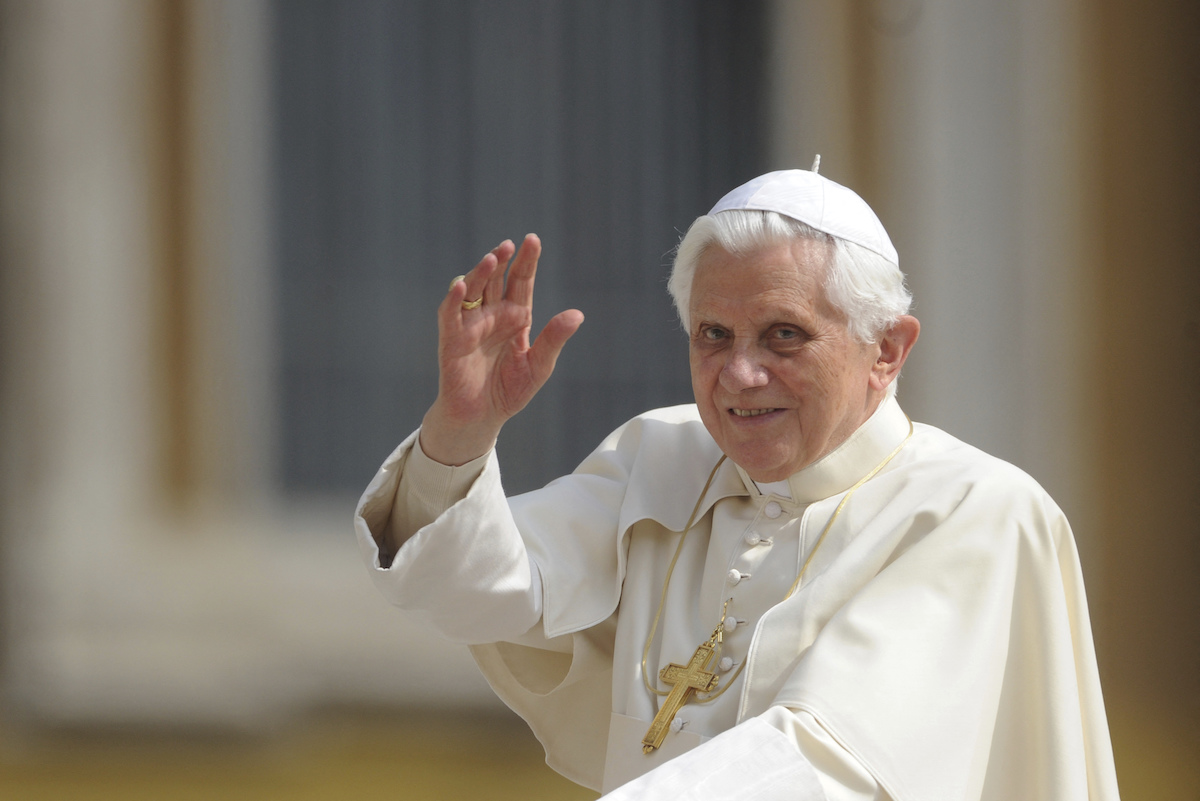
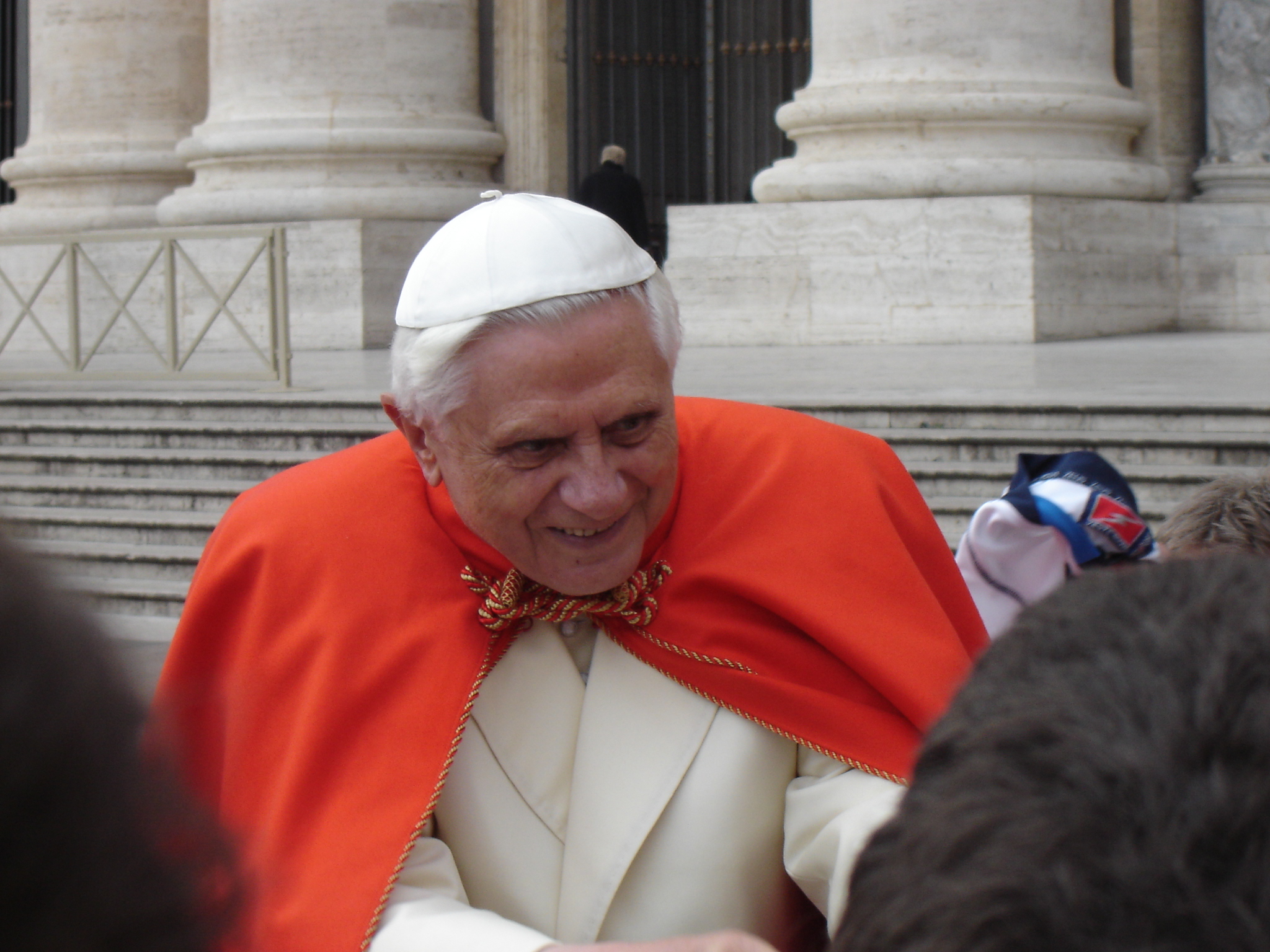
Pope Benedict XVI delivered inspiring remarks at the European Year of Volunteering (EYV) summit held in Rome this past Nov. 10-11. He explained why gratuitous giving of personal talent and resources is so important in restoring a healthy vocational perspective to everyday business.

Read more on Benedict XVI: Giving of Talent and Resources in Crisis Economy…


Comments

Kenneth Spence
posted by on Friday, October 28, 2011

Acton’s prolific director of research Samuel Gregg writes at Crisis Magazine about those who would modernize the Catholic Church (theologically): “Dissenting Catholics’ Modernity Problem.” His reflection centers on the thought of Pope Benedict XVI, whose recent visit toGermany brought the modernizers out of the woodwork, and whose speeches and writings have placed the faithful in their proper context.

Read more on Samuel Gregg on Feelings and Reason…


Comments

Kenneth Spence
posted by on Monday, September 12, 2011

Director of Research Samuel Gregg has written a special report for the American Spectator about Benedict XVI’s upcoming trip to Germany. The recent World Youth Day in Spain may have looked like a bigger challenge for Benedict, but Gregg says that Germany, while its economy looks good, is facing rough seas ahead.

Read more on Samuel Gregg: Pope’s Work Cut out for Him in Germany…


Comments

Kishore Jayabalan
posted by on Thursday, August 18, 2011

On his flight to World Youth Day in Madrid this morning, Pope Benedict XVI responded to a question about the current economic crisis. Not sure what the question was, but the well-respected Italian Vatican analyst Andrea Tornielli captured the reply. Here’s my quick translation of the Pope’s answer:

Read more on World Youth Day: Pope talks profits and people…


Comments

Michael Severance
posted by on Tuesday, May 24, 2011

Last week in Rome the Acton Institute presented a promotional video for the PovertyCure initiative before an international audience of businessmen, scholars, journalists, graduate students and missionaries in attendance at the Institute’s May 18 development economics conference: “Family-Enterprise, Market Economies, and Poverty: The Asian Transformation.” The Acton Institute is one of many partners in this new initiative made up of a network of individuals and organizations looking for free-enterprise solutions to poverty.

Read more on Rev. Sirico: Change thinking on poverty…

In a special report, the American Spectator has published Acton Research Director Samuel Gregg’s new article on the “civilizational agenda” of Pope Benedict XVI. Special thanks also to RealClearReligion for linking the Gregg article.

Read more on Samuel Gregg: Benedict XVI in ‘No One’s Shadow’…

Patriarch Bechara Rai

As a Lebanese Maronite Catholic student in Rome and a new intern at Istituto Acton, I had the great honor and privilege to attend the audience of the new Patriarch of Antioch of the Maronites, Bechara Rai, with Pope Benedict XVI. The April 14 audience gave me the occasion to think about our new Patriarch’s role in promoting the entrepreneurial vocation in Lebanon. Our new patriarch seems to be a very active, energetic man, in keeping with the majority of his flock, but both his church and his country face many daunting challenges.

Read more on Can Maronites bridge the cultural divides in Lebanon?…

The American Spectator published a new commentary by Acton Research Director Samuel Gregg. The commentary was also picked up by RealClearReligion.

Christians in a Post-Welfare State World

By Samuel Gregg

As the debt-crisis continues to shake America’s and Europe’s
economies, Christians of all confessions find themselves in the
unaccustomed position of debating the morality and economics of
deficits and how to overcome them.

At present, these are important discussions. But frankly
they’re nothing compared to the debate that has yet to come. And
the question is this: How should Christians realize their
obligations to the poor in a post-welfare state
world?

However the debt-crisis unfolds, the Social
Democratic/progressive dream of a welfare state that would
substantially resolve questions of poverty has clearly run its
course. It will end in a fiscal Armageddon when the bills can’t be
paid, or (and miracles have been known to happen) when political
leaders begin dismantling the Leviathans of state-welfare to avert
financial disaster.

Either way, the welfare state’s impending demise is going
to force Christians to seriously rethink how they help the least
among us.

Why? Because for the past 80 years, many Christians have
simply assumed they should support large welfare states. In Europe,
Christian Democrats played a significant role in designing the
social security systems that have helped bankrupt countries like
Portugal and Greece. Some Christians have also proved remarkably
unwilling to acknowledge welfarism’s well-documented social and
economic dysfunctionalities.

As America’s welfare programs are slowly wound back, those
Christian charities who have been heavily reliant upon government
contracts will need to look more to the generosity of churchgoers
– many of whom are disturbed by the very secular character assumed
by many religious charities so as to enhance their chances of
landing government contracts.
Read more on Samuel Gregg: Christians in a Post-Welfare State World…

Support the Acton Institute

The Acton Institute is funded through the generous contributions of individuals such as yourself. Learn more about how you can advance the cause of freedom and virtue.