Posts tagged with: business

Jordan J. Ballor
posted by on Friday, October 19, 2012

This week I wrote about the dignity of paying taxes (among other ways of contributing to social flourishing). But as we know, not all taxes are created equal. Indeed, as Antony Davies and James Harrigan write this week at US News, “Politicians are in the business of buying votes with tax breaks and sweetheart deals for their preferred constituencies, and they have to offset these deals by taxing disfavored constituencies at increased rates. The longer this game is played, the more convoluted the tax code becomes.”

As I argued previously at Capital Commentary, this amounts to a kind of back door social engineering (as well as playing favorites, picking winners, and so on). The fundamental purpose of taxation is not to buy votes and give preference to lobbies and special constituencies. Instead, as I write, “The point of taxation is to raise funds to enable the government to fulfill its moral, political, and social responsibilities.” Such a view is ultimately at odds with a Utilitarian theory, which considers taxation to be a tool rather used “to maximize overall well-being in society.” Matthew Weinzierl argues for greater attention to a theory of Equal Sacrifice, which on Weinzierl’s account “assumes individuals have the first claim to their output, and that they voluntarily agree to form societies that collect taxes in order to purchase public goods.”
Read more on Sixpence to the Good (of Government)…

This morning at Ethika Politika, I argue that “acting primarily for the sake of national interest in international affairs runs contrary to a nation’s highest ideals.” In particular, I draw on the thought of Vladimir Solovyov, who argued that, morally speaking, national interest alone cannot be the supreme standard of international action since the highest aspirations of each nation (e.g. “Life, Liberty and the pursuit of Happiness”) are claimed to be universal goods. I would here like to explore his critique with reference to the subject of international trade. Read more on Are Protectionism and Patriotism Incompatible Principles?…

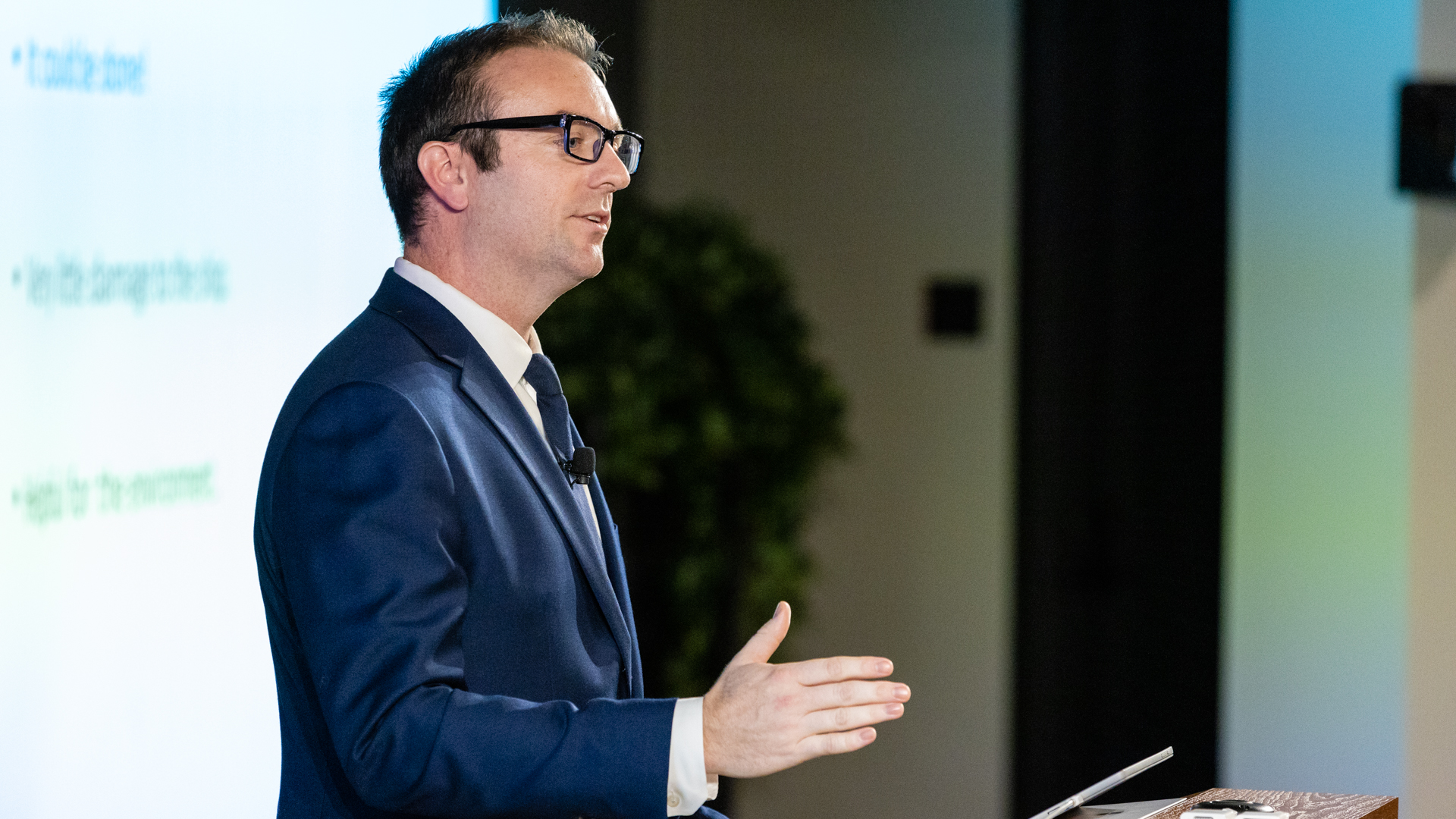
At an Acton Institute event on Oct. 3 in Grand Rapids, Mich., Amway President Doug DeVos delivered a talk on ‘Free Enterprise and the Entrepreneurial Spirit’ to an audience of 200 people. He was introduced by the Rev. Robert A. Sirico, president and co-founder of the Acton Institute.

Read more on Video: Amway’s Doug DeVos on ‘Free Enterprise and the Entrepreneurial Spirit’…

Forbes recently ran a profile of Christian billionaire and Hobby Lobby CEO David Green. According to Forbes, Green is “the largest evangelical benefactor in the world,” giving “at upwards of $500 million” over the course of his life, primarily to Christian ministries.

Yet, for Green, his strong Christian beliefs don’t just apply to how he spends his wealth; they’re integral to how it’s createdin the first place:

Hobby Lobby remains a Christian company in every sense. It runs ads on Christmas and Easter in the local paper of each town where there’s a store, often asserting the religious foundation of America. Stores are closed on Sundays, forgoing revenue to give employees time to worship. The company keeps four chaplains on the payroll and offers a free health clinic for staff at the headquarters–although not for everything; it’s suing the federal government to stop the mandate to cover emergency contraception through health insurance. Green has raised the minimum wage for full-time employees a dollar each year since 2009–bringing it up to $13 an hour–and doesn’t expect to slow down. From his perspective, it’s only natural: “God tells us to go forth into the world and teach the Gospel to every creature. He doesn’t say skim from your employees to do that.”

Economists have increasingly recognized the ways in which healthy stewardship and property rights are linked—how increased ownership leads individuals to weigh costs and benefits more thoughtfully and effectively. Green’s comments add a slight twist to this approach, calling Christians in particular to reconsider who the “owner” actually is and how we might weigh particular costs/benefits and subsequent action accordingly:
Read more on Hobby Lobby’s Billionaire CEO Says ‘God Owns It’…

President Obama’s speech last week in which he asserted to businesspeople, “You didn’t build that,” has been getting some pretty harsh and some pretty hilarious responses.
In this week’s Acton Commentary, “It Takes a Village to Raise a Business,” I caution against responses that play into a simple individualist/collectivist dichotomy that underlays the president’s message:

Read more on Acton Commentary: It Takes a Village to Raise a Business…

Legatus, an international organization of Catholic business professionals, is celebrating its 25th year of existence. The mission of Legatus is to help its members and spouses live out their Catholic faith and to spread that faith “through good works, good ideas, and high ethical standards.”

Read more on Legatus: Celebrating 25 Years of Supporting Catholic Business Professionals…

Jordan J. Ballor
posted by on Tuesday, April 17, 2012

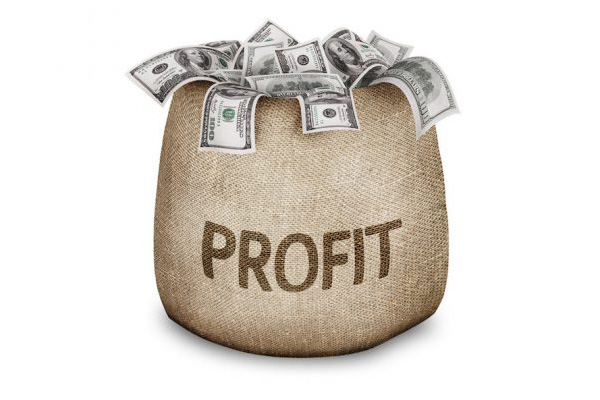
Work: The Meaning of Your Life“When conducting Business as Mission, the primary purpose has to be to expand the Kingdom of God,” said Joseph Vijayam, founder and managing director of Olive Technology, a Colorado Springs-based information technology services provider. “Profits and an increase of shareholder wealth are an important result of a solid business that is well executed and are essential for the survival of any business, but they need not become the very purpose for existence.”

Vijayam invites Christian business leaders to reflect on the place of profits in the context of Tax Day here in the US: “I am not challenging business owners to stop making profits, but instead to look at those profits in a completely new way.”

In a piece for Comment magazine last year, “Reforming Economics,” I argued, “For too long a view has held dominance that has portrayed profit as a purpose or end, rather than as a means or a consequence. That is to say, the pursuit of profit is acceptable when it is couched within the broader framework of and constrained by the norm of service of others.”
Read more on Profits, Service, and Tax Day…

Ray Nothstine
posted by on Tuesday, January 17, 2012

Calvin Coolidge quipped shortly before his death, “I feel I no longer fit in with these times.” The words came not long before FDR’s ascendency to the presidency and not long after the upsurge of government activism that started in the Herbert Hoover administration. Coolidge, even for his time, was seen as old fashioned, a throw back to simpler values, ethics, and principles. Coolidge cut the name tags out of his suits when he asked his wife to resale them, so not to profit from his name and position. He was lampooned for his hands off approach to the presidency. Ronald Reagan was even teased by the Washington Press Corps for hanging up a portrait of Coolidge in the White House. By many academics today, Coolidge is chiefly mischaracterized as a simpleton largely from quotes like “The chief business of the American people is business.” In that speech in 1925 delivered to newspaper editors, Coolidge also went on to say, “Of course the accumulation of wealth cannot be justified as the chief end of existence.”

Read more on Calvin Coolidge and the Commercial Spirit…

John Couretas
posted by on Tuesday, January 17, 2012

Franciscan University in Steubenville, Ohio, has launched a new Center for Leadership which university alumnus Rep. Jeff Fortenberry, R-Neb., lauds as a project that “roots young men and women in virtue, forms them as leaders, and grounds them in sound philosophical thought.”

Read more on ‘Ultimately, all leadership is local’…

Jordan J. Ballor
posted by on Monday, January 9, 2012

Made-in-ChinaThe latest episode of This American Life follows the story of Mike Daisey and his investigation into the origins of Apple products, especially the iPhone which is “Made in China.”

What might the iPhone say if it could speak for itself? Ira Glass provides some answers to such a question in the opening moments of this episode, “Mr. Daisey and the Apple Factory.” It’s illuminating that Daisey half-jokingly describes his devotion to Apple products in religious terms (this doesn’t prevent him from using the Lord’s name in cursory fashion, however).

Read more on I, iPhone…

Acton PowerBlog RSS

Google Plus

Twitter Feed

Facebook Fan Page

Support the Acton Institute

The Acton Institute is funded through the generous contributions of individuals such as yourself. Learn more about how you can advance the cause of freedom and virtue.