Posts tagged with: choice

dad-baby-bjorn1With the expansion of economic freedom and the resulting material prosperity, we’ve reached an unprecedented position of personal reflection and vocation-seeking. This is a welcome development, to be sure, but as I’ve written recently, it also has its risks. Unless we continue to seek God first and neighbor second, such reflection can quickly descend into self-absorbed and unproductive naval-gazing.

Thus far, I’ve limited my discussion to the ways in which privilege and prosperity can impact our views about work outside of the home, but we needn’t forget the side effects that modernity might foster in an area that often consumes the rest of our daily lives: the family.

Just as most of our ancestors had few choices about where they glorified God in business (toiling for the feudal landowner), they also had few choices when it came to raising families (who they married, how many children they had, etc.). Whether due to lack of contraception, more practical material/financial concerns, or any number of other factors, for most families, children were simply a given.

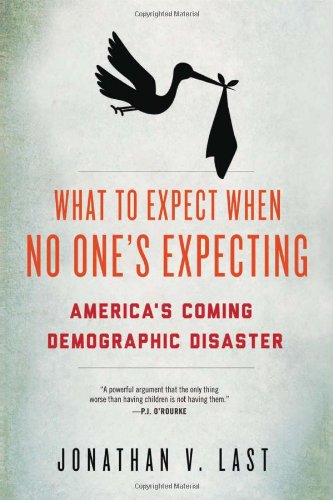
Today, much like in our approaches to job-seeking, child-bearing has come to involve a significant degree of choice, and the overriding choice of the day seems definitive. As Jonathan Last points out in his book, What to Expect When No One’s Expecting: America’s Coming Demographic Disaster, birthrates in the Western world are in a free fall, with more and more adults opting for fewer and fewer kids, if any at all. Last offers plenty of nuances as to why this is happening, pointing to a “complex constellation of factors, operating independently, with both foreseeable and unintended consequences.” But on the whole, he concludes that “there is something about modernity itself that tends toward fewer children.” Read more on Family and Vocation in a Culture of Choice…

The legal institutions of capitalism exist not to advance any particular purpose, says Robert T. Miller, but to facilitate the advancement by individuals of their various, often conflicting purposes:

As this article in the Wall Street Journal explains, Missy Franklin, a seventeen year-old from Colorado who won the gold medal in the 100-meter backstroke last week, has steadfastly refused lucrative endorsement contracts. Why? Because she wants to preserve her amateur status so that she can swim competitively in college. In other words, she prefers competing to money. Happily, the economic freedom of capitalism includes not only the freedom to make money but also the freedom not to make money, if one so chooses. That’s an important lesson. If most people in Ms. Franklin’s position choose the money, that just shows that they have desires and views about the human good different from hers.

Read more on What an Olympic Swimmer’s Choice Tells Us About Capitalism…

Our latest health care video short is up: “Why Consumer-Driven Healthcare Beats Socialized Healthcare.” And John Hinderaker of Powerline has an incisive analysis of the president’s speech last night to a joint session of Congress. The passage that stood out to me was this one about competition:

Read more on President Obama Praises/Opposes Health Insurance Competition…

There are a number of problems with Paul Krugman’s NYT piece earlier this week, “A Socialist Plot.” Krugman compares the American educational system to its healthcare system, arguing that because Americans aren’t inclined to disparage the former as a socialist threat, we likewise shouldn’t consider universal healthcare as a “socialist plot.”

Read more on Socialism is the American Way in Krugman’s America…

Citing a recent OECD report, the EUObserver says that European schools are falling behind their counterparts in the US and Asia.

The main reason: a governmental obsession with equality that prevents investment and innovation in education, especially at the university level.

Read more on There’s No Such Thing As “Free” Education…

Acton PowerBlog RSS

Google Plus

Twitter Feed

Facebook Fan Page

Support the Acton Institute

The Acton Institute is funded through the generous contributions of individuals such as yourself. Learn more about how you can advance the cause of freedom and virtue.