Posts tagged with: christian anthropology

The video below of a second grade teacher in Providence, RI reading his letter of resignation has recently gone semi-viral with over 200,000 views on YouTube.

What I would like to offer here is an Orthodox Christian critique of the anthropological assumptions that separate this teacher from the “edu-crats,” as he terms them, who in his district so strongly championed standardized testing-oriented education at the exclusion of all other methods and aims. Read more on Life-Long Learners or Good Test-Takers? An Orthodox Christian Critique…

Michelle Hornak
posted by on Friday, May 25, 2012

Are you attending the 2012 Acton University conference? If so, I can only hope that you are as excited as I am about all of the wonderful things we have planned for the event. To get your mind in gear for the conference, why not participate in a Q&A session with a member of Acton’s staff?

Read more on Q&A with Stephen Grabill…

Michelle Hornak
posted by on Friday, April 20, 2012

Have you always wanted to interact with one of Acton’s staff members? Do you have questions or ideas related to Acton’s foundational principles that haven’t been answered? Do you want the chance to participate in an intellectual discussion organized by Acton?

If you answered yes to any of these questions, then this is your chance!
Read more on Q&A with Acton…

John Couretas
posted by on Tuesday, June 21, 2011

On RealClearMarkets, Mark Hunter dismantles “The End of Capitalism and the Wellsprings of Radical Hope,” by Eugene McCarraher in the Nation magazine. McCarraher’s article appears to be destined for the ash heap of Marxist utopian literature. But Hunter’s critique is valuable for his reminder that capitalism, free enterprise, the market economy — all the systems of mutually beneficial free exchange by whatever name — have actually been ingrained in human culture as far back as the ancient spice trade and probably earlier.

Read more on Capitalist Anthropology…

A brilliant assessment of where we are. (HT: American Orthodox Institute Observer).

Subject to the governor of the universe: The American experience and global religious liberty

March 1, 2011 – Most Rev. Charles J. Chaput, O.F.M. Cap., Archbishop of Denver, addressed the Berkley Center for Religion, Peace and World Affairs at Georgetown University.


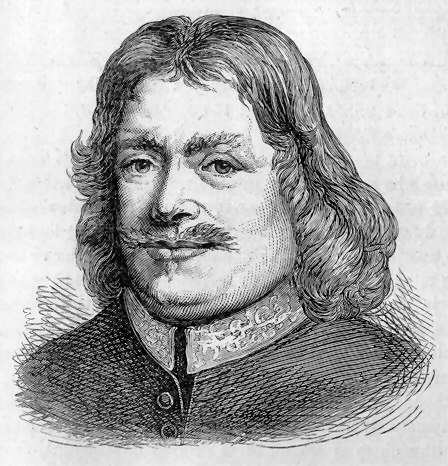
A friend once said – I think shrewdly — that if people want to understand the United States, they need to read two documents.  Neither one is the Declaration of Independence.  Neither one is the Constitution.  In fact, neither one has anything obviously to do with politics.  The first document is John Bunyan’s The Pilgrim’s Progress.  The second is Nathaniel Hawthorne’s The Celestial Railroad

John Bunyan

Bunyan’s book is one of history’s great religious allegories.  It’s also deeply Christian.  It embodies the Puritan, Protestant hunger for God that drove America’s first colonists and shaped the roots of our country. 

Hawthorne’s short story, of course, is a very different piece.  It’s one of the great satires of American literature.  A descendant of Puritans himself, Hawthorne takes Bunyan’s allegory – man’s difficult journey toward heaven – and retells it through the lens of American hypocrisy: our appetite for comfort, easy answers, quick fixes, material success and phony religious piety.

Bunyan and Hawthorne lived on different continents 200 years apart.  But the two men did share one thing.  Both men – the believer and the skeptic — lived in a world profoundly shaped by Christian thought, faith and language; the same moral space that incubated the United States.  And that has implications for our discussion today.

In his World Day of Peace message earlier this year, Pope Benedict XVI voiced his concern over the worldwide prevalence of “persecution, discrimination, terrible acts of violence and religious intolerance.”i   In reality, we now face a global crisis in religious liberty. As a Catholic bishop, I have a natural concern that Christian minorities in Africa and Asia bear the brunt of today’s religious discrimination and violence.  Benedict noted this same fact in his own remarks.

Read more on Archbishop Chaput: The American experience and global religious liberty…

John Couretas
posted by on Friday, November 19, 2010

The University of Maryland — Baltimore County Orthodox Christian Fellowship and the school’s Secular Student Alliance sponsored a Nov. 16 debate on the subject of “The Source of Human Morality” with about 450 people in attendance. Fr. Hans Jacobse, an Orthodox Christian priest and president of the American Orthodox Institute (he blogs here), squared off with Matt Dillahunty, the president of the Atheist Community of Austin, and host of the public access television and Internet show The Atheist Experience. The debate’s organizer noted that Dillahunty “was raised as a fundamentalist Baptist, and was on track to become a minister until he started asking questions about the reasons for his belief. He rejected religion, and now serves as a public voice for rationality and secular morality.”

Read more on Debate: The Source of Human Morality…

Jordan J. Ballor
posted by on Monday, December 29, 2008

Two of Eric Shansberg’s recent PowerBlog posts got me thinking of some other things I had run across in the last couple weeks during the run-up to Christmas Day.

The first item, “Santa and the ultimate Fairy Tale,” quotes Tony Woodlief to the effect that “fairy tales and Santa Claus do prepare us to embrace the ultimate Fairy Tale.” Schansberg’s (and Woodlief’s) take on this question is pretty compelling and worth considering, even though I’m not quite convinced of the value of the Santa Claus fable.

Read more on Christmas and the Cross…

Acton PowerBlog RSS

Google Plus

Twitter Feed

Facebook Fan Page

Support the Acton Institute

The Acton Institute is funded through the generous contributions of individuals such as yourself. Learn more about how you can advance the cause of freedom and virtue.