Posts tagged with: culture

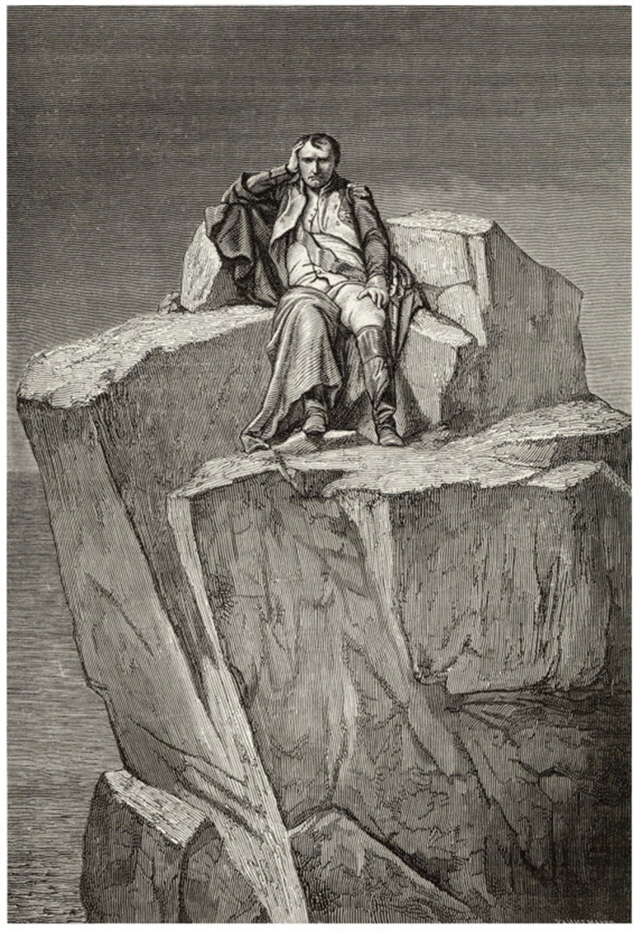
New York Post illustration

New York Post illustration

In the New York Post, Acton Research Director Samuel Gregg looks at “the spread throughout America of economic expectations and arrangements directly at odds with our republic’s founding” and asks what the slow walk to “Europeanization” means for the long term. Gregg:

Unfortunately there’s a great deal of evidence suggesting America is slouching down the path to Western Europe. In practical terms, that means social-democratic economic policies: the same policies that have turned many Western European nations into a byword for persistently high unemployment, rigid labor markets, low-to-zero economic growth, out-of-control debt and welfare states, absurdly high tax levels, growing numbers of well-paid government workers, a near-obsession with economic equality at any cost and, above all, a stubborn refusal to accept that things simply can’t go on like this.

It’s very hard to deny similar trends are becoming part of America’s economic landscape. States like California are already there — just ask the thousands of Californians and businesses who have fled the land of Nancy Pelosi.

Europeanization is also reflected in the refusal of so many Americans to take our nation’s debt crisis seriously. Likewise, virtually every index of economic freedom and competitiveness shows that, like most Western European nations, America’s position vis-à-vis other countries is in decline.

Is there a way out, even as the “fiscal cliff” negotiations vividly illustrate the inability of Washington’s political elites to take spending and tax problems seriously? Gregg holds out hope: Read more on Samuel Gregg: United States succumbing to ‘Eurosclerosis?’…

Ave Maria Communications will be presenting a conference on Saturday, January 13, 2013 entitled “Catholic Witness in a Nation Divided.” The conference, hosted by Al Kresta, CEO of Ave Maria Communications and host of “Kresta in the Afternoon”, will be held at Eastern Michigan University in Ypsilanti, MI.

Read more on Conference: ‘Catholic Witness in a Nation Divided’…

Joseph Sunde
posted by on Tuesday, December 18, 2012

Work: The Meaning of Your LifeI recently pondered what might come of the global economy if we were to to put God at the forefront of our motives and decision-making. The question came as a reaction to Tim Keller, whose recent book calls on Christians to challenge their views about work. By re-orienting our work to be a “servant” instead of a “lord,” Keller argues, we will actually find more fulfillment in the work that we do.

Read more on Work as Service and Servant…

IkariaThe New York Times has a fascinating profile on Ikaria, a Greek island located about 30 miles off the western coast of Turkey. With roughly 8,000 inhabitants, the island is known for its slow and relaxed lifestyle, thriving communities, and healthy citizenry.

As Ikarian physician Dr. Ilias Leriadis says in the article: “Have you noticed that no one wears a watch here? …We simply don’t care about the clock here.”

Brendan Case offers a good summary of the article at Call and Response (HT), pointing to some significant themes:

“For people to adopt a healthful lifestyle,” reports Dan Buettner in a recent issue of the “New York Times Magazine,” “they need to live in an ecosystem, so to speak, that makes it possible.” Buettner’s exploration of the Aegean island of Ikaria, where people are 2.5 times as likely as Americans to live past the age of 90, showcases the inseparability of individual and communal flourishing.

On Ikaria, a constellation of factors yields long lives: a great diet, and few chances to deviate from it; lots of physical activity (little of which could be classed as “exercise”); even regular napping.

But the likely keys to Ikarian longevity are harder to map. Buettner suggests that social structures — the marriages, families and friendships that knit Ikarians into a densely woven fabric of village life — are what sustain these communities in healthy practices.

At a superficial level, it can be easy for us to overly romanticize such places, especially for those of us who are routinely exhausted by fast-paced Western culture (though I still prefer a widespread concern for clocks). Buettner, for example, often seems over-sold on the notion of Ikaria as Utopia–likely, no doubt, because of his research interests in longevity (understandable). Read more on Ikaria and the Inseparability of Individual and Communal Flourishing…

Rome contributor to ZENIT, Stefanie DeAngelo, recently interviewed the Acton Institute’s 2012 Novak Award winner, Professor Giovanni Patriarca. During the interview Prof. Patriarca speaks candidly about some of his academic influences, including Michael Novak and Benedict XVI. He also offers his reasons for hope in overcoming the prolonged global economic crisis.

Some Contemporary Reflections: An Itinerary from Novak to Benedict XVI

by Stefanie DeAngelo

2012 Novak Award Winner Prof. Giovanni Patriarca

ZENIT: You have recently received the Novak Award. What are some of the major contributions of the American philosopher and theologian to our thinking about the current state of the world?

Patriarca: The work of Dr. Michael Novak is so rich that it is not easy to summarize it in a few thoughts. In addition to his famous works on economics, a number of his articles published in the last few years, especially in the journal First Things, explores some of modernity’s contradictions regarding individual and social responsibility and the demise of traditional values that were held by previous generations. As Alexis de Tocqueville also warned, the loss of a metaphysical perspective, leads to materialism and the absurdity of nihilism. Read more on Novak Award Winner reflects on influences of Benedict, Michael Novak…

Jordan J. Ballor
posted by on Wednesday, November 21, 2012

IMGP2668The estimable Mollie Hemingway has a post up at Ricochet that examines the curious spillover of Black Friday into Thanksgiving Thursday. She writes, “Do Target executives have the right to make employees leave their families to open stores on days when they’ll be home with their families? Of course they do. Should they? Of course not!” Her concern is “that some people are so addicted to shopping that they can’t even take three days off a year.” I think she’s right to conclude that “if you are in any way inclined to shop on Thanksgiving instead of waiting a day for your fix, consider seeking help.”

About this time last year I wrote a piece on this phenomenon, in which I argued that consumers ought to realize the implications of their spending choices: “A variety of polls have shown that the public generally thinks that stores should be closed on Thanksgiving, but they may not always recognize what their shopping habits require of retailers. Shoppers need to realize that they cannot have it both ways. Our decisions have real consequences for the lives of those who work in retail and a host of other industries.”
Read more on Black Friday and Thanksgiving Thursday…

Jordan J. Ballor
posted by on Tuesday, November 20, 2012

I remember when I was a kid and would ask why we celebrate Father’s Day and Mother’s Day. What about Children’s Day? To which I would receive the inevitable response, “Every day is Children’s Day.” I use the same response now when some smart-alecky kid pipes up with this kind of question.

That may be true, in a sense, but today (Nov. 20) is also “Universal Children’s Day.” This event is a vehicle in part for UN advocacy on behalf of the ratification and implementation of the Convention on the Rights of the Child. In the last issue of the Journal of Markets & Morality, Johan van der Vyver examined the convention, with an eye particularly toward the complications of ratification and implementation in the United States in comparison with that of South Africa, in his piece, “Children’s Rights, Family Values, and Federal Constraints.”

Van der Vyver argues, “There is strong opposition against ratification of the convention from within the ranks of evangelical Christians, based essentially on a perception that the convention undermines family values. However, this article argues that the main obstacle confronting the United States in this regard derives from the constitutional dispensation of federalism.” The basic point, says van der Vyver, is that the autonomy of the family unit is not essentially undermined by the convention, but that the particular polity of the U.S. government and the nature of the process of treaty ratification is what stands in the way of American participation.

As to a classical expression of the place of children within the family and the significance of the family as a social institution, it’s worth noting the recent translation of the Dutch Reformed theologian Herman Bavinck’s treatise, The Christian Family. This is a wonderful book, full of insights into the nature of social relationships, the divine institution of the family, and the importance of the family to a free and virtuous society.
Read more on Every Day is Children’s Day…

Over at Think Christian I take a look at the looming fiscal “cliff,” which we are being told from every conceivable quarter represents a significant danger to America’s fragile economic recovery:

Read more on Is the Fiscal ‘Cliff’ Just a Bump in the Road?…

John Couretas
posted by on Monday, November 12, 2012

Writing on The Corner over at National Review Online, Acton Research Director Samuel Gregg points to the election and, refreshingly, tells us that, “I’m not one of those who, in recent days, have seemed inclined to indulge their inner curmudgeon, apparently convinced that it’s more or less game-over for America and we’re doomed to Euro-serfdom.”

Read more on Samuel Gregg: Are We All Europeans Now?…

For next spring’s issue of the Journal of Markets & Morality, we’ve planned a special issue devoted to the theme “Integral Human Development,” guest edited by Peter Heslam and Manfred Spieker. The deadline for submissions is December 1, a month away as of today. Details about submission procedures can be found on the JMM website. Check out the full CFP at the site as well, and consider the following from Caritas in Veritate:

Read more on “Integral Human Development” Deadline Approaches…

Acton PowerBlog RSS

Google Plus

Twitter Feed

Facebook Fan Page

Support the Acton Institute

The Acton Institute is funded through the generous contributions of individuals such as yourself. Learn more about how you can advance the cause of freedom and virtue.