The PowerBlog is managed by the Acton Institute, a non-profit think tank dedicated to promoting a free and virtuous society characterized by individual liberty and sustained by religious principles. Its authors are a diverse group of scholars, writers, clergy, and businesspeople who discuss a wide variety of topics connected to the relationship between religion and economics. Click here to learn more about the Acton Institute...

Resurrection

Jordan J. Ballor


Posted by Jordan J. Ballor
on Sunday, March 23, 2008

If it be all for nought, for nothingness
At last, why does God make the world so fair?
Why spill this golden splendor out across
The western hills, and light the silver lamp
Of eve? Why give me eyes to see, the soul
To love so strong and deep? Then, with a pang
This brightness stabs me through, and wakes within
Rebellious voice to cry against all death?
Why set this hunger for eternity
To gnaw my heartstrings through, if death ends all?
If death ends all, then evil must be good,
Wrong must be right, and beauty ugliness.
God is a Judas who betrays his Son
And, with a kiss, damns all the world to hell–
If Christ rose not again.

–Unknown Soldier, killed in World War I
(From The Life of Christ in Poetry, comp. Hazel Davis Clark)

0

comments
share yours

And His Glory Knows No End

Ray Nothstine


Posted by Ray Nothstine
on Friday, March 21, 2008

“Why do you look for the living among the dead? He is not here; he has risen!” - Luke 24:5b,6a

The Lord Jesus Christ makes all things new. He is the alpha and the omega, the beginning and the end, and his glory knows no end. Isaiah says in his 65th Chapter, “Behold, I will create new heavens and a new earth. The former things will not be remembered, nor will they come to mind.”

Christians understand everything is summed up in Christ. For believers, all of our sins, trials, afflictions, pain, and heartache is made perfect and right through the victory of Christ over death. “The despair of all past history is reversed by the resurrection, and the hope of all future history is enabled by it,” says Thomas C. Oden.

In his horrible affliction and despair, Job cried out long before the incarnate presence of Christ on this earth, “I know my redeemer liveth.” Job had lost everything on earth. He lost his children, his comfort, and his health. His utter despair made him see the need for a mediator and vindicator, one who could reverse the deep despair and suffering that covered his circumstances and his entire body. Job points to the future triumph of the risen Lord.

The testimony and the witness of the Saints finds its meaning in the risen Lord. I know for me the testimony of their life has been decisive in my own belief. The same followers who were known to be in despair and hiding because of the death of Christ, then find super-natural authority and power in the name and reign of Christ. This makes sense, because through the resurrection, Christ raises humanity. The resurrection points to what we are to become. In the hymn “Christ the Lord is Risen Today“, Charles Wesley says it well:

Soar we now where Christ has led, Alleluia!
Following our exalted Head, Alleluia!
Made like him, like him we rise, Alleluia!
Ours the cross, the grave, the skies, Alleluia!

1

comments
share yours

Paging Dr. Kevorkian

Marc Vander Maas


Posted by Marc Vander Maas
on Sunday, June 3, 2007

The pro-assisted suicide movement always couches its argument in terms of “compassion” and “choice,” downplays the word “suicide,” and breezily dismiss any counter arguments about the (very real) slippery slope that will accompany the legalization of the practice. For example, here’s a section from the FAQ of the Compassion and Choices website:

The slippery slope argument hypothesizes that legal aid in dying will lead to forced euthanasia. Slippery slopes are precarious situations that one step logically necessitates subsequent steps. This does not define aid in dying, which is always dependent upon one individual. That said, we recognize that any law is subject to abuse, which is why the Oregon law and other proposed legislation have built-in safeguards.

The breezy dismissals are a little harder to swallow when reality looks like this:

Prosecutors are calling for tougher regulations on Switzerland’s assisted suicide clinics after uncovering evidence that some of the foreign clients they help to die are simply depressed rather than suffering incurable pain.

The clinics, which attract hundreds of foreigners, including Britons, every year, have been accused of failing to carry out proper investigations into whether patients meet the requirements of Switzerland’s right-to-die laws.

In some cases, foreign clients are being given drugs to commit suicide within hours of their arrival, which critics say leaves doctors and psychologists unable to conduct a detailed assessment or to provide appropriate counselling.

I don’t know; is suicide cheaper and more effective than, say, Paxil or Cymbalta?

Let’s face facts: when you deny that human life has intrinsic value from start to finish, and substitute the idea of “quality of life” as the sole determining factor as to whether someone can live or take their own life, you’re marching full tilt down a path that leads to people killing themselves to avoid the pain of a completely treatable condition - and worse.

2

comments
share yours

Death With Dignity, Redux

Marc Vander Maas


Posted by Marc Vander Maas
on Friday, June 1, 2007

Why is this man smiling?

Assisted suicide crusader Dr. Jack Kevorkian is out of prison as of this morning. For a good recap on who Kevorkian is, what he proposes for society, and just how creepy the man really is, I encourage you to check out Wesley Smith’s article at National Review Online. A sample:

…most of Kevorkian’s “patients” were not terminally ill, but disabled and depressed. Several weren’t even sick, according to their autopsies. Moreover, Kevorkian never attempted to treat any of the 130 or so persons who traveled to Michigan to be hooked up to his suicide machines to die either by drug overdose or carbon monoxide poisoning.

And as for compassion — forget about it. Kevorkian was never in the killing business to alleviate unbearable suffering. Indeed, over the course of decades he repeatedly explained his ultimate goals in professional journals and in his 1991 book, Prescription Medicide. As Jack Kevorkian articulately expresses it himself, compassion had absolutely nothing to do with it.

Kevorkian’s adulthood obsession has been to perform live human experimentation on people he was killing.

No doubt this event will bring the issue of physician assisted suicide to the forefront of our national dialogue for a time. I added my two cents to this debate almost two years ago and I don’t have much to add to what I’ve already said:

We hear a lot in our society about the importance of “death with dignity.” Often this phrase is used in the promotion of physician-assisted suicide by people who argue that those with terminal illnesses should have the right to “hasten their death” in the face of suffering. In so arguing, however, advocates of assisted suicide reinforce the idea that those who suffer have no intrinsic value as human beings that would cause society to favor sustaining their life; and as a result they strip those who suffer of any dignity at all. They seem to say that the terminally sick and aged have no inherent dignity - but it can be earned by choosing suicide.

The assisted suicide movement - like so many well-meaning “compassionate” efforts - fails because it does not recognize the inherent worth of every man, woman, and child. Dignity and value are not commodities that rise and fall on some moral market in response to the fluctuations of human frailty. They are intrinsic to what we are as humans. They are a part of our very nature, as real a part of us as the blood that flows in our veins.

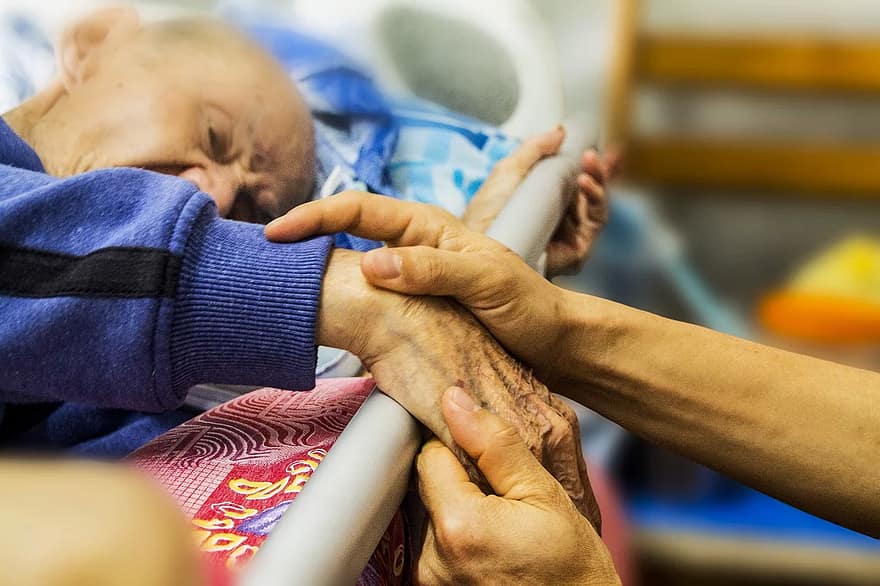
These thoughts come to mind as I read of the passing of Dame Cecily Saunders, the founder of the modern Hospice movement. Her life’s work has allowed countless individuals to face the end of their life with some amount of physical comfort, often in their own home surrounded by their loved ones. There is a profound truth at the core of the movement that she founded: that dignity in death comes not through the act of dying, but through the act of living one’s life to the fullest until death.

You can read the full post here.

This post is dedicated to the memory of my father, my grandmother, and the other friends and loved ones now departed who demonstrated to me - in the midst of their suffering - the true nature of dignity at life’s end.

More: Jordan Ballor sent along links to three commentaries written by Rev. Robert Sirico in 1996 and 1998 on the topic of Dr. Kevorkian’s activities; they’re all well worth a read as well: