Posts tagged with: economic development

Joe Carter
posted by on Friday, May 17, 2013

Our planet contains about forty tons of bugs for every human, says Helena Goodrich, offering and “ongoing ‘all you can eat” insect buffet.” While snacking on cicadas probably won’t catch on in the U.S. anytime soon, could eating more bugs help solve world hunger?

eating-bugsAccording to a recent U.N. report, insects could indeed be part of the solution to some of the world’s food security and health problems. More than 1,900 species have reportedly been used as food and insects form part of the traditional diets of at least 2 billion people. So why isn’t entomophagy (consumption of insects as food) more popular among Westerners?

The main reason, of course, is that cows and chickens taste better than crickets and cockroaches. But that shouldn’t stop us from promoting insects as an edible alternative:
Read more on Should We Be Eating More Bugs?…

Bono, foreign aid, development, capitalismBono, lead singer of U2 and co-founder of charity-group ONE, recently offered some positive words about the role of markets in reducing global poverty and spurring economic development (HT):

The Irish singer and co-founder of ONE, a campaigning group that fights poverty and disease in Africa, said it had been “a humbling thing for me” to realize the importance of capitalism and entrepreneurialism in philanthropy, particularly as someone who “got into this as a righteous anger activist with all the cliches.”

“Job creators and innovators are just the key, and aid is just a bridge,” he told an audience of 200 leading technology entrepreneurs and investors at the F.ounders tech conference in Dublin. “We see it as startup money, investment in new countries. A humbling thing was to learn the role of commerce.”

The remarks have led to relative hype in “pro-market” circles, but I’d remind folks that these are brief statements made to a small group of innovators and entrepreneurs. ONE has plenty of wrinkles in its past, and Bono’s primary legacy in this arena consists of promoting the types of ineffective, top-down social engineering that groups like PovertyCure seek to expose. When Bono continues to claim that foreign aid, as he understands it, is still a “bridge”—even if just a bridge—it’s reasonable to assume that his orientation toward “bridge-building” has been left largely unchanged by his newfound appreciation for markets.

But although I’m not overly confident that Bono’s sudden self-awareness is enough to radically shift his aid efforts away from fostering dependency, this small admission helps illuminate one of our key obstacles to doing good in the world: overzealousness paired with overconfidence.
Read more on Bono, Babel, and the Myth of Economist as Savior…

Jordan J. Ballor
posted by on Friday, September 28, 2012

Article: “Big Questions and Poor Economics”
James Tooley. “Big Questions and Poor Economics: Banerjee and Duflo on Schooling in Developing Countries.” Econ Journal Watch 9, no. 3 (September 2012): 170-185.

In Poor Economics, MIT professors Abhijit Banerjee and Esther Duflo set out their solutions for global poverty. Their key premise is that development experts have been sidetracked by the “big questions” of development, such as the role of government and the role of aid. This approach, they say, should be eschewed in favour of adopting carefully tested “small steps” to improvement. The book ranges widely, covering topics such as food, health, family planning and microfinance. Here I treat only their arguments on education in developing countries. Poor Economics points to evidence that shows that governments have not been successful in bringing quality education to the poor. Nevertheless, the authors bring their own big-think judgments to suggest why, despite the evidence, governmentally owned and operated schooling should remain central. Part of their own evidence concerns how private schooling, including for the poor, is burgeoning and outperforming government schooling. But private education cannot be the solution, they argue, because private schooling is not as efficient as it could be. The problems identified by Banerjee and Duflo are, however, clearly caused by bad public policy. I suggest that development economists are quite justified in forming and exercising judgment on the big questions, and that when they do exercise such judgment they should be aware that they are doing so.

Read more on ResearchLinks – 09.28.12…

Joe Carter
posted by on Wednesday, August 22, 2012

What was the greatest invention of the industrial revolution? Hans Rosling makes the case for the washing machine. Rosling explains how the productivity gains of the washing machine (and similar labor-saving devices) lead to increases in education and economic growth in the developing world.

Read more on The Magic of the Washing Machine…

Patriarch Kirill gives an emphatic “no” in a TV interview. He points to the catastrophe of the Bolshevik Revolution and what followed. Here’s a snip from Interfax:

“And then everything was broken. Eventually with great efforts, including terror, high economic indicators were reached,” the Patriarch said explaining further collapse of the USSR with the fact that the “backbone of national life was destroyed” in years of revolution.

Read more on Is the Orthodox Church to Blame for Russia’s Economic Ills?…

Catherine Larson
posted by on Thursday, April 23, 2009

It is our pleasure to welcome guest ramblings on the PowerBlog, and we are happy to feature this contribution from Catherine Claire Larson, author of As We Forgive, the subject of this week’s PBR question.

Read more on PBR: Enterprise and Interdependence…

Jonathan Spalink
posted by on Wednesday, November 29, 2006

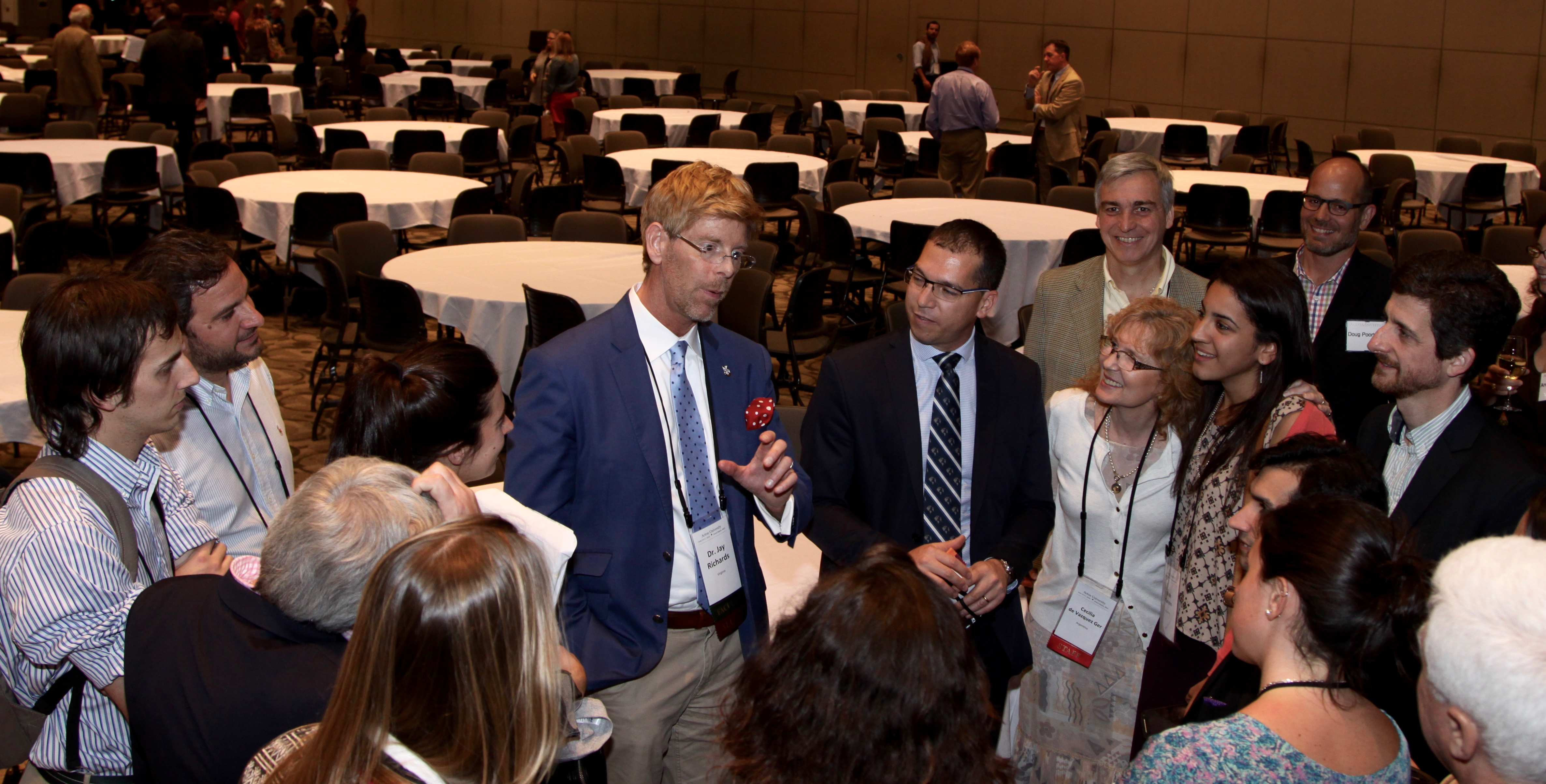
The Supreme Court is hearing a case today brought by 12 states and a coalition of environmental groups that sued the Bush administration in 2003 for refusing to issue regulations limiting carbon emissions. “On a global scale, forced cutbacks in CO-2 emissions would create an unconscionable setback for developing countries where economic development is just beginning to pull people out of poverty,” writes Jay Richards.

Read more on Carbon Dioxide’s Day in Court…

This article, by California Western School of Law Professor James Cooper concerns me quite a bit. A legal specialist in Rule of Law, Cooper has been trying to establish legal reforms in Mexico that would make its judicial system more transparent. He isn’t getting anywhere:

Read more on Rule of Law and Economic Development in Mexico…

The Super MoneyMaker Pressure Pump

No, we’re not talking about Elmore James’ Blues hit covered by the likes of George Thorogood, Fleetwood Mac and The Black Crowes nor its racy subject matter.

Read more on Seek Dignity? Then, “You Gotta Shake Your MoneyMaker”…

Ecumenical News International (ENI) relates the launch last month of a new initiative in Africa, designed to “to mobilise a strong African voice in development.” The effort is called African Monitor and is led by the Anglican Archbishop of Cape Town, South Africa, Njongonkulu Ndungane.

Read more on Monitoring African Aid and Development…

Acton PowerBlog RSS

Google Plus

Twitter Feed

Facebook Fan Page

Support the Acton Institute

The Acton Institute is funded through the generous contributions of individuals such as yourself. Learn more about how you can advance the cause of freedom and virtue.