Surf Acton.org:
The PowerBlog is managed by the Acton Institute, a non-profit think tank dedicated to promoting a free and virtuous society characterized by individual liberty and sustained by religious principles. Its authors are a diverse group of scholars, writers, clergy, and businesspeople who discuss a wide variety of topics connected to the relationship between religion and economics. Click here to learn more about the Acton Institute...

Posted by Jonathan Spalink
on Tuesday, February 26, 2008
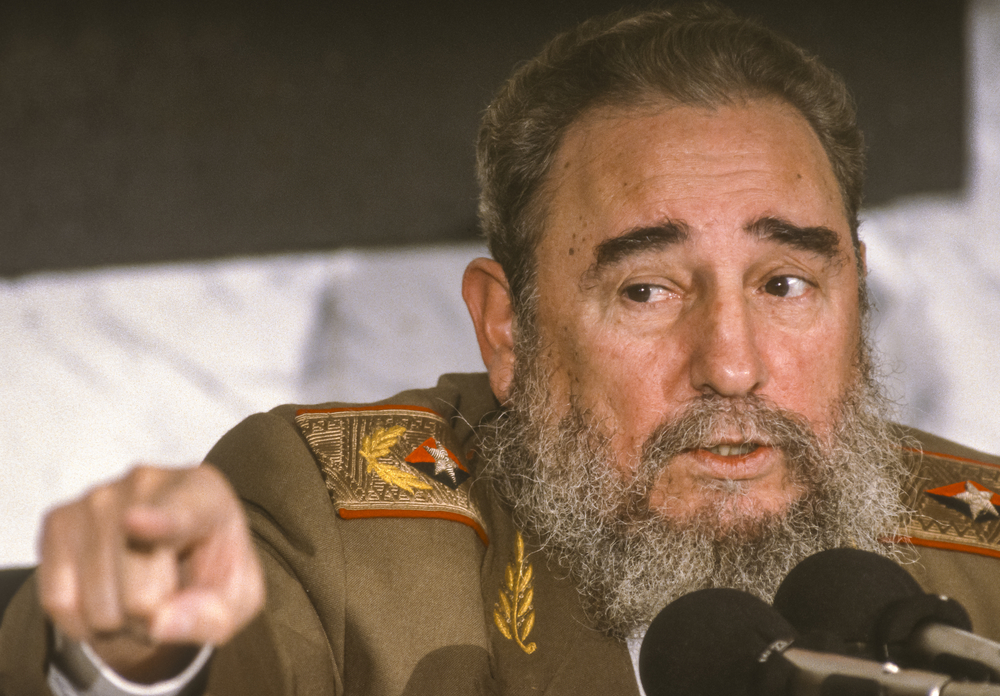
In today’s Detroit News, Rev. Robert Sirico, president of the Acton Institute, argues for the end of the trade restrictions against Cuba. Fidel Castro, recently retired from the position of el lider maximo, held the small island nation in the tight grip of his totalitarian regime, effectively stagnating all economic development for the past 50 years. The United States embargo against Cuba gave Castro a scapegoat to blame for the economic woes that oppressed the Cuban population and helped him maintain control. Now, Fidel Castro has left office and the United States has a new opportunity to reassess its foreign policy with Cuba.
So, how should we move forward? Sirico writes:
Now the United States needs to rethink its policies. A vibrant trading relationship will prevent the new regime from continuing to scapegoat its Northern neighbor. It will inject much-need cultural and political influence. It will permit growing travel, emigration and immigration. In time, normalcy will pervade.
I recently talked with a Cuban acquaintance of mine about Cuba. He expressed the growing dissatisfaction that Cubans feel for the Castro regime (I spoke with him the week before Castro retired). The nation is impoverished financially, but also emotionally. People have forgotten how to be entrepreneurial; how to act on their ideas to make change. The difficulty of travel between such geographically close locations (the United States particularly), especially by Cuban citizens, the lack of economic contact with the United States, the religious opression experienced by Cubans until recently, and the tight control of ideas allows this feeling of woe to stew in its juices. The way to change is to open up: to make travel easier, to send missionaries, to allow Cubans to attend U.S. universities, to import Cuban cigars, and to encourage tourism to Cuba. Now is the time to free the Cubans.

Posted by Marc Vander Maas
on Tuesday, February 19, 2008
Rev. Robert A. Sirico (unfortunately misidentified by host David Asman as “Father John Sirico”) made an appearance on America’s Nightly Scoreboard on Fox Business Channel to discuss the announcement that 81 year old Fidel Castro is stepping down as dictator of Cuba, officially handing power to his sprightly, 76 year old brother Raoul. If you couldn’t catch it live, you can see it here:

Posted by John Couretas
on Monday, December 31, 2007
In the Wall Street Journal’s Americas column, Rev. Robert A. Sirico examines the shift in thinking about liberation theology among Catholic Church leaders in Latin America. Excerpt:
Catholic Church bishops, priests and other Church leaders in Latin America were once a reliable ally of the left, owing to the influence of “liberation theology,” which tries to link the Gospel to the socialist cause. Today the Church is coming to recognize the link between socialism and the loss of freedom, and a shift in thinking is taking place.
In a region that is more than 90% Catholic, this change might have enormous implications. A Church that emphasizes liberty could play a role in Latin America similar to that which it played in Eastern Europe in the 1980s, as a counterweight in defense of freedom during a time of rising despotism.
For proof of the change I refer to, consider a recent statement from the Catholic Bishops of Venezuela: It blasted the political agenda of President Hugo Chávez for its assault on liberty under the guise of helping the poor. It is morally unacceptable, the statement said, and will drive the country backward in terms of respect for human rights.
The Bishops’ statement from Caracas was not the first challenge the Church issued to Mr. Chávez. The late Cardinal Rosalio Castillo once laid out the Church’s view of Bolivarian socialism. The government, he explained, though elected democratically was morphing into dictatorship. He worried about the results of this process. “All powers are in the hands of one person who exercises them in an arbitrary and despotic way, not for the purposes of bringing about the greater common good of the nation, but rather for a twisted and archaic political project: that of implanting in Venezuela a disastrous regime like the one Fidel Castro has imposed on Cuba . . .”
Continue reading Rev. Sirico’s article “Liberty Theology” (registration required for the Journal’s online version).

Posted by Ray Nothstine
on Friday, July 13, 2007
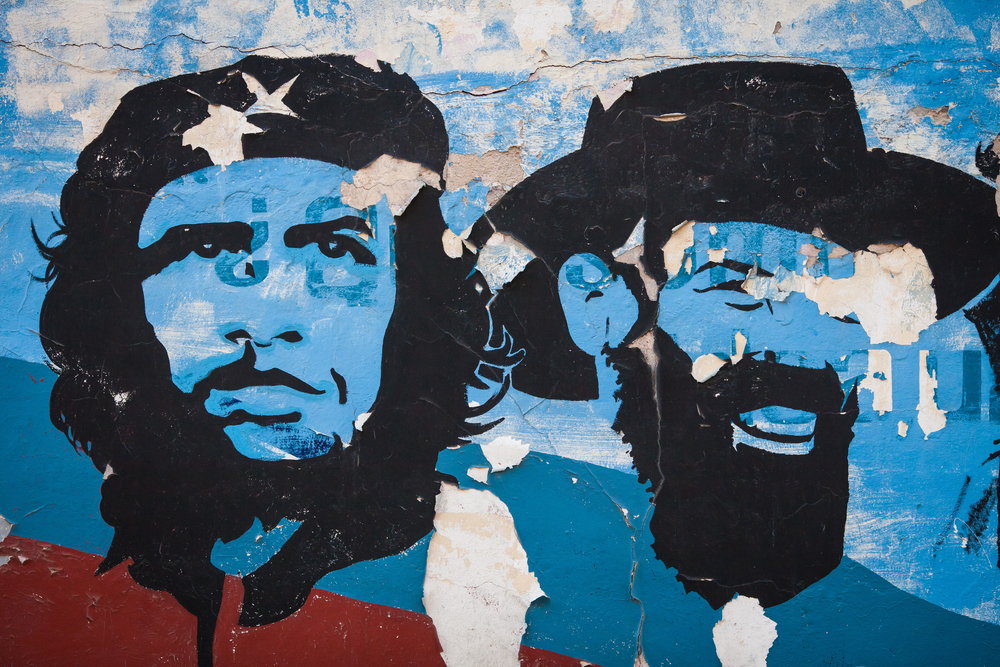
Cuban–American author Humberto Fontova has a new book out titled, Exposing The Real Che Guevara and the Useful Idiots Who Idolize Him. Che worship is something I have been fascinated with for quite some time, especially among the young Americans who are hyper consumers. Investor’s Business Daily ran an interview of Fontova concerning his new book on July 10 and here are some essential quotes by Fontova from the interview.
“My dad doesn’t like to take orders. There’s this myth that anyone leaving Fidel Castro’s revolution had to be a millionaire, a gangster or a crook. All he wanted was to not be a slave.”
“Cuba in 1961 had 6.3 million people. According to Freedom House, 500,000 Cubans have passed through Cuba’s prison systems, proportionately more than went through Stalin’s Gulag. At one time in 1961, 350,000 Cubans (were) jailed for political crimes and 1 out of 18 Cubans was a political prisoner.”
“He had an arrogant nature. I interviewed people who visited him and tried to save their sons from firing squad executions without trial. He liked to toy with them. He liked to pick up the phone in front of weeping mothers and bark out, “Execute the Fernandez boy right now!”
“They have big notions, especially the young kids who see Che as a hero — that he is a revolutionary, that he fought “The Man.” No, sir, I say, he was “The Man” that rebellious people fought against. You got it completely backwards.”
The disinformation out there about Che is staggering. Che was unsuccessful leading Marxist revolutions in Africa and Latin America, so much so Fidel Castro sent him on a suicide mission. He was a tyrant and murderer. And even one book against one tyrant and murder is a book against all of them.
Religious Cubans also suffer from the oppression of a hostile regime just 90 miles from the American shore. If the Che t-shirt culture reminds of us anything it’s the fact and sadness of the billions of people who live under totalitarian oppression are often forgotten. Unfortunately the evil Stalinist - Che ideology is not just forgotten but knowingly and sometimes unknowingly propped up by copycat consumers. In fact the National Council of Churches and other like minded organizations have defended and propped up Castro’s Cuba.
In contrast Representative Ileana Ros-Lehtinen (R-FL) said, “We must stand with the oppressed rather than their oppressors and defend human dignity by supporting those who toil for freedom.”

Posted by Kevin Schmiesing
on Thursday, October 26, 2006
Otto Reich at NRO claims that Cuban tyrant Fidel Castro is dead, or soon will be. That has been suspected for some time, but Reich says that funeral arrangements are now definitely in the works. Cuban authorities are evidently modeling the funeral on that of Pope John Paul II, a comparison that Reich teases out in the rest of the article. One is inclined to say that the forthcoming grandiose tributes to Castro are risible, but it is hard to laugh given the long suffering of the Cuban people.
1
commentsshare yours