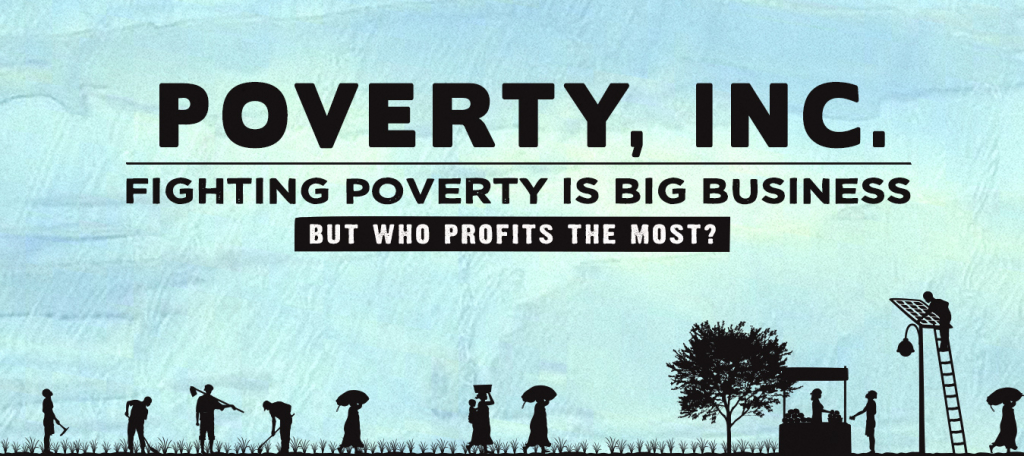
Posts tagged with: foreign aid

One of the main points of the “What Would Jesus Cut?” campaign is the pitting of defense spending against charitable social programs. The assumption is that Jesus would obviously endorse and campaign for the welfare state over the military. A common perception of the U.S. armed forces by many of the religious left is that they are the perfect embodiment of America as “corrupt empire.”

Read more on Does Shane Claiborne Care about Military Humanitarian Aid?…

Jonathan Witt
posted by on Tuesday, December 14, 2010

The Detroit News published a new column today by Acton president and co-founder Rev. Robert A. Sirico:

Faith and Policy: Free markets, not aid, will help poor nations best

Rev. Robert Sirico

Read more on Rev. Sirico: Free markets, not aid, will help poor nations best…

Jordan J. Ballor
posted by on Tuesday, August 11, 2009

As promised, the Summer 2009 issue of The City is now available online.

In addition to my review of Blind Spot, this issue includes a host of noteworthy items, including Wilfred McClay’s essay, “The Soul & The City,” and a review by HBU provost Paul Bonicelli of Dead Aid: Why Aid is Not Working and How There is a Better Way for Africa, by Dambisa Moyo. Bonicelli, formerly an assistant administrator for USAID, discusses how his own experience as a “foreign aid official” coheres with Moyo’s depiction of the state of affairs in international development.

Read more on The City Online…

And if bed nets or any other foreign interventions are to do significant and lasting good, charitable enterprises will need to rediscover the importance of subsidiarity, of humans on the ground in relationship with other human beings, as opposed to government-to-government aid transfers that often do more harm than good. One person who speaks forcefully to this issue is Rwandan Anglican Bishop John Rucyahana …

Kevin Schmiesing
posted by on Thursday, June 26, 2008

In preparation for the G8 summit in Japan in July, the Catholic bishops’ conferences of the respective G8 nations have collaborated and released a joint statement to their political leaders. I mean to diminish neither the importance of the topics addressed nor the respect due to the bishops’ teaching by saying that such statements are usually rather bland and predictable. This one, however, contains some interesting language concerning, in particular, global warming. “We urge you,” the bishops exhort, “to deepen your commitments and actions to reduce global poverty and address global climate change.”

Read more on G8 Bishops Statement…

International aid groups have criticized the EU and many of its member states for falling behind their promises to step up foreign aid to 0.5 per cent of GDP by 2010 and 0.7 per cent by 2015.

Read more on European foreign aid caught between dishonesty and incompetence…

The NYT editorializes today that Venezuelan president Hugo Chávez is, at worst perhaps, a necessary evil given the current political climate: “if it takes Mr. Chávez’s demagogy to spur Washington toward more enlightened policies in the Americas, so be it.”

Read more on NYT Editorial on Chávez: Necessary Not-So-Evil…

Ecumenical News International (ENI) relates the launch last month of a new initiative in Africa, designed to “to mobilise a strong African voice in development.” The effort is called African Monitor and is led by the Anglican Archbishop of Cape Town, South Africa, Njongonkulu Ndungane.

Read more on Monitoring African Aid and Development…

Jordan J. Ballor
posted by on Monday, April 10, 2006

Bryan Caplan at EconLog says that he has long wondered about the validity of the statistics of the spread of AIDS on the African continent:

The whole story had a quasi-Soviet flavor to it. The main difference: Soviet growth statistics were too good to be true, while African AIDS statistics were too bad to be true. Reflecting on the incentives cemented my skepticism: Just as the Soviet Union had a strong incentive to exaggerate its growth numbers in order to get the world’s respect, researchers and advocates had a strong incentive to exaggerate their AIDS number in order to get the world’s money.

He goes on to cite a recent Washington Post story that backs up his doubts. While Caplan may ultimately be wrong in his skepticism, I think it’s a responsible question to ask. Any system of charity or aid that faces an ongoing and high-level need should wonder about the incentives that it creates for people to take advantage of the system.

Read more on AIDS: Not that Bad?…

Acton PowerBlog RSS

Google Plus

Twitter Feed

Facebook Fan Page

Support the Acton Institute

The Acton Institute is funded through the generous contributions of individuals such as yourself. Learn more about how you can advance the cause of freedom and virtue.