Posts tagged with: Gerard Berghoef

Over at the IFWE blog, Elise Amyx takes a look at Brian Fikkert’s argument about the origins of the modern American welfare state:

According to Fikkert, the evangelical church’s retreat from poverty alleviation between 1900 and 1930 encouraged the welfare state to grow to its size today. Church historians refer to this era as the “Great Reversal” because the evangelical church’s shift away from the poor was so dramatic.

In Faithful in All God’s House: Stewardship and the Christian Life, Gerard Berghoef and Lester DeKoster make a similar case. They argue that “the church is largely responsible for the coming of the modern welfare community.” They also cast the hopeful vision that another reversal might occur: “The church could be largely responsible for purging welfare of its faults and problems if enough believers caught the vision.”

While Fikkert is largely drawing on the early twentieth century in America for his argument, Berghoef and DeKoster examine more broadly the Christian perspective on the relationship between faith and works of charity. This dynamic is, after all, is a perennial challenge for Christian social engagement, and the interaction between the Social Gospel and evangelicalism in America is just one example. Another is the reversal over the last century or so in the Netherlands, where there has been a move from Abraham Kuyper’s claim that “all state relief for the poor is a blot on the honor of your Savior” to the church’s plea “for social security that is not charity but a right that is fully guaranteed by government.”
Read more on A Great Reversal of the Church & the Welfare State…

dirty_jobsTelevision is often lamented for its propensity to exaggerate the mundane and the ordinary. Yet when it comes to something as routinely downplayed and unfairly pooh-poohed as our daily work—the “rat race,” the “grindstone,” yadda-yadda—I wonder if television’s over-the-top tendencies might be just what we need to reorient our thinking about the broader significance of our work.

As I’ve argued previously, we face a constant temptation to limit our economic endeavors to the temporal and the material, focusing only on “putting in our 40,” working for the next paycheck, and tucking away enough cash for a cozy retirement. Whether we know it or not, plenty of transcendent activity is also taking place in such efforts, whether through our service, creativity, productivity, collaboration, relationship-building, or plain-old ordinary exchange. How we think about the greater significance and spiritual potential of our efforts is bound to impact how we behave in our daily efforts, either pushing us in the direction of earthbound toil or unleashing us further toward transcendent ends.

If, as Lester DeKoster puts it, work is the “meaning of our lives,” whether we’re scrubbing toilets or selling high-priced widgets, it would seem that such a striking and all-encompassing reality deserves at least a little drama. Thus, below is a select list of my favorite TV shows that draw out some of these features (some more sincerely and effectively than others). None are “Christian” in any explicit sense, and each involves its own share of tasteless theatrics and contrived scenarios, but each nevertheless illuminates some untold truths about the significance of our work beyond the merely material.

(Tip to producers: Add a concerted focus on the will of God and the power of the Holy Spirit to any one of these shows, and that Emmy is a shoo-in.)

5. Dirty Jobs

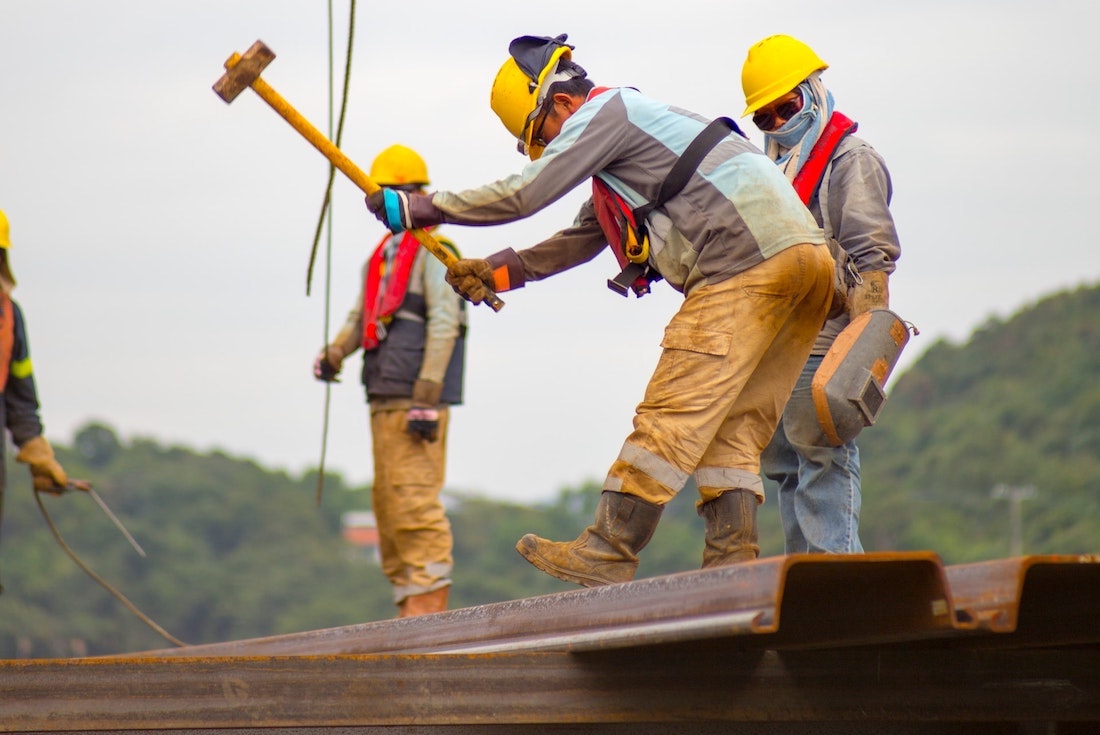
Dirty Jobs host Mike Rowe is passionate about “celebrating hard work and skilled labor,” and by trying his hand at some of the dirtiest jobs in the land, from coal miner to sewage sifter to animal-husbandry parts-grabber, he has drawn enormous attention to some of the less celebrated and most essential jobs around. Each has its own unique requirements and pay scale, but plenty of Rowe’s undertakings involve manual labor that we might be tempted to label “undignified” or “dehumanizing.” Yet even the persistently cheery Rowe—who is surely well paid for his toil—is rarely able to outdo the positive attitudes of these workers. These are folks who ooze with passion, pride, and an acute awareness of the pressing needs they are meeting in their local communities and society at large. Read more on 5 TV Shows That Demonstrate the Importance of Ordinary Work…

John Couretas
posted by on Wednesday, January 26, 2011

Two more thoughtful reviews of Jordan Ballor’s Ecumenical Babel: Confusing Economic Ideology and the Church’s Social Witness are in. Ross Emmett says that, “those concerned about the role of the church in the world today can learn a lot by reading and reflecting on Ballor’s excellent critique of the ecumenical movement’s political economy.” And in the new issue of the Journal of Markets & Morality, Thomas Sieger Derr agrees with Jordan that the ecumenical movement should be “appropriately circumspect in its ethical pronouncements on specific matters of public policy.”

Read more on Talking About Babel…

In today’s Acton Commentary I argue that “Christian Giving Begins with the Local Church.”

I note some statistics that show that American Christians are increasingly looking beyond their local congregations and churches as outlets for their charitable giving, in spite of the fact that giving to religiously affiliated and religiously focused charities is increasing.

Read more on Christian Giving Begins with the Local Church…

Carl Trueman has a lengthy reflection and asks some pertinent and pressing questions on the nature of work and human intellectual development.

Recalling his job at a factory as a young man in the 1980s, Trueman writes concerning those who were still at their positions on the line when he had moved on:

Read more on Questions on Work and Intellectual Development…

Acton PowerBlog RSS

Google Plus

Twitter Feed

Facebook Fan Page

Support the Acton Institute

The Acton Institute is funded through the generous contributions of individuals such as yourself. Learn more about how you can advance the cause of freedom and virtue.