(March is Women’s History Month. Acton will be highlighting a number of women who have contributed significantly to the issue of liberty during this month.)
What does the Victorian era have to do with contemporary culture and society? Quite a bit, in the mind and work of Gertrude Himmelfarb, an American historian who called her own work “the history of ideas.” Himmelfarb has been criticized for her call to the return of traditional values (like shame, personal responsibility and self-reliance) by an academic community that prefers what they believe is a “value-neutral” method of teaching and research.
courtesy of www.superscholar.org
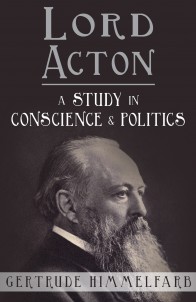
Himmelfarb wrote her Ph.D. dissertation on the British parliamentarian and historian Lord Acton, which she later published as Lord Acton: A Study in Conscience and Politics (1952). Himmelfarb found Lord Acton’s ambivalent blend of liberalism and pessimism, ideas of progress, and notions of human sinfulness, as well as his advocacy of a “judicious mix of authority, tradition, and experience, to be highly relevant for the post World War II world.” Even in this early work, she discerned a connection between the modern neglect of personal moral character and the political catastrophes of the twentieth century, including the rise of fascism and totalitarianism. (Gertrude Himmelfarb: Jewish Women’s Archive)