Posts tagged with: Heaven

480px-Candlemas_(Greece,_Benaki,_17_c.)In the most recent issue of Theosis (1.6), Fr. Thomas Loya, a Byzantine Catholic priest, iconographer, and columnist, has an interesting contribution on the upcoming feast of the Presentation of Christ at the Temple (also known as Candlemas or the “Meeting of the Lord”). For many, February 2nd is simply the most bizarre and meaningless American holiday: Groundhog Day. However, for more traditional Christians, this is a major Christian feast day: the commemoration of the forty day presentation of Christ at the Temple in Jerusalem (December 25 + 40 days = February 2; for the biblical account, see Luke 2:22-40).

Read more on Departing in Peace: Economics and Liturgical Living…

Joseph Sunde
posted by on Monday, January 14, 2013

Great Divorce, C.S. LewisI recently discussed our pesky human tendency to limit and debase our thinking about economics to the temporary and material. Much like Judas, who reacted bitterly to Mary’s outpouring of expensive ointment, we neglect to contemplate what eternal purposes God might have for this or that material good and the ways through which it might be used or distributed.

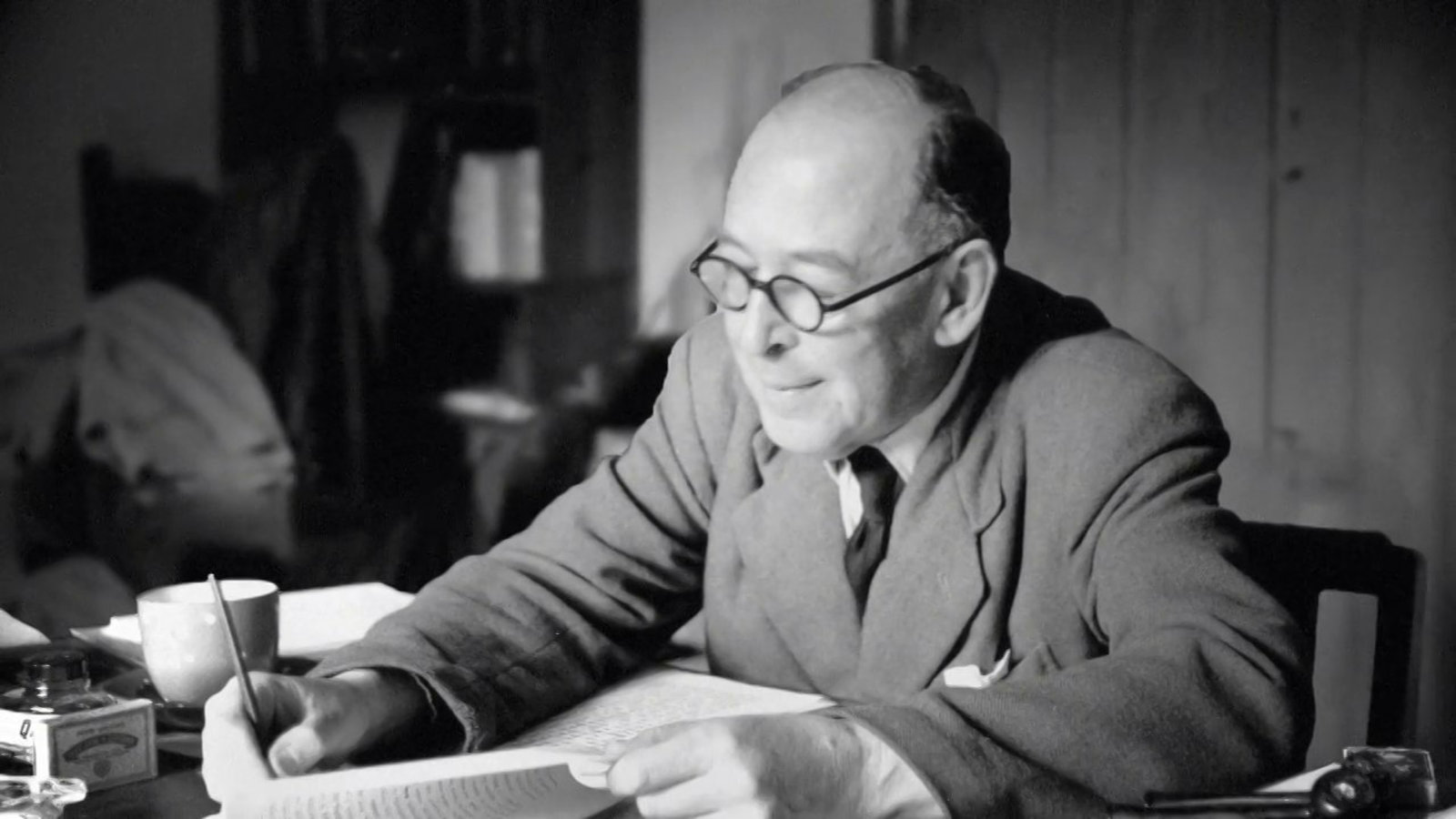
C.S. Lewis captures the tendency powerfully in his book, The Great Divorce, providing a clear contrast of heaven and hell through a series of conversations and spiritual choices.

Beginning the story in a dreary town described as being “always in the rain and always in evening twilight,” Lewis provides us with a setting very much like earth but with a bit more darkness and—take note—a bit more surface-level comfort and security (“they have no Needs,” as one character describes it).

Lewis follows one man’s journey beyond the town (which we quickly discover to be hell or some type of purgatory), toward an ever-increasing light (which we quickly discover to be heaven). Along the way, he encounters a series of fellow travelers, each struggling with his or her own obstacle to the divine—an earthbound idol that must be pried from their paws.

In one particular conversation, Lewis points specifically to the economic sphere, using a character he calls “the Intelligent Man” to propose an economic solution that, according to his limited, earthbound assumptions, will certainly relieve what he believes to be an inevitable, ever-increasing darkness:

What’s the trouble about this place? Not that people are quarrelsome—that’s only human nature and was always the same even on earth. The trouble is they have no Needs. You get everything you want (not very good quality, of course) by just imagining it. That’s why it never costs any trouble to move to another street or build another house. In other words, there’s no proper economic basis for any community life. If they needed real shops, chaps would have to stay near where the real shops were. If they needed real houses, they’d have to stay near where builders were. It’s scarcity that enables a society to exist. Well, that’s where I come in…I’d start a little business. I’d have something to sell. You’d soon get people coming to live near-centralisation. Two fully-inhabited streets would accommodate the people that are now spread over a million square miles of empty streets. I’d make a nice little profit and be a public benefactor as well.

His approach has some charming elements, to be sure. Indeed, if I myself were to encounter a dreary town such as this, I, too, would be quick to emphasize the positive socializing effects of market collaboration and cooperation. “The townspeople boast an unhealthy and isolating sense of entitlement,” I might be tempted to say. “Thus, we should proceed to foster a healthy web of bottom-up independence, interconnectedness, collaboration, and specialization.” Read more on C.S. Lewis on Transcendent Economics…

EcclesiastesThe Preacher says that God “has set eternity in the human heart” (Ecclesiastes 3:11 NIV). This is within the broader context of his discussion of the paradox of exploring the wonder of God’s creation and the vanity of human striving in a fallen world.

Read more on God Has Set Eternity in the Human Heart…

Leonardus LessiusOne of the issues that arose during last week’s law and religion symposium (in the questions following Wim Decock’s thorough and engaging paper on Leonardus Lessius’ engagement of commercial affairs from the perspective of moral theology and philosophy) had to do with the understanding of the relationship between material pursuits and eternal salvation. In some way you might say that Lessius held to a view of commercial activity as a worthy expression of the stewardship responsibilities of human beings.

At the time I noted that one of the origins of this biblical idea is in a formulation found in Augustine, that temporal goods are given by God “under a most fair condition: that every mortal who makes right use of these goods suited to the peace of mortal men shall receive ampler and better goods, namely, the peace of immortality and the glory and honour appropriate to it, in an eternal life made fit for the enjoyment of God and of one’s neighbor in God.”

There is clearly a sense in which this could be taken in what the Reformed would consider a semi-Pelagian manner associated with Jesuits like Lessius. But I also note this passage from Augustine in my new book on Wolfgang Musculus, observing the continuities with it as understood by a variety of the early Reformers.
Read more on Earthly Vocation and Eternal Salvation…

Acton PowerBlog RSS

Google Plus

Twitter Feed

Facebook Fan Page

Support the Acton Institute

The Acton Institute is funded through the generous contributions of individuals such as yourself. Learn more about how you can advance the cause of freedom and virtue.