Posts tagged with: jesus

480px-Candlemas_(Greece,_Benaki,_17_c.)In the most recent issue of Theosis (1.6), Fr. Thomas Loya, a Byzantine Catholic priest, iconographer, and columnist, has an interesting contribution on the upcoming feast of the Presentation of Christ at the Temple (also known as Candlemas or the “Meeting of the Lord”). For many, February 2nd is simply the most bizarre and meaningless American holiday: Groundhog Day. However, for more traditional Christians, this is a major Christian feast day: the commemoration of the forty day presentation of Christ at the Temple in Jerusalem (December 25 + 40 days = February 2; for the biblical account, see Luke 2:22-40).

Read more on Departing in Peace: Economics and Liturgical Living…

In today’s culture, there is always an abundance of news stories about the “War on Christmas.” In my commentary this week, I address that concern and the lack of understanding of the deeper meaning of Christmas. Here’s a highlight:

Read more on Commentary: Christmas and Secularism’s Futility…

Joe Carter
posted by on Tuesday, August 21, 2012

“She must not have any friends,” my wife says all too frequently. “Because if she did they wouldn’t let her go out dressed like that.”

Although the cattiness of her comment always makes me cringe, my wife does have a point. One of the roles friends play in our lives is to prevent us from embarrassing ourselves in public. Editors play a similar role, though they are not as beloved as friends—at least by writers. One of our most essential functions is to say to a writer, “You probably don’t want to say that.” Or, as happens too frequently, we insist, “No, seriously, you really don’t want to put that in writing and make it available for the entire world to read.”

Of course writers don’t always listen, which is why they can make a blunders similar to the recent gaffe by Erika Christakis. I can only assume Ms. Christakis overrode the advice of both friends and editors. I can’t imagine anyone who cared about the Harvard College administrator would support her making this outrageously silly claim in Time magazine:

Read more on Did Jesus Support a 100% Tax Rate?…

Jordan J. Ballor
posted by on Monday, January 16, 2012

In connection with the current Acton Commentary, over the last week I’ve been looking at what I call the “the overlap and varieties of these biblical terms” like ministry, service, and stewardship. As Scot McKnight notes in his recent book, The King Jesus Gospel: The Original Good News Revisited, the theme of stewardship is absolutely central to the biblical message. In his summary of the gospel toward the conclusion of the book, he begins this way:

Read more on Uncommon Acts of Common Grace…

Jordan J. Ballor
posted by on Tuesday, December 27, 2011

Earlier this year Michael Kruse put out a request for suggestions for inclusion in a Commissioning Service for Human Vocation. This Advent season it struck me that the Christmas song, “The Little Drummer Boy,” or, “The Carol of the Drum,” is rich in vocational theology.

Read more on The Little Drummer Boy’s Gift…

The next skirmish over the country’s financial direction will come in September as Congress tries to prepare for the federal government’s new fiscal year, which starts October 1st. The Christian Left has quoted the Bible quite freely during the budget battle, throwing around especially the “red letter” words of Christ in its campaign to protect all of the federal government’s poverty programs (even those so riddled with fraud that the White House wants to cut them). It seems bizarre, then, that they never make reference to the most obviously political passage of the Gospels—Christ’s dictate to “render unto Caesar the things that are Caesar’s…”

Read more on What Would Jesus Cut? Who’s Asking, the Pharisees?…

The question of “What Would Jesus Cut” raised in new ads for John Boehner’s, Harry Reid’s, and Mitch McConnell’s home states is fundamentally wrongheaded. It reverses the proper approach of religious leaders to politics and threatens to mislead their flocks.

Read more on Circle of Protection Subordinates Religion to Politics…

Kenneth Spence
posted by on Thursday, July 21, 2011

Archbishop Charles J. Chaput was named the next archbishop of Philadelphia on Tuesday, and mainstream coverage of the story immediately turned to sex abuse scandals. Which makes a lot of sense because, you know, that has dominated his tenure in Denver. As John Allen pointed out, that’s not the case at all, but George Weigel reminds us not to expect anything else.

Read more on A Bishop in the Public Square…

Louie Glinzak
posted by on Thursday, April 21, 2011

Easter is fast approaching, and in light of this revered day, we take a look at Easter messages the Acton Institute has published in the past.

A day celebrated by all Christians, Easter can mean many different things for people. The article, “An Easter Message for Business” explores what it means for entrepreneurs and business men and women. In the article we find that business is a calling and business men and women are called to utilize their Christian principles by applying them to in their every day lives on the job:

Read more on Messages for Easter…

Below is the full-length version of “The Rich Young Man: The Law Versus Privilege,” an essay published in the winter 2011 Religion & Liberty. John Kelly’s essay was shortened because of space limitations for the print issue. He was passionate about sharing the full version, which he edited himself for readers of the PowerBlog. Mr. Kelly, a financial advisor, also authored a piece in 2004 for Religion & Liberty titled “The Tithe: Land Rent to God.”

– — – — – –

THE RICH YOUNG MAN: THE LAW VERSUS PRIVILEGE

by John Kelly

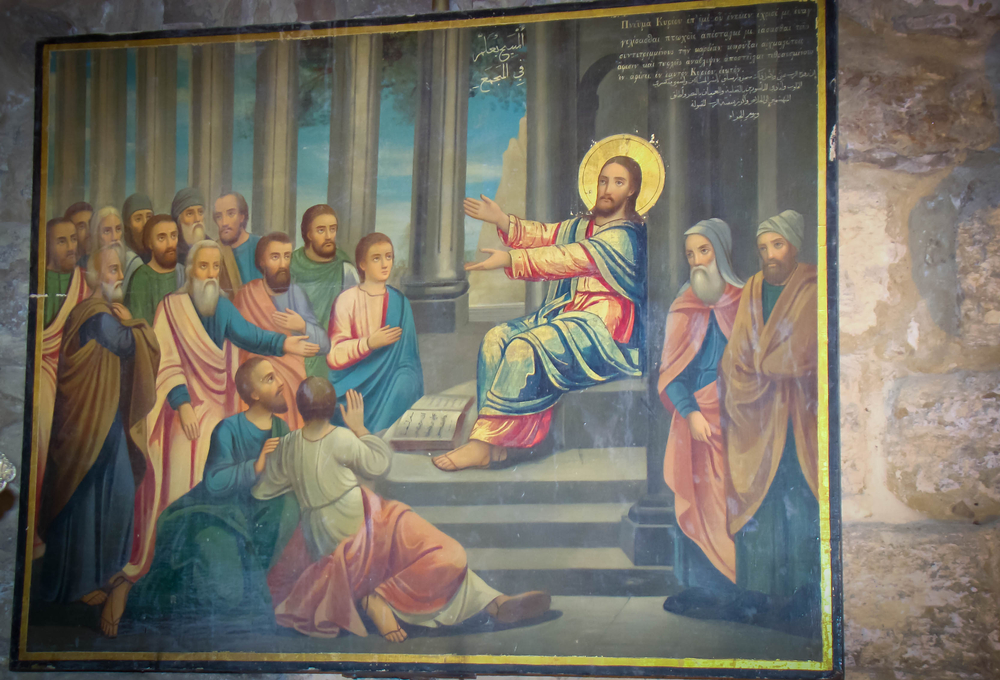
As Jesus conducted his public ministry, he drew considerable crowds. Within the throngs were, of course, the peasants of the neighborhood, along with longer-term disciples. There were many who wished to see miracles, many who wished to hear his sayings of peace, love, hope and promise. There were those who wanted reinforcement of the Law and those who wished to see some of the Law abandoned. And within all these groups were many who were troubled by personal doubt.

Jesus spoke with these people, engaging them, answering their questions, asking them questions, all the while proclaiming the authority and the efficacy of the Law. He said, “Do not imagine that I have come to abolish the Law or the Prophets. I have come not to abolish – but to complete them.” He then goes on – he’s trying to make sure his listeners understand: “In truth I tell you, till heaven and earth disappear, not one dot, not one little stroke, is to disappear from the Law until all its purpose is achieved.” (Matthew 5:17-18 – NJB)

Some of Jesus’ most engaging images come from these conversations. Rich and poor, titled and powerless, legalists and apostates, disciples and strangers all had encounters with Jesus that fleshed out for them his view of the Law. However, our lack of knowledge regarding the economic, political and cultural environment in which Jesus lived and preached sometimes hampers our understanding of his message.

One of the more famous of these encounters was with the rich young man. This story is found, in almost identical versions, at Matthew 19:16-22, Mark 10:17-22 and Luke 18:18-23. He approached Jesus and asked what was necessary to be saved. “Good Master, what must I do to inherit eternal life?” Jesus replied that the young man should keep the commandments. “I have kept all these,” stated the rich young man, “What more do I need to do?” Jesus said to him, “If you wish to be perfect, go and sell your possessions and give the money to the poor … then come, follow me.” This was too much for the young man. Scripture says that he “went away sad, for he was a man of great wealth.”

This story seems too hard for most of us. What is fundamentally wrong with being rich? Preachers try to make sense of this passage by assuming that the rich young man was too materialistic, and that the story is a warning to us about that failing. That much may be true, however, that interpretation is about the young man’s reaction, not about Jesus’ words. Jesus instructed him to sell everything he had and give it to the poor. Why? Read more on The Rich Young Man: The Law Versus Privilege…

Acton PowerBlog RSS

Google Plus

Twitter Feed

Facebook Fan Page

Support the Acton Institute

The Acton Institute is funded through the generous contributions of individuals such as yourself. Learn more about how you can advance the cause of freedom and virtue.