Posts tagged with: Juan de Mariana

In response to my post last Thursday on the Fed’s signaling the possibility of more quantitative easing (QE), a commentator using the pseudonym “Milton Friedman” wrote,

have you checked inflation rates lately? they are at historic lows. if the parade of horribles doesn’t happen, shouldn’t that cause you to reconsider your understanding of the economy? economists have learned quite a few things since 1609…

As I responded on that post, I’m not sure what “parade of horribles” he is referring to; my point was simply that the short term gain of inflationary policy now is not worth risking the likely long term disadvantages and need not be taken as apocalyptic.

Furthermore, as a matter of fact, inflation rates do not appear to be at “historic lows” in 2012, especially given the short bout of deflation we experienced from March to October 2009. I’ll let readers make up their own minds on that point, however, since it really doesn’t affect my argument.

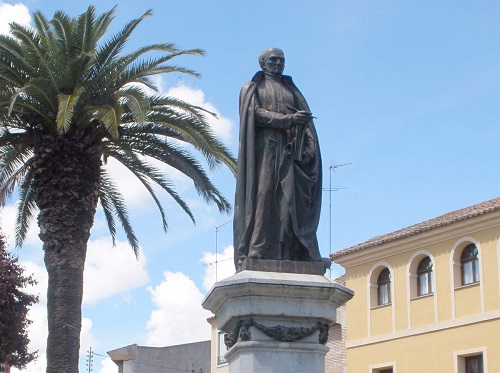
What is far more important to me is pseudo-Friedman’s comment that “economists have learned quite a few things since 1609.” The reference to 1609 is due to the fact that I was highlighting the work of Spanish scholastic Juan de Mariana’s analysis of the effects of inflationary policies in medieval Spain. Is pseudo-Friedman right? Is Mariana’s analysis invalid due to its antiquity? Read more on QE: Haven’t We Learned So Much Since 1609?…

In today’s Wall Street Journal, Jon Hilsenrath and Kristina Peterson report, “The Federal Reserve is heading toward launching a new round of stimulus to buck up the weak economy, but stopped short of doing so right away.” The predicted means of stimulating the economy is another round of the unconventional policy of quantitative easing (QE), i.e. when a central bank purchases financial assets from the private sector with newly created money in effort to spark economic growth. Thus, the quantity of US dollars would be increased, debasing their value and causing inflation.

Read more on The Prospects of More QE for Economic Stimulus: A Lesson from History…

The folks over at the Comment magazine site have generously run an essay by me, “Business and the Development of Christian Social Thought.” This piece is a web-friendly version of my editorial from the current issue of the Journal of Markets & Morality, which highlights the call for papers for next spring’s issue on the theme “Integral Human Development.” If you have an interest in this theme as it appears particularly in the Roman Catholic social encyclical tradition, or analogous ideas from other religious traditions, including notably the idea of “integral mission” as appears in the evangelical ecumenical movement, be sure to check out and share the CFP.

One of the points I highlight in this essay is what biblical scholar Craig Blomberg, in his paper in the issue’s “Theology of Work and Economics” Symposium, identifies as the “theory of limited good.” He describes this perspective as that of the biblical world, when

most people were convinced that there was a finite and fairly fixed amount of wealth in the world, and a comparatively small amount of that to which they would ever have access in their part of the world so that if a member of their society became noticeably richer, they would naturally assume that it was at someone else’s expense.

Read more on Murray, Mariana, and Montaigne’s Fallacy…

In an editorial in a previous issue of the Journal of Markets & Morality, “Printed Source and Digital Resource in Economics and Theology” (PDF), I examined developments in research methodology, particularly with an eye toward digital research tools. One of the tools I highlighted was a project that I had some involvement with, the Post-Reformation Digital Library (PRDL). The PRDL has launched a new version today at it’s own website, and includes a substantive move from bibliography to database, as well as expansive coverage of over 1,900 authors.

Read more on The Dynamics of Digital Source and Resource…

Acton PowerBlog RSS

Google Plus

Twitter Feed

Facebook Fan Page

Support the Acton Institute

The Acton Institute is funded through the generous contributions of individuals such as yourself. Learn more about how you can advance the cause of freedom and virtue.