Posts tagged with: market economy

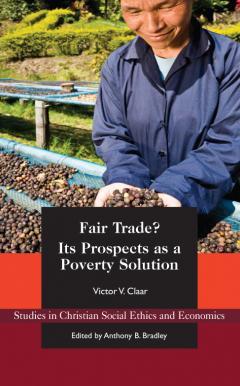
This week’s commentary is from Victor V. Claar, an economist at Henderson State University and the author of a new Acton Institute monograph, Fair Trade? Its Prospects as a Poverty Solution. Follow his economics blog here.

+++++++++

Poverty, Capital and Economic Freedom

By Victor V. Claar

When poor countries grow rich, it rarely has anything at all to do with how many mouths they have to feed or the abundance of natural resources. Instead, across the globe, poor countries of all sizes, climates, and endowments begin to grow rich as two key factors increase.

First, countries grow rich as their human capital improves. Human capital is the term economists use to describe the value that a country’s people possess through their accumulated experience and education. For example, there is little doubt that India’s recent growth explosion is due in large part to the education—including the knowledge of the English language—of its people.

Second, countries grow rich as they invest in and accumulate physical capital: the machines, tools, infrastructure, and other equipment that make the product of each hour of physical labor more valuable. That which both human capital and physical capital share is that they both transform the result of an hour of a person’s hard work into something of even greater value. As the value of an hour of labor rises, employers gladly pay higher hourly rates, knowing that their bottom lines will be the better for it.

If we want to be effective agents in aiding the poor, we should focus our efforts in directions leading to the enhanced value of an hour of labor. That is, we should help poor countries wisely grow their stocks of human and physical capital, all the while bearing in mind that markets and their prices send the best available signals regarding where our efforts can have the greatest impact. The newfound success of innovative micro lending efforts such as Kiva can help show us ways to effectively invest in the accumulation of physical capital by the global poor. Compassion International is a marvelous organization that works to further the education—the human capital—of poor children worldwide, with a financial accountability record above reproach. Read more on Poverty, Capital and Economic Freedom…

Some members of the Acton team were in Krakow, Poland, last week for the third conference in our series on Poverty, Entrepreneurship and Integral Development. This conference, which took place on May 19th, was on the topic of Building a Commercial Society: Culture & the Transition to Wealth, and was co-sponsored with the John Paul II Catholic University of Lublin, the Civil Development Forum, and the Polish American Foundation for Economic Research and Education.

Read more on Acton in Krakow: Culture & the Transition to Wealth…

A while back, Bevan Sabo and Ariel Goldring at Free Market Mojo interviewed me on a wide range of subjects. They’ve kindly granted us permission to post some excerpts:

FMM: Capitalism requires a large degree of selfishness. Though there is certainly room for charity in a free-market system, individuals and firms must pursue their own selfish interests in order for an economy to thrive (or even succeed). How does a Christian love his neighbor as himself and still function as a capitalist?

Father Sirico: I do not share the use of the word selfishness in the way that it is employed in this question. A proper self regard is based on the belief in my own inherent dignity and this requires “self love” but not an inordinate self-love or self-preoccupation which is willing to subordinate others to my own ends, either coercively or in a manipulative manner which disregards the same dignity of others. The word selfishness as it is used in common parlance does not reference rational self-interest but rather a self preoccupation and disordered priority.

From a Christian anthropological point of view the human person (who is much more than “the individual”) is a combination of his individuality and his sociality, his autonomy and relationships. From the first moment of our existence we are simultaneously autonomous (in that we are genetically distinct from our mothers), yet in relation to her while in the womb. The whole of our existence following is a working out of this interplay of our autonomy and our social nature. A Christian’s love for his neighbor is rooted in solidarity which is the recognition of a profound connection between human beings. It is, in a sense, a recognition of myself in the other. Because all human beings share an intrinsic dignity we ‘love our neighbors as we love ourselves’. Capitalism, which is only the economic extension of this anthropological truth, can be lived out from this perspective, but in order to be secure, just, and enduring, it needs to rooted in the historical development of such an anthropology.

FMM: In July of last year, the Guardian reported on Pope Benedict XVI’s third encyclical, entitled Charity in Truth. For me, the following is a particularly disturbing paragraph from the article:

The pope today called for a “profoundly new way” of organising global finance and business, calling for a new social and ethical dimension to capitalism and arguing the case for a new world political authority to help champion “the common good”.

The idea of the “common good” goes against the spirit of individualism that is an essential part of capitalism and any proper government. Can you discuss Charity in Truth, particularly, its ramifications for those who consider themselves both Christians and capitalists?

Father Sirico:
If one is going to really understand papal encyclicals one must understand the tradition and theological milieu from which they emerge and attend to the precise definitions that are given to various specific phrases or concepts. In the case of the latest encyclical Caritas in Veritate many have asked questions about what the pope was addressing when he called for a “New World political authority”. I very much doubt your readers want from me a full exegesis of this section of the encyclical, but let me summarize by saying that this phrase is used in context with the references to subsidiarity elsewhere in the encyclical (e.g., no. 57) which is therein described as “the most effective antidote to any form of all-encompassing welfare state.”

Thus it is explicitly NOT the pope’s intention to be calling for some kind if ‘super state’, but rather for a global solidarity and authority “which cannot be imposed by force” (cf., Mater et Magistra, no. 130). The encyclical also cites a number of other references it is drawing upon, all of which are noted in the critical apparatus of the encyclical itself and all of which repudiate any kind of ‘super global state’. Read more on Interview: Economics and the Reality of Things…

At the Volokh Conspiracy, Todd Zywicki looks at a new article by Zeljka Buturovic and Dan Klein in Econ Journal Watch which aims to “gauge economic enlightenment based on responses to eight economic questions.” Among other things, the researchers filter the survey results for political ideology. Zywicki’s highlights:

Read more on What does the left know about economics?…

Sign up for Acton News & Commentary here. This week, I contributed a piece on Jim Wallis’ new book.

+++++++++

This class of the very poor – those who are just on the borders of pauperism or fairly over the borders – is rapidly growing. Wealth is increasing very fast; poverty, even pauperism, is increasing still more rapidly. – Washington Gladden, Applied Christianity (1886)

For three decades, we have experienced a social engineered inequality that is really a sin – of biblical proportions. We have indeed seen class warfare, but this war has been waged by the wealthy and their political allies against the poor and the middle class. – Jim Wallis, Rediscovering Values: On Wall Street, Main Street, and Your Street (2010)

One of Jim Wallis’ long running aims at Sojourners is to cast himself as a moderate or centrist (God is not a Republican. Or a Democrat). This is howling nonsense to anyone who pays attention to his policy prescriptions or watches the progressive/liberal company he keeps. With his new book, Rediscovering Values: On Wall Street, Main Street, and Your Street (Howard Books, 2010), Wallis drops all pretense to holding the center as he piles on with the horde of religious left activists and others now demonizing Wall Street. The book, a clip-file pastiche of easy eat-the-rich moralizing, relentlessly pushes for the sort of collectivist policies that even the Obama administration is reluctant to take on directly (to Wallis’ chagrin).

The Wallis publicity machine casts him in the tradition of the Hebrew prophets with their fiery visions and passion for the social application of faith. Alas, he can only scold: “It’s clear that Wall Street has learned nothing, wants to learn nothing, and instead just wants to go back to the same old behaviors.”

With this new book, Wallis has ventured into the nation’s economic life with his cheap outrage. There, he has exposed himself as utterly ignorant of even the most basic economic principles. Not even a disinterested undergraduate halfway through a compulsory Econ 101 would make these mistakes. Case in point:

The market’s fear of scarcity must be replaced with the abundance of the loving God. And the first commandment of the Market: “There is never enough,” must be replaced by the dictum of God’s economy: namely, there is enough, if we share it.

Well, no, wrong. You cannot wish scarcity away. It is one of the most fundamental realities of economic life, involving everything from raw materials to money to the very time we have on God’s green earth. Still less can you wish away scarcity with shallow sentiment and decree that all of humanity will have enough (what is enough?) if we follow the “dictum” of “God’s economy.” Scarcity is not a Republican or a Democrat issue, you might say.

Read more on Commentary: Prophet Jim Wallis and the Ecclesia of Economic Ignorance…

Jordan J. Ballor
posted by on Wednesday, March 10, 2010

Via Victor Claar (follow him on Twitter here), an op-ed in The Oracle (Henderson State University’s student paper) by Caleb Taylor, “Tiger Woods and Capitalism.”

A taste: “Contrary to what Michael Moore thinks, capitalism promotes moral and ethical behavior. In Woods’ case, it punishes poor behavior. Sponsors such as Nielsen, AT&T, Gillete and Gatorade have all either suspended or removed their endorsement deals with Tiger due to his moral mistakes.”

Read more on Tiger Woods, Morality, and the Market…

Rev. Robert Sirico
posted by on Monday, January 18, 2010

Published today on National Review Online:

When I first heard the news from Haiti and watched the horrible stories on television, I had the same impulse I imagine millions around the world experienced: I found myself thinking of catching the next plane to Port-au-Prince to help in whatever way I could.

Read more on Haiti and Solidarity…

Relativists beware. Whether you like it or not, truth matters – even in the economy. That’s the core message of Pope Benedict XVI’s new social encyclical Caritas in Veritate.

For 2000 years, the Catholic Church has hammered home a trio of presently-unpopular ideas into the humus of human civilization: that there is truth; that it is not simply of the scientific variety; that it is knowable through faith and reason; and that it is not whatever you want or “feel” it to be. Throughout his entire life, Benedict XVI has underscored these themes, precisely because much of the world, including many Christians, has lost sight of their importance.

Read more on Caritas in Veritate: Why Truth Matters…

Pope Benedict XVI’s much anticipated economics encyclical, Caritas in Veritate, is scheduled to be released early next week, according reports. For a good sense of this pope’s thinking on economics, we offer an article the then-Joseph Cardinal Ratzinger presented in 1985 at a symposium in Rome.  The Acton Institute published it under the title “Market Economy and Ethics.”  As indicated by the following quote, the pope believed in integrating morals into economics in order to have sound and successful economic policy:

Read more on Preview: Pope Benedict XVI on the Market Economy and Ethics…

In “The Real Culture War Is Over Capitalism,” Arthur C. Brooks argues in the Wall Street Journal that the “major cultural schism” in America today divides those who support capitalism and, on the other side, those who favor socialism. He makes a strong case for the moral foundations of free enterprise and entrepreneurship and points to the recent “tea parties” as evidence that Americans still favor the market economy. Brooks, the president of the American Enterprise Institute, says Americans are revolting against “absurdities” like the bailout of General Motors that will be financed with ballooning budget deficits and trillions in new federal debt. He writes:

Read more on Arthur C. Brooks: Time For An ‘Ethical Populism’…

Acton PowerBlog RSS

Google Plus

Twitter Feed

Facebook Fan Page

Support the Acton Institute

The Acton Institute is funded through the generous contributions of individuals such as yourself. Learn more about how you can advance the cause of freedom and virtue.