Posts tagged with: martin luther king jr.

Joe Carter
posted by on Wednesday, January 23, 2013

If you want to improve the material conditions of the poor and working classes, what is the one economic metric you should consider most important?

carpooling-Life MagFor progressives the answer is income inequality, since a wide disparity between the incomes of the rich and poor is considered by them to be an obvious sign of injustice and a justification for using the force of the government to redistribute wealth. But for conservatives, the answer is upward economic mobility, the ability of an individual or family to improve their economic status. One of the benefits of the free market is that it harnesses liberty, diligence, and hard work in order to advance economic mobility.

The economic realm, though, exists in the physical realm, which is why economic mobility often requires effective means of physical mobility, that is, reliable transportation. While progressives tend to favor government-controlled public transit (such as busses and subways), conservatives tend to prefer individual transportation, especially access to cars. The reason is that history has shown, as Sasha Volokh says, that freedom drives a car:

Read more on History Shows Freedom Drives a Car…

Joe Carter
posted by on Monday, January 21, 2013

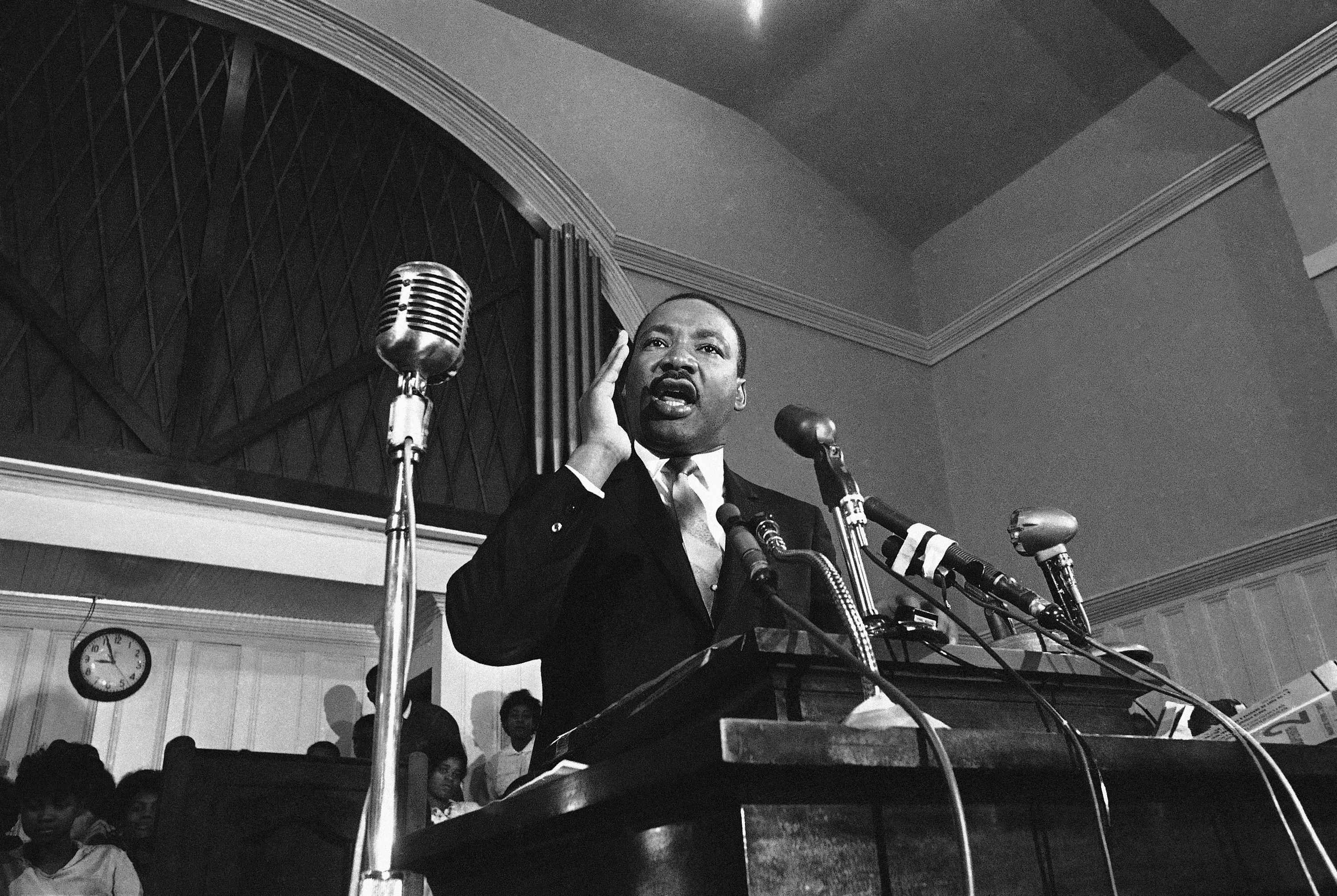
While The civil rights movement was led by Christians, it is easy to forget how many believers—particularly in the South—did not support the efforts of Dr. Martin Luther King, Jr. On this day set aside to honor the civil rights leader we should read his best work, “Letter from Birmingham Jail”, and reflect on how his words are applicable to us today.

Read more on MLK Day Recommendations…

Charles Kaupke
posted by on Tuesday, July 3, 2012

Florida Governor Rick Scott

Florida Governor Rick Scott recently declared that his state would not comply with President Obama’s Patient Protection and Affordable Care Act. In blatant defiance of the federal government, Florida will not expand its Medicare program or implement any of the other changes that “Obamacare” requires. While a flat-out refusal to comply with federal law on the part of a lower authority is relatively uncommon, it is by no means unprecedented. The history of the United States is filled with individuals and groups who have decided to obey their consciences in the face of laws that they believed to be illegal or immoral, or both. In fact, our country’s very founding began with an act of civil disobedience against the unjust and illegal actions of England’s King George III.

Even before our nation was formally established, adherence to true justice and the natural law, rather than to the whims of tyrants, was a hallmark of the American spirit. Witness the turmoil that took place in the American colonies in the 1760s and 1770s over the actions of England, including the famous Boston Tea Party of 1773. Thomas Jefferson wrote in the Declaration of Independence that, “when a long train of abuses and usurpations, pursuing invariably the same Object evinces a design to reduce them under absolute Despotism, it is their right, it is their duty, to throw off such Government, and to provide new Guards for their future security.” Read more on Obamacare and Civil Disobedience…

Anthony Bradley
posted by on Wednesday, August 24, 2011

My contribution to this week’s Acton News & Commentary:

Flash Mobbing King’s Dream

by Anthony B. Bradley

Every black person apprehended for robbing stores in a flash mob should have their court hearing not in front of a judge but facing the 30-foot statute of Dr. Martin Luther King, Jr. at his Washington memorial site. Each thief should be asked, “What do you think Dr. King would say to you right now?”

Read more on Flash Mobbing King’s Dream…

A popular citation of Martin Luther King, Jr.’s justly-famous “Letter from Birmingham Jail” is his reference to natural law and Thomas Aquinas:

How does one determine whether a law is just or unjust? A just law is a man-made code that squares with the moral law or the law of God. An unjust law is a code that is out of harmony with the moral law. To put it in the terms of St. Thomas Aquinas: An unjust law is a human law that is not rooted in eternal law and natural law. Any law that uplifts human personality is just. Any law that degrades human personality is unjust.

The Witherspoon Institute has announced today its project, “Natural Law, Natural Rights, and American Constitutionalism,” which “will serve as an online resource center for students, teachers, and educated citizens to learn about the intellectual traditions of natural law and natural rights, particularly within American political and constitutional history.”

Read more on Martin Luther King, Jr. and Natural Law…

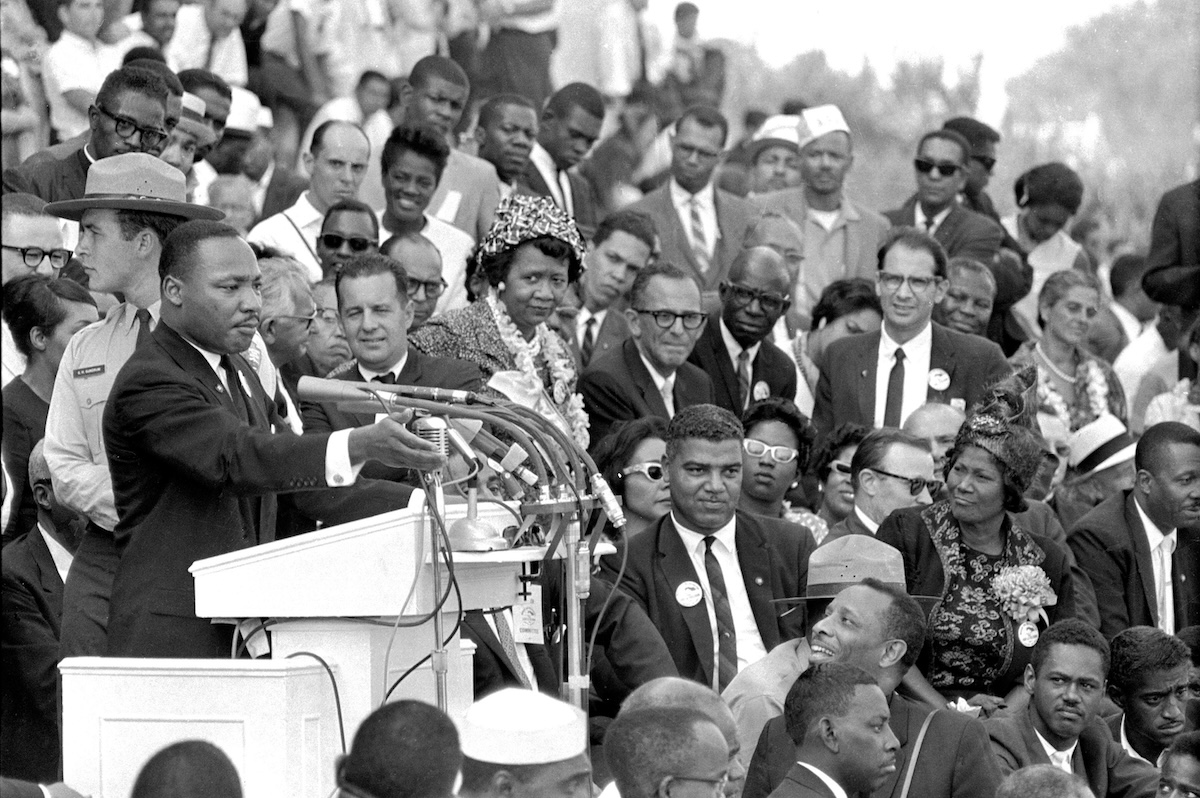
The Birth of Freedom opens and closes with Martin Luther King, Jr.’s iconic “I Have a Dream” speech. King appealed to Americans to live out the true meaning of this nation’s creed that all men are created equal. The documentary sets that appeal within the broader context of the Christian West’s slow but ultimately triumphant march to freedom.

Read more on Celebrate Martin Luther King Day With The Birth of Freedom Film…

Jordan J. Ballor
posted by on Sunday, September 21, 2008

This morning we opened the final day of GodblogCon 2008 with an exclusive premiere of the Acton Institute’s new documentary, The Birth of Freedom.

I had occasion to think about one of the more compelling parts of the film when I came across this blog post from Justin Taylor. JT shares a section from Dr. Martin Luther King Jr’s address at Western Michigan University, December 18, 1963.

Read more on GBC 08: The Birth of Freedom

Jordan J. Ballor
posted by on Thursday, January 18, 2007

This is one of the images I see on days I drive home from school:


Yes, that’s a shared storefront for a health spa featuring “rub downs” and “American” girls, along with an adult “super store.” Nothing untoward about that connection. Nope, nothing at all.

And even though it touts “American” girls, this parlor isn’t located in a country like Thailand, which was noted by the US State Department as “a source, transit, and destination country for men, women, and children trafficked for the purposes of sexual exploitation and forced labor.”

In a statement in 2004, Mohamed Y. Mattar, Co-Director of the Protection Project of the Johns Hopkins University School of Advanced International Studies, talked about cases in which “massage parlors have been shut down after it was discovered that they were fronts for houses of prostitution. The women working in those establishments did not have massage therapist licenses and traveled from New Orleans to Atlanta, Houston, Chicago, Pittsburgh, Boston, New York, Biloxi (Mississippi) and Grand Rapids (Michigan) to engage in prostitution.”

And as the icing on the cake, these shops are located on this street:


The adventure in cognitive dissonance leading to a street named “Division” to become the site for honoring Martin Luther King Jr. is a whole other story. At least they got one thing right: MLK is “above” division.

Jordan J. Ballor
posted by on Monday, January 15, 2007

Today is Martin Luther King, Jr. Day of Service, and rightly so.

Here’s a bit from his “Letter from Birmingham Jail”:

How does one determine whether a law is just or unjust? A just law is a man-made code that squares with the moral law or the law of God. An unjust law is a code that is out of harmony with the moral law. To put it in the terms of St. Thomas Aquinas: An unjust law is a human law that is not rooted in eternal law and natural law. Any law that uplifts human personality is just. Any law that degrades human personality is unjust. All segregation statutes are unjust because segregation distort the soul and damages the personality.

When I was in elementary, middle, and high school in Virginia, the government celebrated Lee-Jackson-King Day. Res ipsa loquitur.

Read more on Today is MLK Day…

“There is a time for everything, / and a season for every activity under heaven…a time to tear and a time to mend, / a time to be silent and a time to speak” (Ecclesiastes 3:1,7 NIV).

On April 19, 1963, writing from the jail in Birmingham, Martin Luther King, Jr. penned the following words:

We know through painful experience that freedom is never voluntarily given by the oppressor; it must be demanded by the oppressed. Frankly, I have yet to engage in a direct-action campaign that was “well timed” in the view of those who have not suffered unduly from the disease of segregation. For years now I have heard the word “Wait!” It rings in the ear of every Negro with piercing familiarity. This “Wait” has almost always meant “Never.” We must come to see, with one of our distinguished jurists, that “justice too long delayed is justice denied.”

King was responding to what he called the “white moderate” who “paternalistically believes he can set the timetable for another man’s freedom; who lives by a mythical concept of time and who constantly advises the Negro to wait for a ‘more convenient season.’” King concluded that “shallow understanding from people of good will is more frustrating than absolute misunderstanding from people of ill will. Lukewarm acceptance is much more bewildering than outright rejection.”

This reminds me of an exchange that took place in 1933 between theologians Dietrich Bonhoeffer and Karl Barth. Earlier in the year, the Nazis had passed the “Law for the Restoration of the Professional Civil Service,” (Gesetz zur Wiederherstellung des Berufsbeamtentums), which contained the so-called Aryan clauses.

This section of the law required that any civil servant of non-Aryan descent be “retired” or “dismissed.” That summer, the German Christian (or Deutsche Christen [DC]) party of the state church would go on to win a huge victory in the church elections. Read more on A Time to Tear, A Time to Speak…

Acton PowerBlog RSS

Google Plus

Twitter Feed

Facebook Fan Page

Support the Acton Institute

The Acton Institute is funded through the generous contributions of individuals such as yourself. Learn more about how you can advance the cause of freedom and virtue.