Posts tagged with: Michael Novak

Acton’s enormously exciting FIRE SALE continues in the Acton Audio Store! We’ve marked down prices on our 2012 Acton University audio by SEVENTY-FIVE PERCENT! Talks by luminaries such as Michael Novak, Eric Metaxas and Arthur Brooks are available for the low, low price of fifty cents! You’d have to be crazy not to check it out!

Read more on EVACUATE THE SCHOOLCHILDREN! It’s a FIRE SALE!…

Sarah Stanley
posted by on Thursday, May 9, 2013

Does the free market encourage moral behavior? Virgil Henry Storr, Research Associate Professor in the Department of Economics at George Mason University, recently wrote a report called “The Impartial spectator and the moral teachings of markets.” He addresses critics’ concerns that the free market brings out and nurtures human vices.

Countless commentators have stated that “engaging in market activity can be corrupting.” Storr highlights two notable quotes. Aristotle “believed that there was something unnatural about the kind of wealth getting that occurred in the market.” Karl Marx “believed that the market could transform man into a ‘spiritual and physical monster.’”

Storr, who is also Director of Graduate Student Programs in the Mercatus Center, addresses these famous claims with quotes from those who have “made the point that markets are moral training grounds where virtues are rewarded and cultivated.” Michael Novak stated that engaging in trade “teaches care, discipline, frugality, clear accounting, providential forethought … fidelity to contracts, honesty in fair dealings, and concern for one’s moral reputation.” Deirdre McCloskey, Distinguished Professor of Economics at the University of Illinois at Chicago, says:

Capitalism has not corrupted the spirit. On the contrary, had capitalism not enriched the world by a cent nonetheless its bourgeois, antifuedal virtues would have made us better people than in the world we have lost. As a system it has been good for us.”

Read more on The Market is a Moral Teacher…

Jordan J. Ballor
posted by on Thursday, May 2, 2013

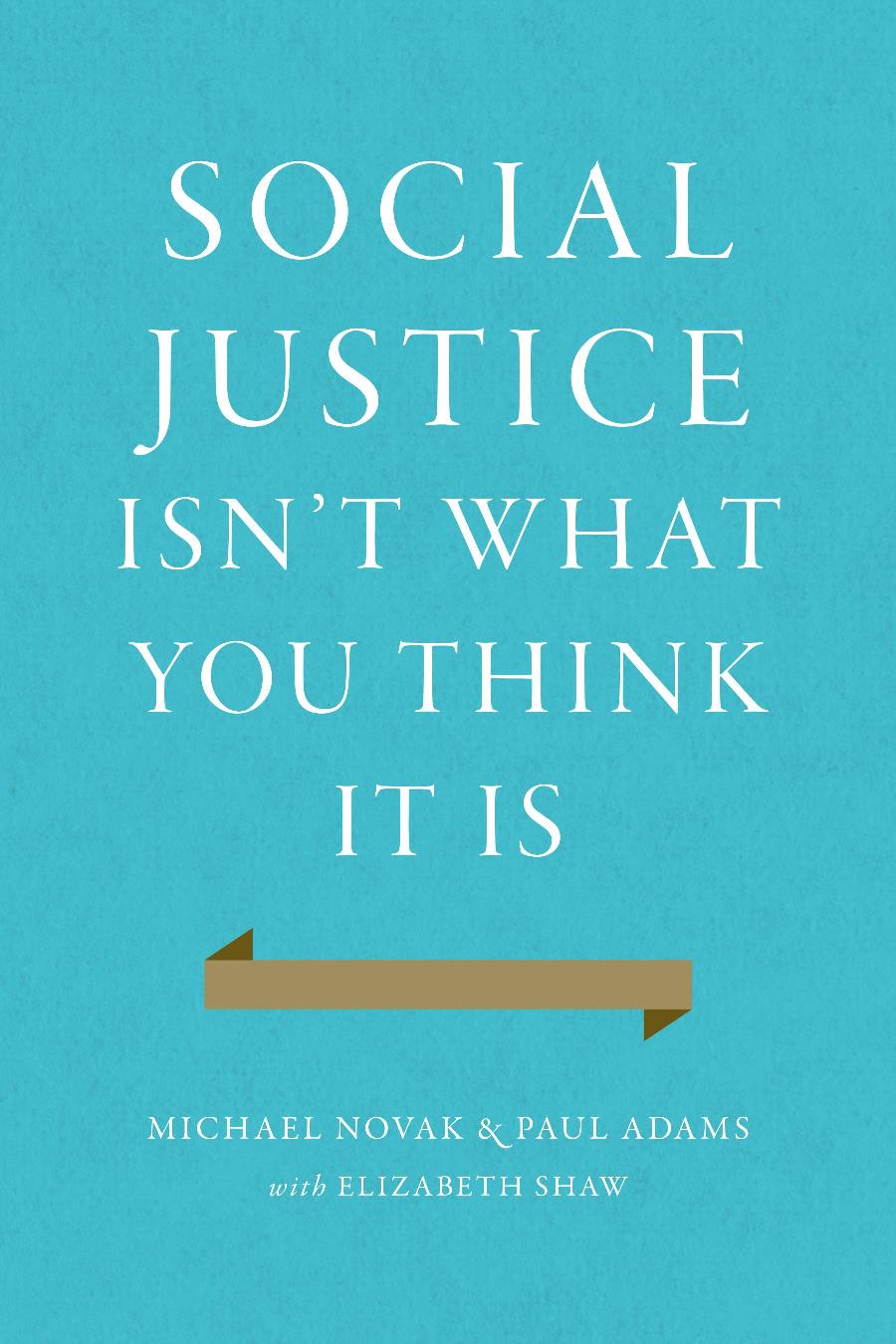
As Michael Novak observes in The Spirit of Democratic Capitalism, “A successful corporation is frequently based upon the principle of subsidiarity. According to this principle, concrete decisions must be made on the level closest to the concrete reality. Managers and workers need to trust the skills of their colleagues. A corporate strategy which overlooks this principle–and many do–falls prey to all the vices of a command economy, in which all orders come from above.”

Read more on No Executive Is An Island…

Today the Acton Institute announced the 2013 Novak Award winner. Full release follows:

Although he has only recently obtained his doctorate, David Paul Deavel’s work is already marking him as one of the leading American scholars researching questions of religion and liberty. In recognition of his early promise, the academic staff at the Acton Institute has named Deavel the recipient of the 2013 Novak Award.

Read more on News: Acton Institute Names David Deavel the 2013 Novak Award Winner…

JMM_15.2_WebThe newest issue of the Journal of Markets & Morality has been published. The issue is available in digital format online and should be arriving in print in the next few weeks for subscribers. This issue continues to offer academic engagement with the morality of the marketplace and with faith and the free society, including articles on economic engagement with Pope Benedict XVI’s encyclical letter Caritas in Veritate, biblical teaching on wealth and poverty, schools as social enterprises, the Reformed philosopher Herman Dooyeweerd’s economic theory, and much more.

As we have done in the past, Jordan Ballor’s editorial is open access, even to non-subscribers. In “Between Greedy Individualism Editorial and Benevolent Collectivism” he examines the enduring impact of Michael Novak’s The Spirit of Democratic Capitalism, writing,

At the time of its publication, Novak’s work must have been like a window thrust wide open in a dank room, introducing a breath of fresh air and the sanitizing rays of sunlight. Against ideologies that posit state power as a neutral or even benevolent force arising of necessity against the rapaciousness of the market, Novak observed instead that it was democratic capitalism that arose first as a system designed to check the invasiveness of state tyranny. The “founders of democratic capitalism,” wrote Novak, “wished to build a center of power to rival the power of the state.” Indeed, “they did not fear unrestrained economic power as much as they feared political tyranny.” Still more would they fear the union of economic and political power that we find all too often today in corrupt and cronyist regimes.

You can read his full editorial here. Read more on New Issue of the Journal of Markets & Morality (15.2)…

Rome contributor to ZENIT, Stefanie DeAngelo, recently interviewed the Acton Institute’s 2012 Novak Award winner, Professor Giovanni Patriarca. During the interview Prof. Patriarca speaks candidly about some of his academic influences, including Michael Novak and Benedict XVI. He also offers his reasons for hope in overcoming the prolonged global economic crisis.

Some Contemporary Reflections: An Itinerary from Novak to Benedict XVI

by Stefanie DeAngelo

2012 Novak Award Winner Prof. Giovanni Patriarca

ZENIT: You have recently received the Novak Award. What are some of the major contributions of the American philosopher and theologian to our thinking about the current state of the world?

Patriarca: The work of Dr. Michael Novak is so rich that it is not easy to summarize it in a few thoughts. In addition to his famous works on economics, a number of his articles published in the last few years, especially in the journal First Things, explores some of modernity’s contradictions regarding individual and social responsibility and the demise of traditional values that were held by previous generations. As Alexis de Tocqueville also warned, the loss of a metaphysical perspective, leads to materialism and the absurdity of nihilism. Read more on Novak Award Winner reflects on influences of Benedict, Michael Novak…

On National Review Online, Acton Research Director Samuel Gregg offers an analysis of last night’s debate between President Barack Obama and Gov. Mitt Romney. Gregg begins with the assertion by Melinda Henneberger of the Washington Post that the candidates are ignoring poor and working-class Americans. Gregg responds:

Read more on Samuel Gregg: Who’s Really Forgotten the Poor…

Andrew Knot
posted by on Wednesday, August 15, 2012

Acton Research Director Samuel Gregg is featured in The American Spectator today with an article titled, “The Book That Changed Reality.” The piece lauds Catholic philosopher, journalist and theologian Michael Novak’s groundbreaking 1982 book, The Spirit of Democratic Capitalism. Called his magnum opus, The Spirit of Democratic Capitalism synthesized a moral defense of capitalism with existing cultural and political arguments. Gregg notes this and comments on the book’s timely publication and lasting influence:
Read more on Gregg: A Book That Changed Reality…

Last week’s Wall Street Journal features a column from Michael Meyerson detailing the religious perspective of the Declaration of Independence. With questions of religious liberty occupying a sizable space in the public square, the article is especially timely. According to Meyerson, the Declaration’s brilliance lies in the “theologically bilingual” language of the Framers. Phrases like “endowed by their Creator with certain inalienable rights” employ what he calls a nondenominational inclusivism, a show of rhetoric that neither endorses nor rejects any particular religious ideology. The underlying implication of this statement, which captures the broader thrust of Meyerson’s article, is that the Framers recognized religion’s intrinsic value in a democratic state. He goes on to argue that the Framers’ understood religious expression as not only permissible, but desirable, for a budding nation. This is especially evident in two oft-forgotten but explicitly religious passages of the Declaration. First, the Framers’ acknowledged their own  “appealing to the Supreme Judge of the world for the rectitude of our intentions.” They also professed a “firm reliance on the protection of divine Providence.” Such phraseology, Meyerson argues, testifies to the value that the Framers’–among them some staunch supporters of church-state separation–placed on religious freedom:

Read more on The Declaration of Independence and the Necessity of Religion…

On the drive over to Acton University this morning I heard an argument on the radio about how the economy would have been fixed if only the dollar amount of the American Recovery and Reinvestment Act of 2009 would have been doubled. What a sad statement to pin your hope to in order to fix the American economy. That argument is unlikely to be uttered at Acton University. Fixing economic problems and lifting up the human condition is not measured by dollars here. Present at Acton University is the strong sense that solving complex problems and failures in society are attainable outside of centralization or a materialistic worldview.

Read more on Truth and Blessings at Acton University…

Acton PowerBlog RSS

Google Plus

Twitter Feed

Facebook Fan Page

Support the Acton Institute

The Acton Institute is funded through the generous contributions of individuals such as yourself. Learn more about how you can advance the cause of freedom and virtue.