Posts tagged with: music

Jordan J. Ballor
posted by on Wednesday, February 6, 2013

Seize the DayIn Businessweek late last year, Jason Zinoman noted the Broadway revival of Glengarry Glen Ross with Al Pacino as Levine. The play, says Zinoman, “speaks as directly to the economic anxieties of today as when it opened on Broadway in 1984, at the end of Ronald Reagan’s first term. Then, the play was widely seen by critics as a left-wing attack on a free-market system run amok.”

But as he also notes,

Glengarry Glen Ross is often compared to Arthur Miller’s Death of a Salesman, but the fundamental difference is that Mamet shows us in concrete detail the value of work. He lets the audience see salesmen doing their job, and then distinguishes between those who do it well and those who don’t. In fact, as corrupt as the office may be, there is a meritocratic ethos at its core—the most impressive salesman, Roma, is also the most successful. Levene, by contrast, repeats himself, caves in negotiation, lies poorly. It’s easy to have sympathy for him, but hard to conclude that he doesn’t deserve to get paid less than Roma. Look closely enough at this play and you’ll find a belief in the market as well as a critique of it. Like most great dramas or novels, its ideas are far too complicated to fit into a slogan.

As another great work of fiction that likewise doesn’t fit neatly into a simple binary pattern, in between Death of a Salesman (1949) and Glengarry Glen Ross (1984), I’d like to also highlight a short novel I recently read, Saul Bellow’s Seize the Day (1956). Seize the Day follows the travails of hapless Tommy Wilhelm as he tries to scrape out a living in New York, or at least as he tries to appear to try to do so. There’s some serious engagement with the realities of internalized expectations, competition, envy, hucksterism, and the phenomena of commodity speculation.
Read more on Parenting under Poverty and Affluence…

Bruce Edward Walker
posted by on Wednesday, February 8, 2012

While reading the Wall Street Journal not so long ago, I came across an article and two opinion pieces that, each in their way, told a story far different than one rendered in Bruce Springsteen’s forthcoming album, Wrecking Ball.

Read more on Bruce Springsteen’s Charity Bawl…

Ray Nothstine
posted by on Monday, December 19, 2011

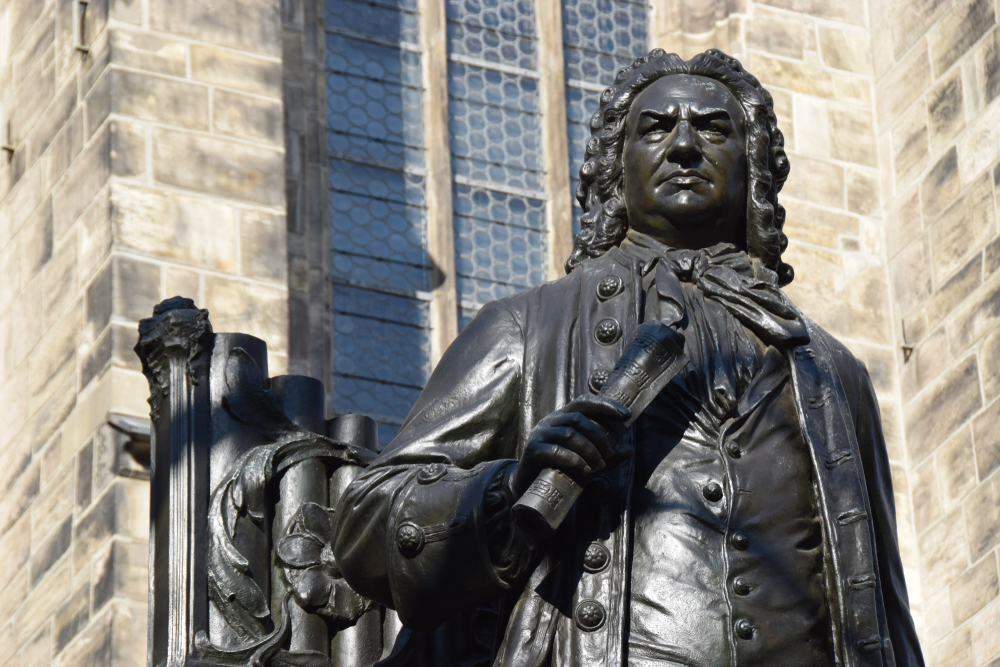
With its subject, use of Scripture, and majestic soaring choruses, George Ferederic Handel’s Messiah is easily the most recognizable musical piece in Western Civilization. It is also perhaps the most widely performed piece of classical or choral music in the West. After hearing a performance of the Messiah, fellow composer Franz Joseph Haydn simply said of Handel, “This man is the master of us all.” Not to be outdone, Beethoven declared, “Handel is the greatest composer who ever lived. I would bare my head and kneel at his grave.”

Read more on Handel, Messiah, and Entrepreneurship…

Jordan J. Ballor
posted by on Wednesday, September 7, 2011

In this week’s Acton Commentary, “Work and Prayer: Of Coins, Sheep, and Men,” I explore what the parable of the Prodigal Son (when read in conjunction with the parables of the Lost Coin and the Lost Sheep) has to teach us about stewardship:

Read more on Stewardship and the Prodigal Son…

The film Lt. Dan Band for the Common Good kicks off with the Abraham Lincoln quote, “Honor to him, who braves for the common good.” The words are appropriate. In 2003, wanting to do even more for America’s service men and women, Gary Sinise formed the Lt. Dan Jam Band. The band name was easily decided because many soldiers, sailors, Marines, and airmen did not know Sinise by name and just called him “Lt. Dan.” The moniker is based on his well known portrayal of an Army lieutenant who lost his legs in Vietnam in the Hollywood film Forrest Gump.

Read more on Review: Lt. Dan Band for the Common Good…

John Couretas
posted by on Saturday, December 25, 2010

L’Accorche-Choeur, Ensemble vocal Fribourg. Veni, Veni Emmanuel is a synthesis of the great “O Antiphons” that are used for Vespers during the octave before Christmas (Dec. 17-23). These antiphons are of ancient origin and date back to at least the ninth century.

Read more on Veni Veni Emmanuel…

Soli Deo Gloria: “to God alone be the Glory.” J. S. Bach often wrote this (or its abbreviation “S.D.G.”) at the conclusion of his scores (secular as well as sacred). Also listen to parts two and three of this recording made at Pilgrimage Church Maria Himmelfahrt, Tading, Germany, 2005.

Read more on J. S. Bach — Christmas Oratorio (Weihnachtsoratorium)…

Jordan J. Ballor
posted by on Monday, November 19, 2007

Last night the American Music Awards were televised on ABC. Among the big winners were alumni of the hit TV show, “American Idol,” whose stars won 3 AMAs.

Kid Rock, the Rock N Roll “Jesus.”

But there was another kind of “idol” on display at the AMAs, as Detroit’s own Kid Rock was a presenter and did a spoof of his fight with rocker Tommy Lee in a comedy bit with host Jimmy Kimmel. Kid Rock released a new album last month, “Rock N Roll Jesus,” which received 4 out of 5 stars from Rolling Stone.

Read more on Rock N Roll ‘Jesus’…

Ray Nothstine
posted by on Monday, July 16, 2007

O for a thousand tongues to sing
My great Redeemer’s praise,
The glories of my God and King,
The triumphs of His grace!

The great hymn writer Charles Wesley was born three hundred years ago in 1707. Wesley has sometimes been referred to as the forgotten Wesley, because of brother John Wesley’s profound organizational skills that launched the American Methodist movement.

Read more on Charles Wesley: 300 Years…

There once was a time when it was, in practice at least, more difficult and costly to copy videocassette tapes than it was music tapes, compact discs, or computer programs. That, in part, is the justification for how the US Copyright code treats music and computer software differently than, say, movies.

Read more on Do unto Music as is Done unto Movies…

Acton PowerBlog RSS

Google Plus

Twitter Feed

Facebook Fan Page

Support the Acton Institute

The Acton Institute is funded through the generous contributions of individuals such as yourself. Learn more about how you can advance the cause of freedom and virtue.