Posts tagged with: pentecostalism

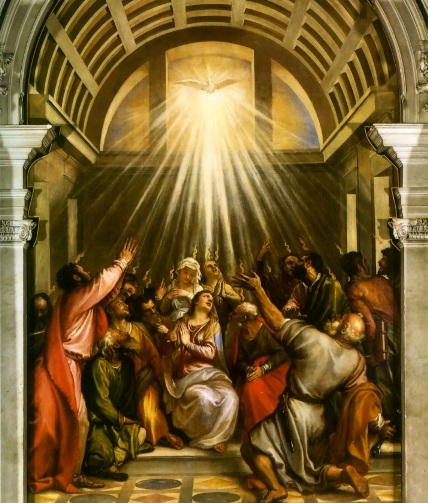
PentecostOver at First Things, Peter Leithart uses the occasion of Pentecost as a launching pad for highlighting the primary theme of his latest book: “The West has been busy building neo-Babel” and the time is ripe for repentance and revival:

We’ve dispensed with the effort to connect heaven and earth, since up above it’s only galaxies. But we share the other aspirations of Babel, as well as Babel’s humanist orientation. Classes and ethnicities can be synchronized, we think, without divine assistance. No need for a Holy Spirit to baptize into one body. We can create a universal language without the gift of tongues. The family resemblance between liberal virtues and the fruits of the Spirit is not an accident. It’s a heresy worthy of Flannery O’Connor: Hazel Motes invented the “Holy Church of Christ without Christ”; the Enlightenment created Pentecostalism without the Spirit.

The experiment has gone relatively well for some time, but the project is fraying. To many among our elites, Enlightenment universalism has been unmasked as nothing more than an effete form of tribalism. Secular defenses of liberal tolerance collapse into incoherence. And alongside these theoretical challenges is the immense practical problem of harmonizing the spirits of the myriad subcultures that occupy the West. I don’t need to repeat the litany of multicultural challenges yet again. Everyone knows that it’s an open question whether we have the intellectual and moral resources to sustain the experiment in secular Pentecostalism much longer. Like other Babels, this one will eventually crumble and its denizens will scatter.

Without the Spirit, such an “experiment in secular Pentecostalism,” will never flourish in that peculiar harmony so characteristic of the upper room and the transformation thereafter — diverse and unified, spontaneous yet ordered. “The Church has only one antidote to Babel,” Leithart writes: “the anti-Babel and fulfilled Babel of Pentecost.” The solution, according to Leithart, is to nurture a rightly aligned, wholly devoted, and thoroughly spiritual “Pentecostal Enlightenment.” Read more on Babel Inverted: The Power and Promise of Pentecost…

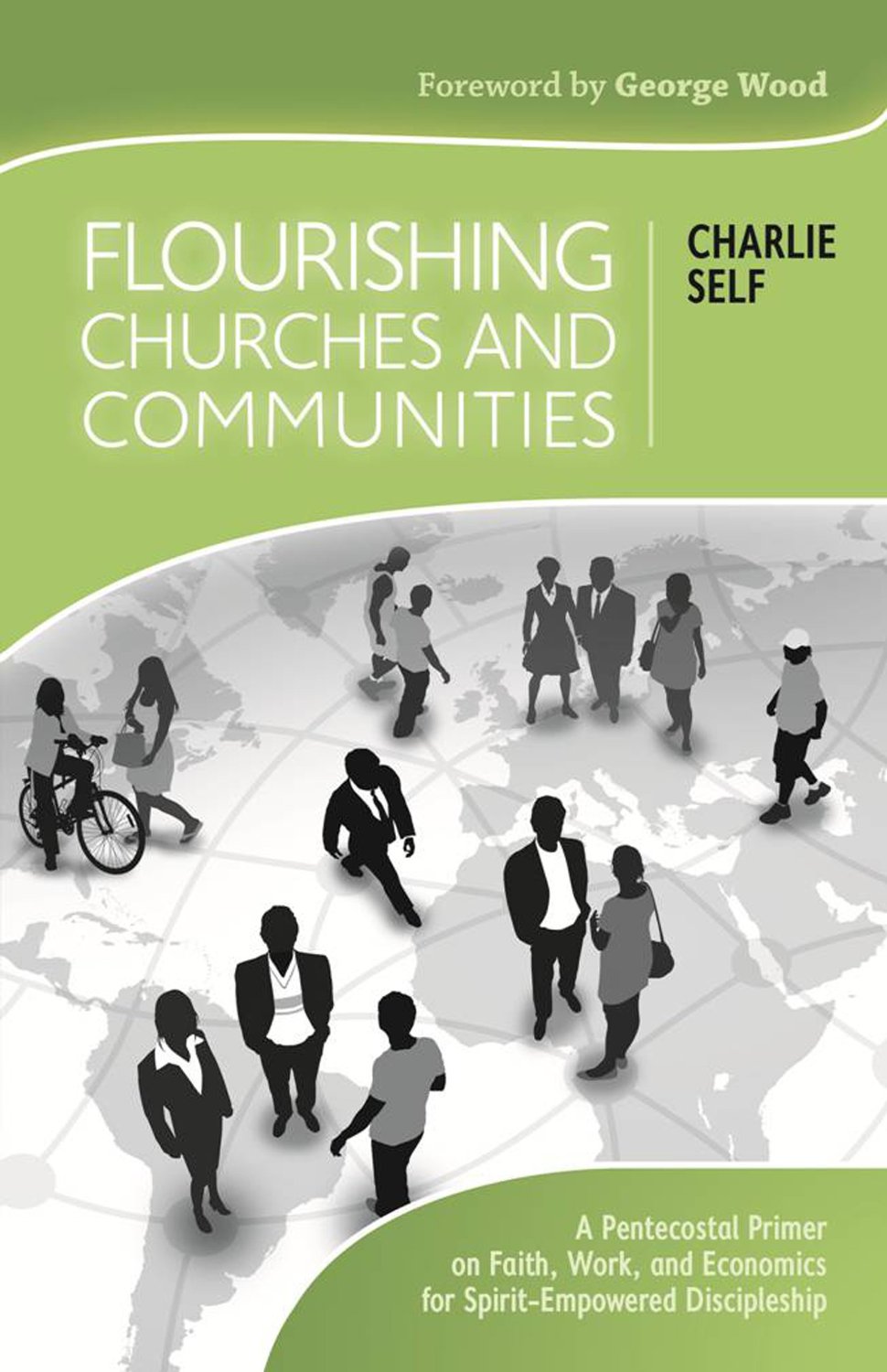
Charlie SelfAEI’s Values & Capitalism recently posted an interview with Dr. Charlie Self, professor at Assemblies of God Theological Seminary and senior advisor for the Acton Institute. In the last few weeks, I’ve posted several excerpts from Self’s new book, Flourishing Churches and Communities: A Pentecostal Primer on Faith, Work, and Economics for Spirit-Empowered Discipleship, which he discusses at length in the interview.

Read more on Charlie Self on Spiritual Empowerment in Work and Economics…

Over at the IFWE blog, Art Lindsley continues his series on the gifts of the Spirit, offering seven reasons the gifts of the Holy Spirit matter for our work. “Whether working in creation or regeneration, the Spirit constantly empowers us to carry out the callings God places on our lives,” Lindsley writes.

Providing some brief Biblical basis for each, he offers the following reasons:

  1. The Spirit gives us power.
  2. We shouldn’t separate “natural” and “spiritual” gifts.
  3. The Spirit helps us reach our true potential.
  4. The Spirit provides gifts when we need them.
  5. The Spirit can increase our gifts for specific tasks.
  6. The Spirit’s gifts apply to all contexts, not just spiritual ones.
  7. The gift of leadership applies on many levels.

These points connect well with those developed at length in Charlie Self’s new book, Flourishing Churches and Communities: A Pentecostal Primer on Faith, Work, and Economics for Spirit-Empowered Discipleship, in which Self explores the many ways that the work of the Spirit impacts the work of the Gospel in our churches and communities.

In his chapter on how the Holy Spirit empowers transformation of the economy and society, Self explains the role the Holy Spirit plays in moving us toward a more “creative integration” on such matters: Read more on Integrating Faith, Work, and Economics by the Power of the Holy Spirit…

Flourishing Churches and CommunitiesI recently wrote about the need to reach beyond an earthbound economics, re-orienting our thinking around a more transcendent framework that requires active spiritual engagement and discernment. Even as Christians, far too often we set our focus too strongly on temporal features like material needs, happiness, and quality of life—all of which come into play accordingly—without first concerning ourselves with what God is actually calling us to do as individuals.

Read more on From the Roots of Society to the Fruits of Discipleship…

The Associated Press has an article reporting on controversial statements made by Governor Sarah Palin at the Wasilla Assemby of God church in Wasilla, Alaska. Governor Palin makes an appeal for prayer about troops in Iraq declaring, “Our national leaders are sending them out on a task that is from God, that’s what we have to make sure that we’re praying for, that there is a plan and that plan is God’s plan.” She also made an appeal for students to pray for the implementation of a $30 billion natural gas pipeline in the state. The short impromptu address was given to graduating students at the Assembly of God church in Palin’s hometown of Wasilla.

Read more on Sarah Palin’s Controversial Prayer Appeal?…

Related to last week’s post about Reformed education and Pentecostalism, I point you to this post by Rod Dreher, who discusses his interview with Josiah Idowu-Fearon, the Anglican Archbishop of Kaduna state in Nigeria. Dreher relates the following:

Read more on Pentecostalism, Poverty, and the Global South…

I’ve heard it said from a number of leaders in the Reformed community that there is a great opportunity for Reformed churches to be a positive influence on the growth of Christianity abroad, particularly in places like Africa where Pentecostalism has made such large inroads.

Read more on Reformed Education and Pentecostal Evangelism…

Acton PowerBlog RSS

Google Plus

Twitter Feed

Facebook Fan Page

Support the Acton Institute

The Acton Institute is funded through the generous contributions of individuals such as yourself. Learn more about how you can advance the cause of freedom and virtue.