The PowerBlog is managed by the Acton Institute, a non-profit think tank dedicated to promoting a free and virtuous society characterized by individual liberty and sustained by religious principles. Its authors are a diverse group of scholars, writers, clergy, and businesspeople who discuss a wide variety of topics connected to the relationship between religion and economics. Click here to learn more about the Acton Institute...

Pope Benedict’s Encyclical and a New World Economic Order

Louie Glinzak


Posted by Louie Glinzak
on Monday, June 22, 2009

In the midst of the release of his expected encyclical, Pope Benedict is calling for a new world economic order; a model that is “more attentive to the demands of solidarity and more respectful of human dignity.” Professor Philip Booth, editorial and program director of the Institute for Economic Affairs, and speaker at Acton University, was interviewed by The Catholic Herald, a UK paper, about the Pope’s upcoming encyclical:

…it would be dangerous to follow a path of greater socialization and greater regulation of the economy and financial sector.  This is a model that has been tried and which is failing.

But what is essential is ethical renewal in all aspects of life-including in the financial sector.  Trying to deal with problems such as the lack of ethics in economic life with more regulation is like trying to deal with promiscuity through sex education lessons – it is the wrong instrument.

Kishore Jayabalan, director of Istituto Acton in Rome and an AU lecturer, was also interviewed by The Herald.

The Pope’s challenge to all of us is that we make the best possible use of our freedom and gifts, which will require a bit more intellectual and spiritual fortitude than we’ve seen from most of our political and business leaders recently.

To read the article and more comments by Professor Booth and Jayabalan please click here.

Pope Benedict’s encyclical is expected to be released on June 29.  The Acton Institute will be commenting on the encyclical once it is released and we encourage everybody to return to the PowerBlog and our website for more commentary.

13

comments
share yours

European foreign aid caught between dishonesty and incompetence

Bernd Bergmann


Posted by Bernd Bergmann
on Wednesday, May 28, 2008

International aid groups have criticized the EU and many of its member states for falling behind their promises to step up foreign aid to 0.5 per cent of GDP by 2010 and 0.7 per cent by 2015.

On the one hand, these groups are right to expose the accounting tricks governments use in order to promote themselves as saviors of Africa. On the other hand, the aid groups should consider very carefully whether their focus on state aid is really the key towards future development in poor countries.

The problem that they indicate is that the EU and its members classify some expenses as aid although these are only indirectly related to development. This includes debt restructuring and payments to cover housing of refugee claimants in Europe.

The aid groups say that in 2007, EU nations spent around €8 billion in such non-aid items. They conclude that “on current trends, the EU will have given €75 billion less between 2005 and 2010 than was promised.”

This kind of creative accounting should not be very surprising since politicians like to claim that they are helping the poorest countries in the world but also know that it is more difficult to tell taxpayers that they have to foot the bill. In such circumstances the most convenient thing to do is to artificially inflate the aid budget with non-aid expenses.

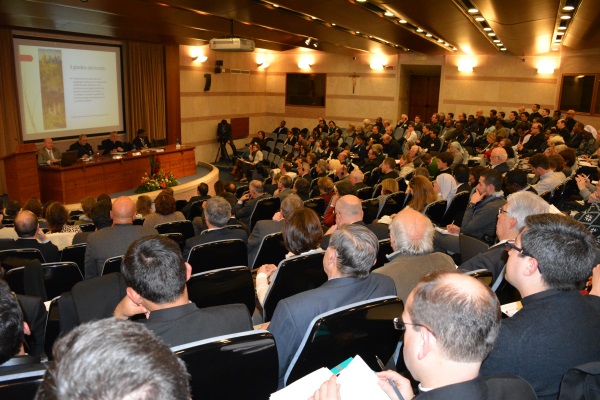
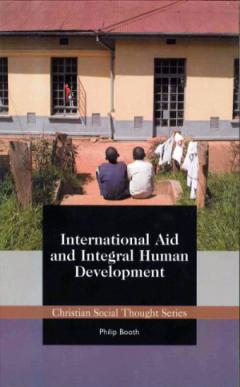
The question remains: Is state-to-state aid the most effective way to promote development? Prof. Philip Booth explained at a recent conference organized by the Acton Institute in Rome that government aid has failed on countless occasions and has even entrenched underdevelopment on some occasions.

Booth made clear that “at the empirical level, there appears to be a negative relationship between aid and growth. This does not imply cause and effect of course, but it should make us pause for thought. After the late 1970s, aid to Africa grew rapidly yet GDP growth collapsed and was close to zero or negative for over a decade from 1984. GDP growth in Africa did not start to pick up again until aid fell in the early-to-mid 1990s. In East Asia, South Asia and the Pacific, one also finds that, as aid reduced, national income increased rapidly.”

It is important to note that Booth criticized government-to-government aid and not charity in general. Whereas transfers between governments have often resulted in rent-seeking and the strengthening of dubious regimes, private initiatives do not suffer from the same problems: “None of the points I have made relate to the exercise of charity. It is important to point out that we should not wait for a just ordering of the world or good governance in recipient countries before supporting charitable relief.”

Aid groups such as Oxfam and Christian Aid would do well to turn their focus away from pressuring governments to spend more on aid and instead strengthen their efforts to encourage private initiatives.

0

comments
share yours