Posts tagged with: Philosophy of religion

John Couretas
posted by on Tuesday, October 9, 2012

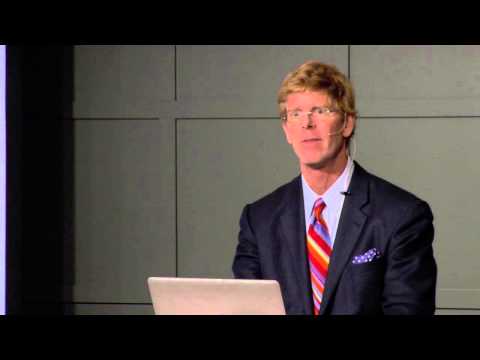
At the online Prager University, lecturer Frank Pastore asks: “Do you have the ability to shape your own destiny? Is there a difference between your mind and your brain? Or is free will just a convenient delusion? Are you really just a product of physical forces beyond your control?”

Read more on Video: Do You Have Free Will?…

Jordan J. Ballor
posted by on Friday, December 30, 2011

In part 1 of “Secular Theocracy: The Foundations and Folly of Modern Tyranny,” David Theroux of the Independent Institute outlines a history of secularism, tracing the complex relationship between religion and the spheres of society, particularly church and government. “Modern America has become a secular theocracy with a civic religion of national politics (nationalism) occupying the public realm in which government has replaced God,” he argues.

Read more on Secularism and Tyranny…

Kenneth Spence
posted by on Friday, June 24, 2011

Jeffery C. Pugh has landed every blogger’s dream: the book deal for a best-of collection of his musings. Devil’s Ink: Blog from the Basement Office is an answer to the question “What if Satan kept a blog?”—one of several (the opportunity to pun is apparently irresistible) all of which immediately invite comparison with C.S. Lewis’s The Screwtape Letters. Pugh anticipates that comparison in his book’s preface, saying he offers “another way of looking at evil,” a modern way that reflects how the “locale of evil has changed,” and confronts particularly its rise in popular culture.

Read more on The Diabolic Comedy…

Jordan J. Ballor
posted by on Wednesday, February 23, 2011

From Abraham Kuyper’s opening address to the First Social Congress in Amsterdam, November 9, 1891, The Problem of Poverty:

The first article of any social program that will bring salvation, therefore, must remain: “I believe in God the Father Almighty, Maker of heaven and earth.” This article is today being erased. Men refuse any longer to recognize God in statecraft. This is not because they do not find the poetry of religion charming, but because whoever says I believe in God thereby acknowledges God’s ordering of nature and an ordinance of God above human conscience–a higher will to which we as creatures must submit ourselves.

Kuyper said this at the close of the nineteenth century, and in the intervening decades the question of the place of the Christian faith in public life has become even more pressing.

Read more on Kuyper on Secularism…

Jordan J. Ballor
posted by on Monday, February 14, 2011

I’m pleased to report that Hunter Baker is the recipient of the 2011 Novak Award from the Acton Institute. Hunter is associate dean of arts and sciences and associate professor of political science at Union University in Jackson, Tenn., and author of The End of Secularism (Crossway Academic, 2009).

Read more on Hunter Baker Wins 2011 Novak Award…

John Couretas
posted by on Friday, November 19, 2010

The University of Maryland — Baltimore County Orthodox Christian Fellowship and the school’s Secular Student Alliance sponsored a Nov. 16 debate on the subject of “The Source of Human Morality” with about 450 people in attendance. Fr. Hans Jacobse, an Orthodox Christian priest and president of the American Orthodox Institute (he blogs here), squared off with Matt Dillahunty, the president of the Atheist Community of Austin, and host of the public access television and Internet show The Atheist Experience. The debate’s organizer noted that Dillahunty “was raised as a fundamentalist Baptist, and was on track to become a minister until he started asking questions about the reasons for his belief. He rejected religion, and now serves as a public voice for rationality and secular morality.”

Read more on Debate: The Source of Human Morality…

Acton PowerBlog RSS

Google Plus

Twitter Feed

Facebook Fan Page

Support the Acton Institute

The Acton Institute is funded through the generous contributions of individuals such as yourself. Learn more about how you can advance the cause of freedom and virtue.