Posts tagged with: Pope Leo XIII

Elise Hilton
posted by on Monday, December 10, 2012

Anthony Esolen, in an on-going series in Crisis Magazine, ponders Catholic Social Teaching, as presented by Pope Leo XIII. Esolen says that Pope Leo’s rich view of humanity arms us today in not only promoting the free market, but in combating the meager thoughts proposed by socialism and liberalism.

How does Leo XIII do this? By truly understanding the human person.

Human beings are embodied rational souls, and everything they touch they mark with the fire of their spirit, the gift of God.  That is the ground of their right to property.  But they are not solitary atoms either, rebounding against one another in a chaotic war of all against all.  For the human soul is made for love, and can only attain its end by communion with other souls.  Therefore, long before we meet the State, we find human beings fashioning not artificial but real bodies in turn: families and clans and villages. It is absolutely crucial to understand this.

Catholic Social Teaching affirms the reality of the bodies that human beings form; they are not notional, but real and living, and they imply real rights and duties among the members, who are themselves not mere parts, but whole persons.  [emphasis original]

Read more on Masses and Quantity vs. Duty and Love…

Here is the comment posted this this morning on the National Catholic Reporter article titled, “Statement on economy denounced by archbishop fails to pass.”

Full statement follows:

An important clarification.

Archbishop Fiorenza’s assertion that the Acton Institute views Rerum Novarum as “no longer applicable today” is incorrect. The archbishop is most likely basing this claim on a June 2012 America Magazine blog post by Vincent Miller titled, “Sirico Completely Wrong on Church’s Social Teaching.”

Read more on Acton Institute responds to National Catholic Reporter article on bishops’ economic statement…

Review of The Tyranny of Cliches: How Liberals Cheat in the War of Ideas, by Jonah Goldberg, (New York, NY: Sentinel, 2012)

With proper training, and maybe a bit of experience on the debate team, it’s easy to recognize logical fallacies in an opponent’s argument. When it comes to popular give and take, the sort of thing we have so much of now on opinion websites and news channels, there hasn’t been decent preparation for arguments outside the columns and blog posts of Jonah Goldberg.

In The Tyranny of Cliches, the National Review contributor, syndicated columnist, author of the bestseller Liberal Fascism, and American Enterprise Institute fellow, convincingly demolishes the Left’s oft-repeated, bumper-sticker slogans that seemingly defy repudiation by many who fear being depicted as a heartless jackanape.

For example, if an impassioned public figure pleads that yet another government expansion and encroachment is “for the children” it is therefore ipso facto in the best interests of everyone. This is a “case-closed” logical fallacy that circumvents rational discussion by declaring that if millions of cute kids benefit, only meanies, bullies, or some contemporary amalgamation of Attila the Hun, Adolph Hitler, Pol Pot, Joseph Stalin, and Darth Vader could oppose it.

Not so fast. Goldberg’s new book wonderfully dissects such liberal shibboleths as “social justice,” “diversity,” attacks on organized religion in general and Roman Catholicism in particular, and “separation of church and state” to reveal the hollowness within. In this regard, Goldberg resembles most William F. Buckley, with the difference that the latter stood athwart history yelling stop, and the former stands astride postmodernism to scream “enough!”
Read more on A Field Guide to the Baseless Claims and Outrageous Canards of the Liberal-Progressive…

On October 31, 1998, Charles Colson came to Calvin College in Grand Rapids, Michigan to deliver the closing address at Acton’s “The Legacy of Abraham Kuyper & Leo XIII” conference, sponsored jointly with Calvin Seminary.

Read more on Video: Chuck Colson speaks at the Abraham Kuyper & Leo XIII Conference…

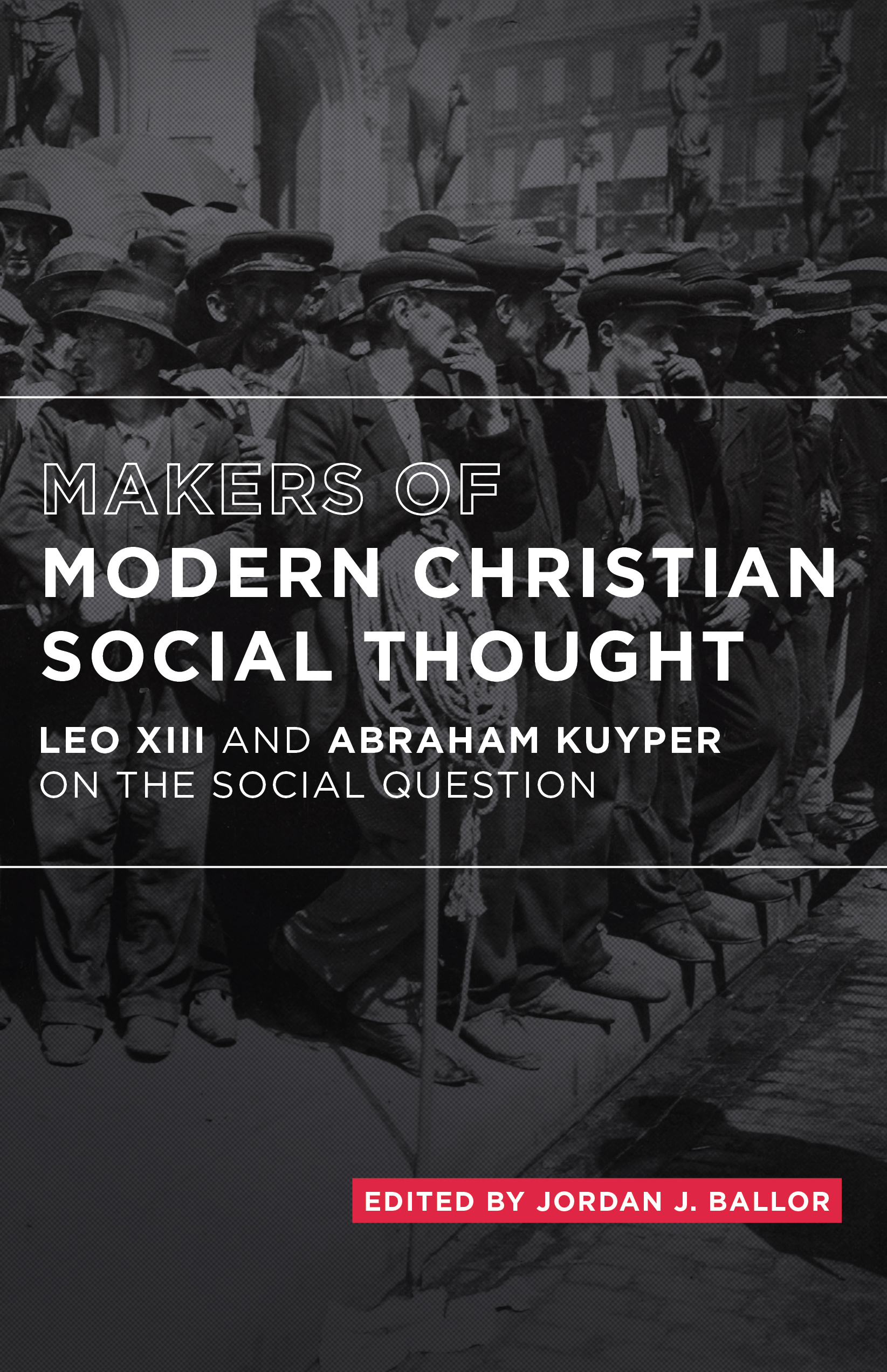
The fall 2011 issue of the Journal of Markets & Morality has now been finalized and will be heading to print. It is a bit overdue, but this issue is one of our largest ever, and it includes a number of noteworthy features on the special theme issue topic “Modern Christian Social Thought.” As I outline in the editorial for this issue (PDF), 2011 marked a number of significant anniversaries, including the 120th anniversaries of Rerum Novarum and the First Christian Social Congress in Amsterdam.

Read more on Preview of JMM 14.2: Modern Christian Social Thought…

The Center for American Progress (CAP) has boldly rebutted the arguments of our own Kishore Jayabalan, director of Istituto Acton, concerning the Vatican’s note on a “central world bank.” It has done so by showing him to be lacking in “respect for the inherent dignity of human life.” … Yes, we are talking about that Center for American Progress.

Read more on BREAKING: Center for American Progress Takes Moral High Ground…

James Hoffa put on quite a performance this weekend—first on CNN’s “State of the Union,” and then in Detroit at a Labor rally with President Obama. Also this weekend, President Biden revealed that the White House seems to have given up and decided America is already a “house divided,” with “barbarians at the gate” in the form of the Tea Party. Coverage of these incidents is available from whichever news outlet you trust, but there is one thing that CNN has probably missed: this weekend’s rhetoric is a vivid reminder that most labor organizations have moved far beyond their proper and defensible role.

Read more on Jumping the Shark: Hoffa’s Rant and Rerum Novarum…

I’ve issued a call for publication for a special issue of the Journal of Markets & Morality to appear in the Fall of 2011 (14.2). The details are below, and you can download and circulate a PDF as well.

Read more on CFP: Modern Christian Social Thought (JMM 14.2)…

Dr. Paul Oslington, professor of economics at Australian Catholic University, has a piece up today that examines the scope of social encyclicals, beginning with Rerum Novarum in 1891 and focusing especially on the similarities and differences between John Paul II’s Centesimus Annus and Benedict XVI’s Caritas in Veritate.

Read more on Oslington, Economics, and the Social Encyclicals…

Father John Zuhlsdorf, who runs the popular Catholic blog “What Does the Prayer Really Say?” has opened a new discussion thread on the work of the Acton Institute. He explains:

In light of what is going on in the world’s economies, and in light of what will be increasing tension between secular governments and the Church, which has her body of teaching on social issues, it is a good idea to have a strong discussion about Acton and the Church’s social teachings.

Read more on Fr. Z: The ‘social Magisterium’ and Acton Institute…

Acton PowerBlog RSS

Google Plus

Twitter Feed

Facebook Fan Page

Support the Acton Institute

The Acton Institute is funded through the generous contributions of individuals such as yourself. Learn more about how you can advance the cause of freedom and virtue.