Posts tagged with: Religion/Belief

Joseph Sunde
posted by on Tuesday, April 23, 2013

tworoadsOver at Fare Forward, Cole Carnesecca provides some great insights into how we should think about calling, offering some similar sentiments to those expressed in my recent post on family and vocation. “Whatever else you may think you are called to,” Carnesecca writes, “if you have a spouse and children, you are called to your family.”

Focusing on the troubled marriages of Methodism founder John Wesley and Chinese evangelist John Sung, Carnesecca explains how a misaligned and over-spiritualized concept of calling can lead us to neglect our basic responsibilities:

We often can over-spiritualize [calling], defining it as a single God-ordained path or the type of thing that comes to the missionary or pastor but not to the lay member. Or we under-spiritualize it, thinking of it as more and no less than a “career.” Both of these approaches miss two crucial points about calling.

I like to describe calling (in my other life as a youth pastor) as the meeting point of opportunity and obligation—what we are capable of doing and what we are responsible for. I mean this to apply to more “everyday” forms of calling— the way that God leads and guides individuals into life choices and experiences—and not the more “Damascus Road” forms of calling that are less difficult to understand. But for any form of calling, both opportunity and obligation must be taken into account and both can be misunderstood.

Indeed, through an orientation of ultimate obedience to God — “thy will be done” — it seems impossible to separate the two. God will not call us to areas that will involve a breaching of basic obligations and responsibilities, whether to the family or otherwise. Likewise, he will not call us to something like family if it will mean the destruction of our God-ordained purpose in this life. Read more on Where Opportunity and Obligation Meet…

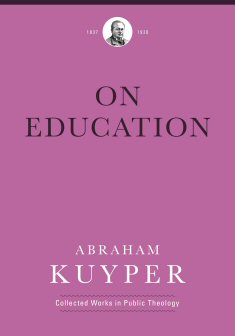
This past weekend, I had the privilege to attend and present a paper at the 2013 Kuyper Center for Public Theology conference at Princeton Seminary. The conference was on the subject of “Church and Academy” and focused not only on the relationship between the institutions of the Church and the university, but also on questions such as whether theology still has a place in the academy and what place that might be. The discussion raised a number of important questions that I would like to reflect on briefly here.

In the first place, I was impressed by Dr. Gordon Graham’s lecture on the idea of the Christian scholar. He began by exploring a distinction made by Abraham Kuyper in his work Wisdom & Wonder. Kuyper writes (in 1905),
Read more on Christian Scholarship and the Crisis of the University…

Elise Hilton
posted by on Friday, April 19, 2013

There is a saying that going to church doesn’t make you a Christian anymore than standing in a garage makes you a car. Apparently, the good folks of Freedom From Religion Foundation and the 7th US District Court aren’t clear on this…and they are making a federal case of it.mustang_gt_fastback-1965

According to Robert P. George in The Washington Times, the Freedom From Religion Foundation can’t bear the thought of a public high school graduation being held in a church, even though the only reason it’s being held there is for convenience sake:

The case began in 2009, when a secularist organization sued the Elmbrook School District in Wisconsin for its decade long practice of renting a church auditorium for graduation. The district chose the church auditorium at the request of its students, who complained that the prior venue the school gymnasium was cramped and uncomfortable, and lacked adequate parking, air conditioning and seating. It is undisputed that the district selected the auditorium for purely secular reasons namely, the convenient location, ample seating, free parking, air conditioning and low cost and that the graduation events were devoid of prayer or any other religious references.

Read more on Common Sense and Religious Hostility…

Joseph Sunde
posted by on Friday, April 19, 2013

I recently argued that although vocation is important, there is a certain something that goes before and beyond it. As Lester DeKoster puts it, “The meaning we seek has to be in work itself.”

Read more on Before and Beyond the Common Good…

Leading religion commentator, Terry Mattingly looks back on Easter in an article about Catholics attending services despite the overcrowding from “Poinsettia and Lily Catholics,” those who only attend a Mass on Christmas and Easter.

Read more on Terry Mattingly and Joe Carter on Surviving Easter…

Nobody can know everything about everything, but in the age of the internet, fact-checking isn’t too tough. It’s one thing for a high-school student to attempt to slide by on “facts” in a research paper for sophomore social studies, but another when professional journalists make errors about easily investigated pieces of knowledge.

Read more on Does the Media Need to Be Schooled in Religion?…

The Pew Forum on Religion & Public Life has been studying the steady rise of hostility towards religious expression and religious liberty worldwide. In fact, they found that restrictions on religion rose in every major area of the world, including the United States, since the study began in 2009.

Citing what the Pew Forum calls “social hostilities” (as opposed to government hostilities), the study found that Pakistan, India and Iraq were the most hostile countries to religious freedom.

The Social Hostilities Index (SHI) measures acts of religious hostility by private individuals, organizations and social groups. This includes mob or sectarian violence, harassment over attire for religious reasons and other religion-related intimidation or abuse.

Read more on Hostility Against Religion: It’s a Rising Tide…

President Obama’s Advisory Council on Faith-based and Neighborhood Partnerships has released its recommendations to the president on Building Partnership to Eradicate Modern-Day Slavery. Here are some things you need to know.

Read more on 5 Things To Know About the Obama Administration and Human Trafficking…

Over at the IFWE blog, Elise Amyx takes a look at Brian Fikkert’s argument about the origins of the modern American welfare state:

According to Fikkert, the evangelical church’s retreat from poverty alleviation between 1900 and 1930 encouraged the welfare state to grow to its size today. Church historians refer to this era as the “Great Reversal” because the evangelical church’s shift away from the poor was so dramatic.

In Faithful in All God’s House: Stewardship and the Christian Life, Gerard Berghoef and Lester DeKoster make a similar case. They argue that “the church is largely responsible for the coming of the modern welfare community.” They also cast the hopeful vision that another reversal might occur: “The church could be largely responsible for purging welfare of its faults and problems if enough believers caught the vision.”

While Fikkert is largely drawing on the early twentieth century in America for his argument, Berghoef and DeKoster examine more broadly the Christian perspective on the relationship between faith and works of charity. This dynamic is, after all, is a perennial challenge for Christian social engagement, and the interaction between the Social Gospel and evangelicalism in America is just one example. Another is the reversal over the last century or so in the Netherlands, where there has been a move from Abraham Kuyper’s claim that “all state relief for the poor is a blot on the honor of your Savior” to the church’s plea “for social security that is not charity but a right that is fully guaranteed by government.”
Read more on A Great Reversal of the Church & the Welfare State…

albert-mohler1In a recent post on leadership and stewardship, Albert Mohler argues that although “Christians are rightly and necessarily concerned about leadership,” we often exhibit a tendency to “aim no higher than secular standards and visions of leadership.”

Instead, Mohler argues, the Christian is called to “convictional leadership,” something defined by fundamental Biblical beliefs that are “transformed into corporate action,” rather than a general deference to the status quo of secularist thinking:

Out in the secular world, the horizon of leadership is often no more distant than the next quarterly report or board meeting. For the Christian leader, the horizon and frame of reference for leadership is infinitely greater. We know that our leadership is set within the context of eternity. What we do matters now, of course, but what we do matters for eternity, precisely because we serve an eternal God and we lead those human beings for whom he has an eternal purpose.

In the past, I’ve described this as a tension between “earthbound thinking” and a more transcendent economic order, one in which we are driven by active obedience to God, empowered and directed by the wisdom of the Word and the power of the Holy Spirit. Even for Christians, it can be easy to acknowledge God’s overall message even while pursuing our own humanistic methods to pursue it — embracing his message of salvation, redemption, love, grace, and mercy, even as we look to our own earthbound plans and schemes for ways to “implement” God’s will. Read more on Albert Mohler on Leadership, Stewardship, and the Sovereignty of God…

Acton PowerBlog RSS

Google Plus

Twitter Feed

Facebook Fan Page

Support the Acton Institute

The Acton Institute is funded through the generous contributions of individuals such as yourself. Learn more about how you can advance the cause of freedom and virtue.