Posts tagged with: Religion/Belief

Nobody can know everything about everything, but in the age of the internet, fact-checking isn’t too tough. It’s one thing for a high-school student to attempt to slide by on “facts” in a research paper for sophomore social studies, but another when professional journalists make errors about easily investigated pieces of knowledge.

Read more on Does the Media Need to Be Schooled in Religion?…

The Pew Forum on Religion & Public Life has been studying the steady rise of hostility towards religious expression and religious liberty worldwide. In fact, they found that restrictions on religion rose in every major area of the world, including the United States, since the study began in 2009.

Citing what the Pew Forum calls “social hostilities” (as opposed to government hostilities), the study found that Pakistan, India and Iraq were the most hostile countries to religious freedom.

The Social Hostilities Index (SHI) measures acts of religious hostility by private individuals, organizations and social groups. This includes mob or sectarian violence, harassment over attire for religious reasons and other religion-related intimidation or abuse.

Read more on Hostility Against Religion: It’s a Rising Tide…

President Obama’s Advisory Council on Faith-based and Neighborhood Partnerships has released its recommendations to the president on Building Partnership to Eradicate Modern-Day Slavery. Here are some things you need to know.

Read more on 5 Things To Know About the Obama Administration and Human Trafficking…

Over at the IFWE blog, Elise Amyx takes a look at Brian Fikkert’s argument about the origins of the modern American welfare state:

According to Fikkert, the evangelical church’s retreat from poverty alleviation between 1900 and 1930 encouraged the welfare state to grow to its size today. Church historians refer to this era as the “Great Reversal” because the evangelical church’s shift away from the poor was so dramatic.

In Faithful in All God’s House: Stewardship and the Christian Life, Gerard Berghoef and Lester DeKoster make a similar case. They argue that “the church is largely responsible for the coming of the modern welfare community.” They also cast the hopeful vision that another reversal might occur: “The church could be largely responsible for purging welfare of its faults and problems if enough believers caught the vision.”

While Fikkert is largely drawing on the early twentieth century in America for his argument, Berghoef and DeKoster examine more broadly the Christian perspective on the relationship between faith and works of charity. This dynamic is, after all, is a perennial challenge for Christian social engagement, and the interaction between the Social Gospel and evangelicalism in America is just one example. Another is the reversal over the last century or so in the Netherlands, where there has been a move from Abraham Kuyper’s claim that “all state relief for the poor is a blot on the honor of your Savior” to the church’s plea “for social security that is not charity but a right that is fully guaranteed by government.”
Read more on A Great Reversal of the Church & the Welfare State…

albert-mohler1In a recent post on leadership and stewardship, Albert Mohler argues that although “Christians are rightly and necessarily concerned about leadership,” we often exhibit a tendency to “aim no higher than secular standards and visions of leadership.”

Instead, Mohler argues, the Christian is called to “convictional leadership,” something defined by fundamental Biblical beliefs that are “transformed into corporate action,” rather than a general deference to the status quo of secularist thinking:

Out in the secular world, the horizon of leadership is often no more distant than the next quarterly report or board meeting. For the Christian leader, the horizon and frame of reference for leadership is infinitely greater. We know that our leadership is set within the context of eternity. What we do matters now, of course, but what we do matters for eternity, precisely because we serve an eternal God and we lead those human beings for whom he has an eternal purpose.

In the past, I’ve described this as a tension between “earthbound thinking” and a more transcendent economic order, one in which we are driven by active obedience to God, empowered and directed by the wisdom of the Word and the power of the Holy Spirit. Even for Christians, it can be easy to acknowledge God’s overall message even while pursuing our own humanistic methods to pursue it — embracing his message of salvation, redemption, love, grace, and mercy, even as we look to our own earthbound plans and schemes for ways to “implement” God’s will. Read more on Albert Mohler on Leadership, Stewardship, and the Sovereignty of God…

Elise Hilton
posted by on Thursday, April 4, 2013

In a world apparently dominated by Christian footwear, a Berlin-based company has come to the rescue of atheists. Atheist Shoes boast a line of footwear that proudly announces the wearer’s lack of faith. The soles of the shoes (not to be confused with “souls”, mind you) state “Ich bin Atheist” (“I am an atheist”). The company  thinks the world needed a “nice, understated way for people to profess their godlessness”, and the founders of the company wanted to help atheists proclaim their unbelief, especially in a world hostile to non-believers (despite the fact that Christians are now among the most persecuted people on the planet right now.)

We’re lucky to live in Berlin, a city where roughly two thirds of the population are atheists, but we’re conscious there are still places where it’s difficult to be godless.

Read more on Taking God Out of Good…

Today at Ethika Politika, Fr. Gregory Jensen, a contributor to the PowerBlog as well as other Acton publications, explores the potential of the Orthodox Christian ascetic tradition as a response to the paradox of American individualism:

Read more on Fr. Gregory Jensen on American Individualism and Orthodox Asceticism…

Philip at the Solovki monastery

In the most recent issue of Religion & Liberty, the “In the Liberal Tradition” section profiles Metropolitan St. Philip II of Moscow for his defense of faith and freedom in the face of the tyranny of Tsar Ivan IV, known to history as “Ivan the Terrible.” In contrast to Ivan, who used his power to oppress his own people, Philip taught, “He alone can in truth call himself sovereign who is master of himself, who is not subject to his passions and conquers by charity.” Among the many spiritual disciplines of the Orthodox Christian spiritual tradition geared towards freeing a person from being “subject to his passions,” we can see Philip’s love of labor in his many projects at the Solovki monastery in the years before he was made Metropolitan of Moscow. Read more on Philip II of Moscow: A Model of Christian Enterprise…

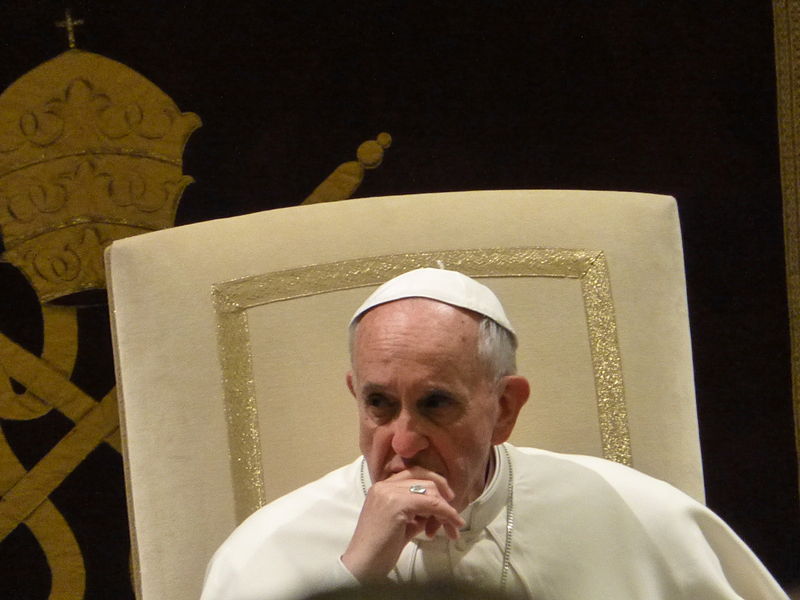
We continue to round up media appearances from the days surrounding the election of Pope Francis in Vatican City on March 13. This particular clip features Acton President Rev. Robert A. Sirico and Instituto Acton Operations Manager Michael Severance, who discuss the new Pope’s style, as well as some of the challenges and opportunities he faces as he assumes his role as the leader of the Roman Catholic Church.

Read more on Video: Sirico and Severance on Pope Francis…

The Acton Institute presents Acton University every June in Grand Rapids, Mich. The course offerings are rich and diverse, but there is often the idea that Acton University is all about economics. It is, but keep in mind that economics is truly about human interaction, and thus the depth of the courses. Who should come to Acton University, and what can they expect to get out of it?

Read more on Acton University: It’s All About Human Interaction…

Acton PowerBlog RSS

Google Plus

Twitter Feed

Facebook Fan Page

Support the Acton Institute

The Acton Institute is funded through the generous contributions of individuals such as yourself. Learn more about how you can advance the cause of freedom and virtue.