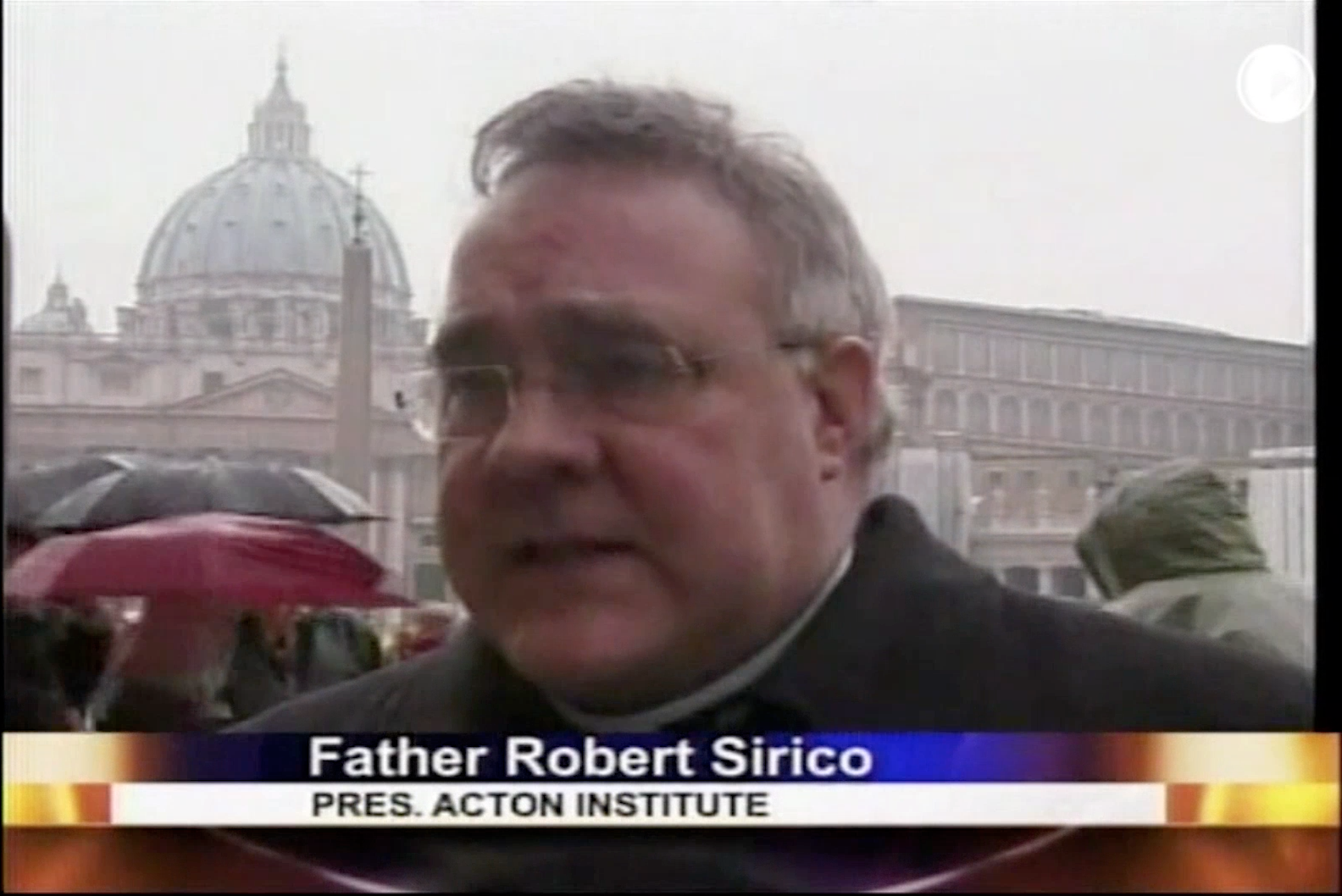
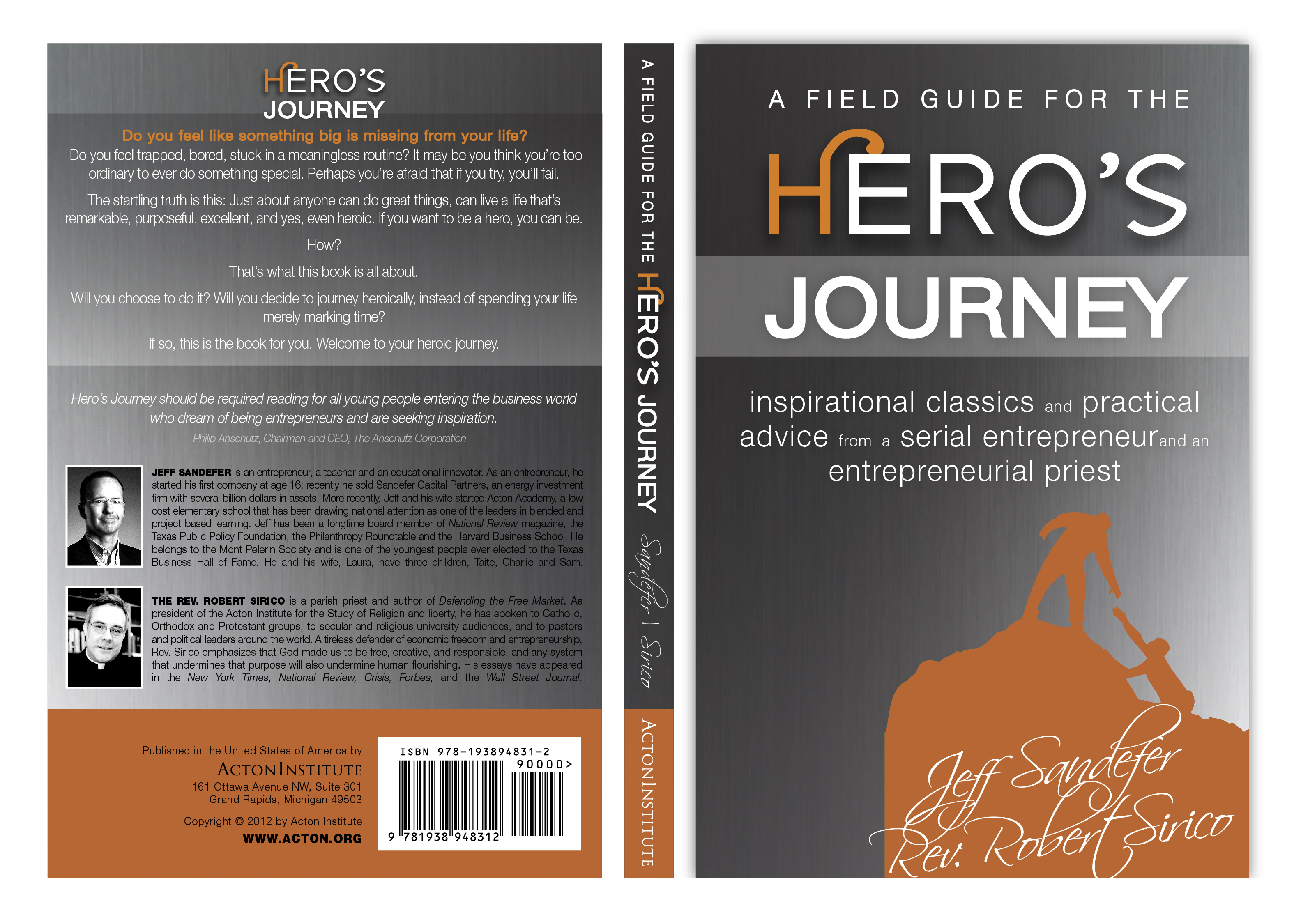
Posts tagged with: Rev. Robert A. Sirico

In the Wall Street Journal’s Americas column, Rev. Robert A. Sirico examines the shift in thinking about liberation theology among Catholic Church leaders in Latin America. Excerpt:

Catholic Church bishops, priests and other Church leaders in Latin America were once a reliable ally of the left, owing to the influence of “liberation theology,” which tries to link the Gospel to the socialist cause. Today the Church is coming to recognize the link between socialism and the loss of freedom, and a shift in thinking is taking place.

Read more on ‘Liberty Theology’ — WSJ article by Rev. Sirico…

Rev. Robert A. Sirico is interviewed by James Freeman, assistant editor of the Wall Street Journal’s editorial page, about markets and morality and about the Acton Institute’s Call of the Entrepreneur documentary.


Read more on Is Capitalism Moral? — Rev. Sirico on WSJ video…

Rev. Robert A. Sirico, president of the Acton Institute, is scheduled to join Fox Business host David Asman tonight to discuss the new documentary, “What Would Jesus Buy?” They’ll be joined by documentary producer Morgan Spurlock and performance artist Bill Talen, of the “Church of Stop Shopping.” The segment is set to air between 7-8 p.m. Eastern time. Check your local listings — and expect a lively debate.

Read more on Tonight: Rev. Sirico on Fox Business to discuss ‘WWJB?’…

John Couretas
posted by on Thursday, December 6, 2007

The following is a statement by Rev. Robert A. Sirico, president of the Acton Institute, on Mitt Romney’s Dec. 6 “Faith in America” speech:

Mitt Romney is right that religion and morality are core convictions in American society. Our freedom depends on this, I completely agree. Without the ability to manage our lives morally, the state steps into the vacuum, both in response to public demand and to serve the state’s own interests in expanding power.

But soon after spelling this out, in part, he makes this bold claim, which I believe repeats John F. Kennedy’s error: “Let me assure you that no authorities of my church, or of any other church for that matter, will ever exert influence on presidential decisions. Their authority is theirs, within the province of church affairs, and it ends where the affairs of the nation begin.”

So here we have an odd tension. Religion matters, he says. But religious authority does not and should not matter in the management of our public lives. If this proposition had been believed by the kings of Europe in the Middle Ages, freedom would never have been born, for it was precisely the jealousy of religious authority that led to limits on the state and kept that state at bay.

Similarly, it was the churches before and after the American Revolution which said no to the leviathan state, precisely because it had intruded into areas that more properly belong to religious authority. The churches didn’t merely mind their own business; they spoke to the whole of society, and we should be thankful for that.

Maybe we are not accustomed to thinking of religion as a limit on government. But this has largely been so and continues to be so. It was the Catholic Church that beat back communism in Eastern Europe and just last week prevented dictatorship in Venezuela. In our own country, the churches are the main protectors of religious liberty, for they tend to resist intrusion by the state at every level.

The idea of authority is inescapable. If public officeholders are not to obey religious authority, what authority do they submit to? Perhaps we can say the Constitution but the signers of that document too held fast to religious convictions. More likely the authority to which they submit is legislation and its enforcement arm, meaning that to the extent that they brush off their religious institutions, they will tend to become obsequious toward the state.

For my part, I find it strange that American culture should require someone running for president to make a break with his or own religious authority. This strikes me as an attack on the conscience. The right question we should be asking: What does the religious authority teach about the role of the state?

Read more on Rev. Sirico on the Romney Speech…

John Couretas
posted by on Wednesday, October 3, 2007

The new issue of Philanthropy Magazine features a cover story on Frank Hanna, vice chairman of the Acton Institute board of directors, and winner of the 2007 William E. Simon Prize for Philanthropic Leadership. The story is titled “Call of the Philanthropist,” a play on Acton’s Call of the Entrepreneur documentary, which features Hanna prominently.

Read more on ‘Call of the Philanthropist’…

Acton PowerBlog RSS

Google Plus

Twitter Feed

Facebook Fan Page

Support the Acton Institute

The Acton Institute is funded through the generous contributions of individuals such as yourself. Learn more about how you can advance the cause of freedom and virtue.