Posts tagged with: Samuel Gregg

Elise Hilton
posted by on Monday, February 18, 2013

It can be tempting to judge the papacy, the world’s longest continuously functioning institution, by its various historical stages that often have little relevance to the modern office. While the Chair of Peter remains the central teaching medium of the Roman Catholic Church, it is safe to say that the challenges faced by Popes John Paul II and Benedict XVI are not the challenges faced by Pope Adrian I (772 – 795) or even Pope Leo XIII (1878 – 1903). The papacy is always acting in response to an ever-changing world, while remaining rooted in the truth of the Gospel.

In The Modern Papacy, Acton’s Director of Research Samuel Gregg notes that the “…popes recognizing that the political, social, and religious culture of modernity was one in which Catholicism would be obliged to live, move and have its being.” This engagement between culture and the papacy has been one of critique, or as Gregg says, affirming “what the Church considers to be good in modernity without ignoring its shortcomings.” Read more on The Modern Papacy…

On National Review Online, Acton Research Director Samuel Gregg reflects on President Obama’s State of the Union address last night, and flags the “reality-denial” that is expressed by “a few token references to free enterprise and rewarding individual initiative (to reassure us we’re still living in America instead of just another declining European social democracy).” More:

Read more on Samuel Gregg: An Alternate Reality State of the Union Address…

Georgene Rice recently interviewed Samuel Gregg about his latest book, Becoming Europe: Economic Decline, Culture, and How America can Avoid a European Future.  Her show airs on KDPQ FM in Portland, Oregon.

Read more on Audio: Samuel Gregg Discusses ‘Becoming Europe’ on the Georgene Rice Show…

Joe Carter
posted by on Tuesday, February 12, 2013

Earlier this week at the Heritage Foundation, Acton Research Director Samuel Gregg argued that if our elected leaders don’t find the courage to reform the economy and government spending soon, the U.S. could find itself in the same terrible economic situation as many European countries do today.

Read more on Samuel Gregg on C-SPAN…

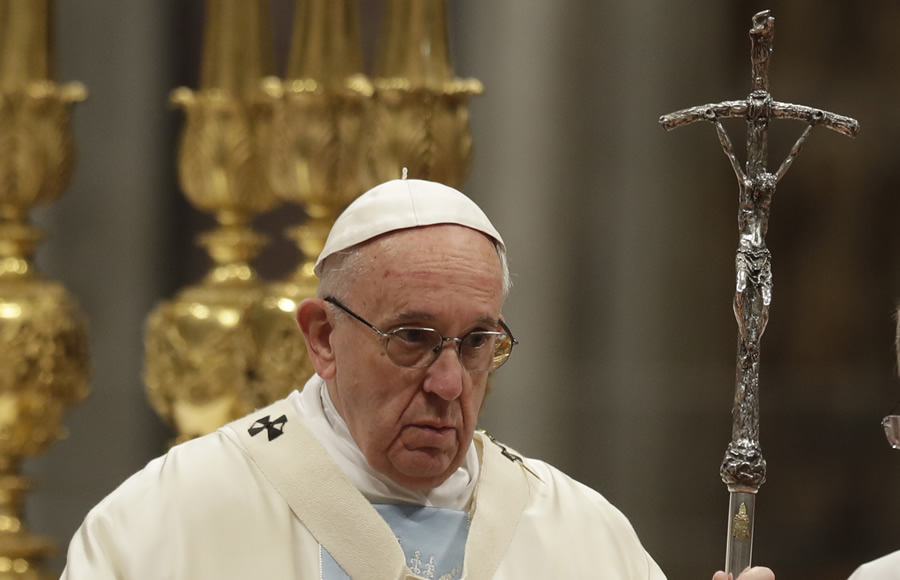
Over on National Review Online, Acton Research Director Samuel Gregg considers what will be Pope Benedict’s last legacy:

In forthcoming weeks, there will be many commentaries on what this Pope has achieved in a relatively short time. This ranges from his efforts to root out what Ratzinger once called the “filth” of sexual deviancy that has inflicted such damage on the priesthood, his successful outreach to Catholicism’s Eastern Orthodox brothers, his generally excellent bishop appointments, to his reforms of the liturgy.

Read more on Samuel Gregg: ‘Benedict XVI: Reason’s Revolutionary’…

Marvin Olasky, editor in chief of WORLD Magazine, just listed Samuel Gregg’s Becoming Europe: Economic Decline, Culture, and How America Can Avoid a European Future in his mid-Winter roundup of books to read. He says:

Read more on Review: Marvin Olasky on Samuel Gregg’s ‘Becoming Europe’…

mobile-cover

Recently Samuel Gregg talked with Jack Riccardi from KTSA 550 San Antonio about Gregg’s new book Becoming Europe.

Listen to the entire interview here:

[Audio clip: view full post to listen]

Theodore Dalrymple also recently reviewed Becoming Europe on the Library of Law and Liberty’s Liberty Law Blog. He said:

Read more on Audio: Samuel Gregg Discusses ‘Becoming Europe’ on the Jack Riccardi Show…

Gadsden_flag.svgAmerica, for the obvious reasons, holds strong ties to Europe. But it is a country that has primarily been associated with a distinctness and separation from the turmoil and practices of the continent. In his farewell address, George Washington famously warned Americans about remaining separate from European influence and declared, “History and experience prove that foreign influence is one of the most baneful foes of republican government.” Class strife, conflict, and instability already long characterized the European fabric at the time of the American Revolution. Likewise, many American colonists already thought of themselves as free and distinct before the revolt. At the time of the revolution, some 400 wealthy noble families controlled Great Britain. America had an aristocracy for sure, but it was much more merit based than Europe. It embodied a more egalitarian spirit, local communities were culturally connected and would have been suspicious of attempts at centralization. So obviously countless problems ignited and there was a fanning of flames when the Crown started making decrees and commands of the American colonists.

I have a copy of Sam Gregg’s Becoming Europe, which is next on my reading list. The recent calls for gun control and the curtailing of 2nd Amendment Rights out of Washington immediately reminded me more of the American – European divide. I’d point you to Gregg’s work for the formative economic study on our evolution towards European democratic socialism, but I want to make a few short observations on the topic, which might be beneficial to expand on after I read Becoming Europe. Read more on ‘Becoming Europe’ or Coming Full Circle?…

Acton’s Director of Research and author of Becoming Europe, Samuel Gregg, was featured yesterday on The RJ Moeller Show. Gregg talked about America’s drift towards “social democracy” and other economic themes in his new book; Moeller gives more detail at this post at Values & Capitalism. Click on the audio link below to hear the show.

Read more on Samuel Gregg: The RJ Moeller Show and ‘Becoming Europe’…

Theodore Dalrymple, contributing editor of the City Journal and Dietrich Weissman Fellow of the Manhattan Institute, has recently reviewed Samuel Gregg’s new book, Becoming Europe at the Library of Law and Liberty.

Read more on Review: Theodore Dalrymple on ‘Becoming Europe’…

Acton PowerBlog RSS

Google Plus

Twitter Feed

Facebook Fan Page

Support the Acton Institute

The Acton Institute is funded through the generous contributions of individuals such as yourself. Learn more about how you can advance the cause of freedom and virtue.