Posts tagged with: science

Empty marketplaceIn his latest column, Ross Douthat contemplates what a world without work might look like:

Imagine, as 19th-century utopians often did, a society rich enough that fewer and fewer people need to work — a society where leisure becomes universally accessible, where part-time jobs replace the regimented workweek, and where living standards keep rising even though more people have left the work force altogether.

If such a utopia were possible, one might expect that it would be achieved first among the upper classes, and then gradually spread down the social ladder. First the wealthy would work shorter hours, then the middle class, and finally even high school dropouts would be able to sleep late and take four-day weekends and choose their own adventures.” — “to hunt in the morning,” as Karl Marx once prophesied, “fish in the afternoon, rear cattle in the evening, criticize after dinner …”

Yet a widespread decline in work is not just an imaginative possibility. As Douthat goes on to argue, such decline has become “a basic reality of 21st-century American life,“ but without following the typical Marxist trajectory. “Instead of spreading from the top down,” Douthat notes, “leisure time – wanted or unwanted – is expanding from the bottom up. Long hours are increasingly the province of the rich.” Despite our persistent longing for rest and relaxation, however, this trend is not viewed as a positive development for society, even for the folks at Mother Jones.

Further, as Charles Murray explains in his latest book, Coming Apart: The State of White America, 1960-2010, our attitudes about work have also begun shifting, again, disproportionally among the lower classes. Pointing to a General Social Survey study that asked participants what they prefer in a job, Murray points out that the leading preference across all income groups during the 1970s was a job that “gives a feeling of accomplishment.” Soon thereafter, beginning in the 1990s, this preference began to shift significantly among the lower classes, who began to put higher preference on jobs with “no danger of being fired” or where “working hours are short.” Read more on A World Without Work: Where Civilization Slowly Melts Away…

Working Class Bulwark by Jacob BurckAs I noted last week, my review of Nicholas Eberstadt’s Nation of Takers: America’s Entitlement Epidemic appears in the current issue of The City, a fine publication produced by Houston Baptist University.

Read more on Beyond Makers and Takers: The Real Diversity of Society…

Jordan J. Ballor
posted by on Friday, November 9, 2012

Article: “The Ethics of Digital Preservation”
Peter Johan Lor and J.J. Britz. “An ethical perspective on political-economic issues in the long-term preservation of digital heritage.” Journal of the American Society for Information Science and Technology 61, no. 11 (November 2012): 2153-2164.

The article provides an overview of the main ethical and associated political-economic aspects of the preservation of born-digital content and the digitization of analogue content for purposes of preservation. The term “heritage” is used broadly to include scientific and scholarly publications and data. Although the preservation of heritage is generally seen as inherently “good,” this activity implies the exercise of difficult moral choices. The ethical complexity of the preservation of digital heritage is illustrated by means of two hypothetical cases. The first deals with the harvesting and preservation in a wealthy country of political websites originating in a less affluent country. The second deals with a project initiated by a wealthy country to digitize the cultural heritage of a less affluent country. The ethical reflection that follows is structured within the framework of social justice and a set of information rights that are identified as corollaries of generally recognized human rights. The main moral agents, that is, the parties that have an interest, and may be entitled to exercise rights, in relation to digital preservation, are identified. The responsibilities that those who preserve digital content have toward these parties, and the political-economic considerations that arise, are then analyzed.

Read more on ResearchLinks – 11.09.12…

Jordan J. Ballor
posted by on Friday, November 2, 2012

Encyclopedia Entry: “Arts”
Tyler Cowen. The Concise Encyclopedia of Economics. 2d ed. Indianapolis: Liberty Fund, 2007.

General economic principles govern the arts. Most important, artists use scarce means to achieve ends—and therefore recognize trade-offs, the defining aspects of economic behavior. Also, many other economic aspects of the arts make the arts similar to the more typical goods and services that economists analyze.

Read more on ResearchLinks – 11.02.12…

Jordan J. Ballor
posted by on Friday, September 21, 2012

Book Note: “As If God Existed”
Maurizio Viroli. As if God Existed: Religion and Liberty in the History of Italy. Princeton: Princeton University Press, 2012.

Religion and liberty are often thought to be mutual enemies: if religion has a natural ally, it is authoritarianism–not republicanism or democracy. But in this book, Maurizio Viroli, a leading historian of republican political thought, challenges this conventional wisdom. He argues that political emancipation and the defense of political liberty have always required the self-sacrifice of people with religious sentiments and a religious devotion to liberty.

Read more on ResearchLinks – 09.21.12…

Jordan J. Ballor
posted by on Thursday, July 19, 2012

I belong to the Christian Reformed Church, and our synod this year decided to formally adopt a report and statements related to creation care and specifically to climate change. I noted this at the time, and that one of the delegates admitted, “I’m a skeptic on much of this.”

Read more on Churches and Climate Change…

Reading as many blogs as I do, I’m always grateful when I stumble on a great blog post that is not only thoughtful, but relates to some aspect of our work here at Acton. Jason Summers over at Q Ideas has written an interesting piece titled Where Angels Cannot Tread: Science in a Fallen World. In his discussion of science, he notes humanity is uniquely equipped by God to engage with science.

Read more on Faith and Science In a Fallen World…

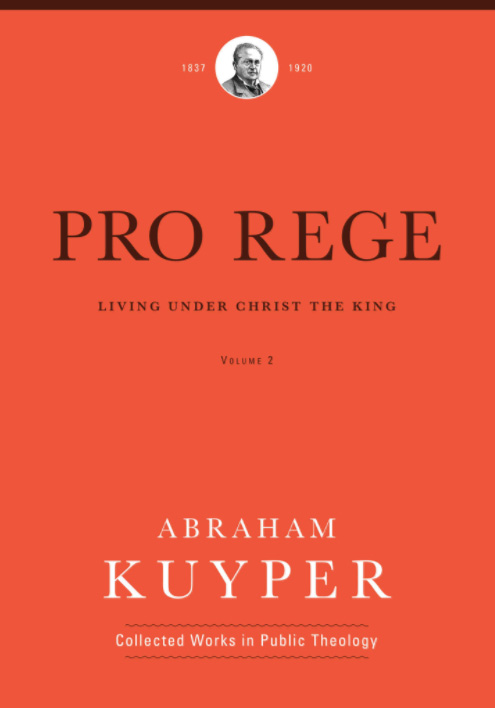
Phillip Long is a professor of Bible and Biblical Languages at Grace Bible College in Grand Rapids, Michigan and blogs over at Reading Acts. Phil does not normally review this kind of book, but was drawn to it due to Abraham Kuyper’s popularity and his contribution to worldview issues today.

Long shares some good observations and this book and its relevance for Christianity today, particularly those with an aversion to the study of science and the pursuit of a career in art.

Read more on When Christianity Was Still Friendly With Science and Art…

John Couretas
posted by on Monday, November 21, 2011

You have the fruit already in the seed. — Tertullian

Image-maker Alexander Tsiaras shares a powerful medical visualization, showing human development from conception to birth and beyond. (Some graphic illustrations.) From TEDTalks (TED stands for Technology, Entertainment, Design).

Read more on Science Meets Divinity…

I’m at the “Whole Life Discipleship: Integrating Faith, Economics, and Work” conference today at Regent University. As I have the opportunity today, I’ll blog (and tweet) some of the lectures. First up is Stephen Grabill of the Acton Institute, and here are some highlights:

Read more on Whole Life Discipleship: Integrating Faith, Economics, and Work…

Acton PowerBlog RSS

Google Plus

Twitter Feed

Facebook Fan Page

Support the Acton Institute

The Acton Institute is funded through the generous contributions of individuals such as yourself. Learn more about how you can advance the cause of freedom and virtue.