Posts tagged with: socrates

Jordan J. Ballor
posted by on Monday, December 12, 2011

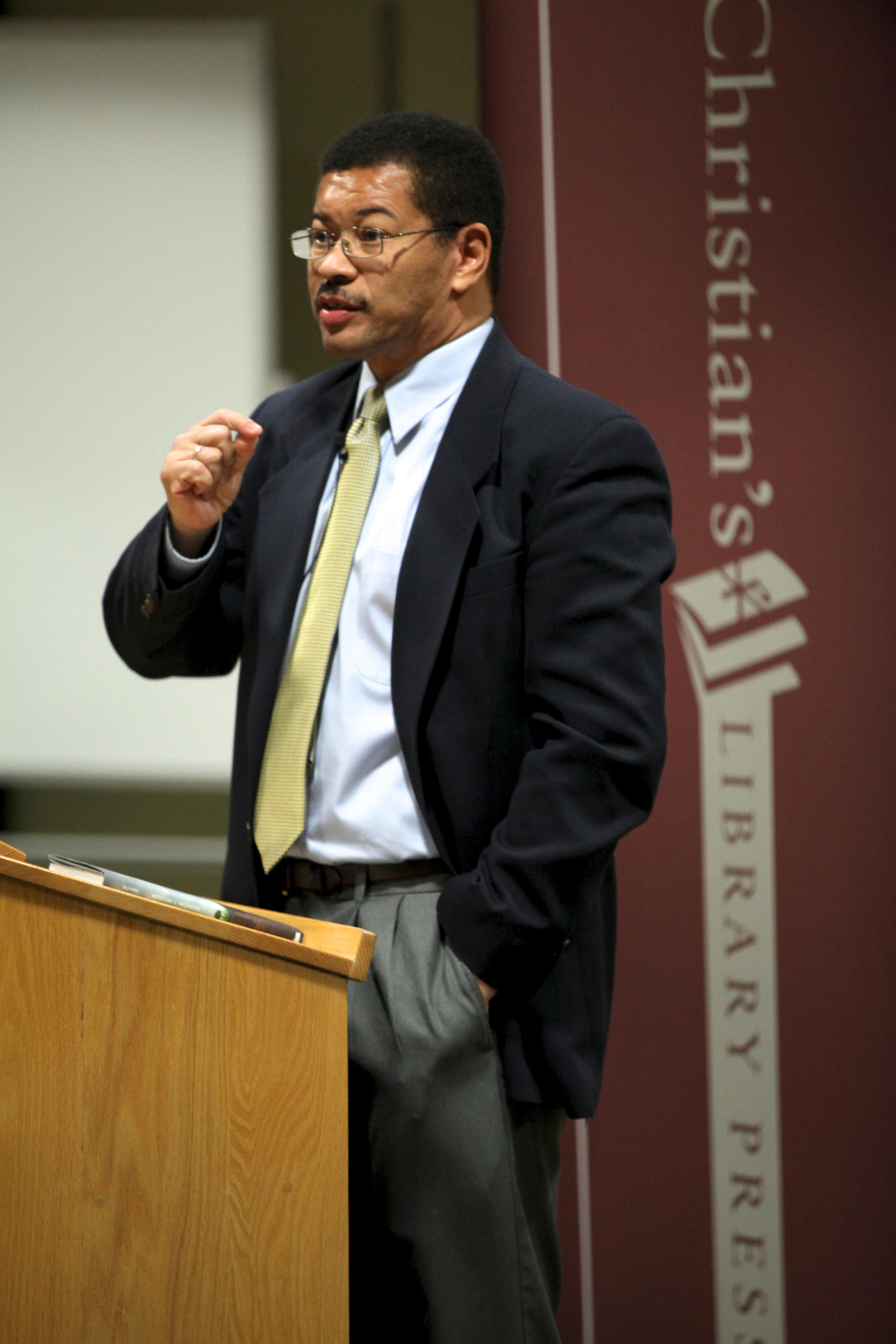
“Wisdom begins in wonder.” This is a popular paraphrase of Socrates from Plato’s Theatetus, which focuses on the relationship between philosophy and knowledge. Dr. Mel Flikkema, provost at Kuyper College, reminded us of this justly famous quotation as he introduced the launch event for Wisdom & Wonder: Common Grace in Science & Art by Abraham Kuyper this past Saturday morning.

Vincent Bacote describes "Another Amazing Grace."

This was a splendidly appropriate introduction to the morning’s event, as the talk by Dr. Vincent Bacote, “Another Amazing Grace,” focused on the relevance of the doctrine of common grace for today’s church and Christian social engagement. Part of what common grace does, said Bacote, is allow us to explain why good things remain in the world after the Fall into sin. The world is not as bad as it could be, and it is because of this common, preserving grace that God prevents everything from falling into complete and utter chaos.

In Wisdom & Wonder Kuyper discusses the insights of the ancient Greeks as a bit of evidence for the existence of common grace. This is especially relevant for the pursuit of truth in philosophy and science. As Kuyper writes, “Anyone who ignores common grace can come to no other conclusion than that all science done outside the arena of the holy lives off appearance and delusion, and necessarily results in misleading anyone listening to its voice. Yet the outcome shows that this is not the case.”
Read more on ‘Wisdom Begins in Wonder’…

Nathan Rolf
posted by on Friday, July 22, 2011

In Allan Bloom’s translation of The Republic of Plato, Socrates sets out to define the meaning of justice, and if the just life can be seen as being more profitable than the unjust life.  Thrasymachus, an acquaintance of Socrates, in book I of the Republic of Plato, offers his reckless opinion on justice saying, “Justice is the advantage of the stronger” (338c), and that “injustice, when it comes into being on a sufficient scale, is mightier, freer, and more masterly than justice” (444c). Thrasymachus’ definition of justice should be an alarming one because it can be used to explain the economic crisis and situation today: The unjust man benefits in good and bad times, by the laws and contracts made by those in power, while the just man is punished in both good and bad times.

Read more on The Advantage of the Virtuous…

Jordan J. Ballor
posted by on Tuesday, April 17, 2007

Socrates in some sense has come full circle. In a case of life imitating art, researchers at the University of Illinois at Chicago and the University of Central Florida in Orlando have received a grant to create life-like virtual representations of historical figures, with whom students can interact, dialogue, and inquire (HT: Slashdot).

Read more on Sailing to Byzantium with Avatars…

For those of you who are going through World Cup withdrawal after the defeat of the French by the Azzurri have a little comfort. I give you the World Cups of Philosophy and Theology.

Read more on World Cups of Philosophy and Theology…

Acton PowerBlog RSS

Google Plus

Twitter Feed

Facebook Fan Page

Support the Acton Institute

The Acton Institute is funded through the generous contributions of individuals such as yourself. Learn more about how you can advance the cause of freedom and virtue.