Posts tagged with: Tom Wolfe

John Couretas
posted by on Friday, November 30, 2012

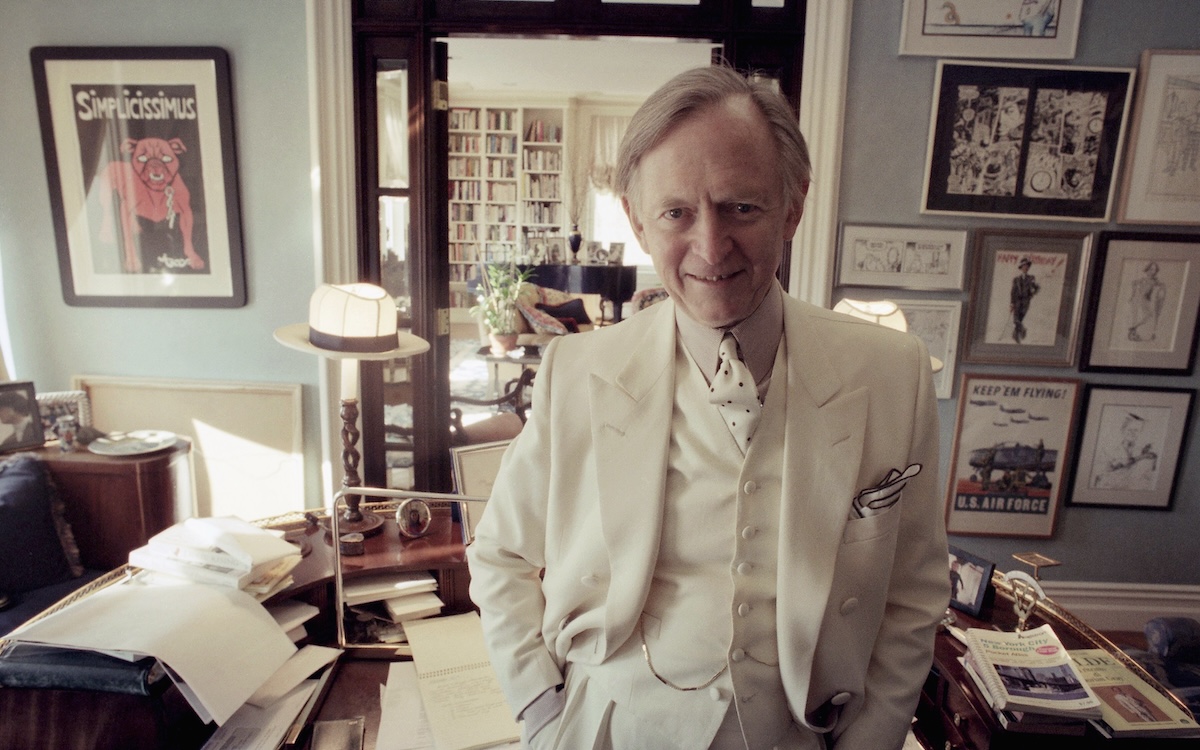
Visiting San Francisco’s Haight-Ashbury district in 1968, Tom Wolfe was struck by the way hippies there “sought nothing less than to sweep aside all codes and restraints of the past and start out from zero.” In his essay “The Great Relearning,” Wolfe connects this to Ken Kesey’s pilgrimage to Stonehenge, inspired by “the idea of returning to civilization’s point zero” and trying to start all over from scratch and do it better. Wolfe predicted that history will record that Haight-Ashbury period as “one of the most extraordinary religious experiments of all time.”

Read more on Back to Civilization’s Point Zero?…

Bruce Edward Walker
posted by on Tuesday, April 28, 2009

We welcome guest blogger Bruce Edward Walker, Communications Manager for the Property Rights Network at the Mackinac Center for Public Policy. This week’s PBR question is: “How should conservatives engage Hollywood?”

It is true that liberal depictions of dissolute and immoral behavior are rampant in modern cinema and justified as the desired end of hedonistic tendencies, but conservative critics too often come across as cultural scolds, vilifying films and filmmakers for not portraying reality as conservatives would like to see it. For many conservative critics, the only worthwhile contemporary movies made are adaptations of C.S. Lewis’ Narnia series or those that feature Kirk Cameron in a starring role. The verisimilitude inherent in all compelling storytelling is neglected in favor of presenting idealized worlds in which a clearly defined good always overcomes easily identified evil.

Such an approach is simplistic and insults those of us that can recognize the presence of moral themes in the works of Graham Greene, Flannery O’Connor and Tom Wolfe, and don’t automatically blanch at cursing, violence, sex and nudity when it serves a real dramatic purpose. Humanity, of course, is fallen and it’s foolish to expect conservative audiences to respond only to films that depict all marriages as salvageable, all protagonists as heroic metaphors for Christ and all heroines as virgins until the wedding night. Reality teaches us that these scenarios are the exceptions rather than the rule.

Felix culpa – the fortunate fall from whence one can experience God’s grace – is the phrase St. Thomas Aquinas used to explain how God allows evil to exist in order to allow for the greater good of His redemption. For all the decadence he depicted, for example, French poet Charles Baudelaire was perceived by none other than T.S. Eliot as still entering the Church albeit through the back door. Read more on PBR: Film and the Felix culpa

Acton PowerBlog RSS

Google Plus

Twitter Feed

Facebook Fan Page

Support the Acton Institute

The Acton Institute is funded through the generous contributions of individuals such as yourself. Learn more about how you can advance the cause of freedom and virtue.