Posts tagged with: Vatican

John Couretas
posted by on Friday, October 31, 2008

According to a report from the Zenit News Service, Cardinal Renato Martino, president of the Pontifical Council of Justice and Peace, recently insisted that the “logic” of the market be changed. He said that the logic “was till (sic) now that of maximum gain, and therefore the most investments possible directed toward obtaining maximum benefit. And this, according to the social doctrine of the Church, is immoral.” This is because, according to the Cardinal, the market “should be able to benefit not just those who invest capital, but those who participate in the step of making it grow, that is, those who work.”

Read more on Why Not Learn Some Economics First?…

Michael Severance
posted by on Thursday, August 7, 2008

Pope John XXIII was once asked how many people worked for the Vatican. “About half” he humorously replied, alluding to a workforce not known for its speed and efficiency. Under the pontificates of John Paul II and especially Benedict XVI, however, the Vatican seems to have made some efforts to improve the delivery of various services.

Take for example this interview with the city-state’s head physician, Dr. Giovanni Rocchi, who boasts of minimal waiting periods for patients at Vatican-run health clinics and laboratories. Such medical services are provided to Vatican employees and residents, including the Swiss Guard, local security officials, and the thousands of daily visitors to the Vatican.

Emergency treatment, Dr. Rocchi says, is immediate and often relies on its own ambulance service to transport the injured and sick. Clinical test results are typically received within 2-3 days. Major medical interventions such as heart or back surgery are usually arranged within a maximum of 2-3 weeks upon diagnosis, which is nothing compared to the purgatory Italian citizens must endure in the country’s public health care system for similar and even very minor treatments.

The Vatican’s health care system is small-scale, offering limited medical services such as emergency first aid, clinical analyses, immunization, physical check-ups, with much of the routine care provided by general practitioners. Major medical surgery must be arranged through outsourced medical facilities found in Rome’s private religious hospitals, like the Fatebenefratelli hospital located on the Tiber Island or the Gemelli hospital, which cared for Pope John Paul II on several occasions. Read more on The Vatican’s War on Bureaucracy…

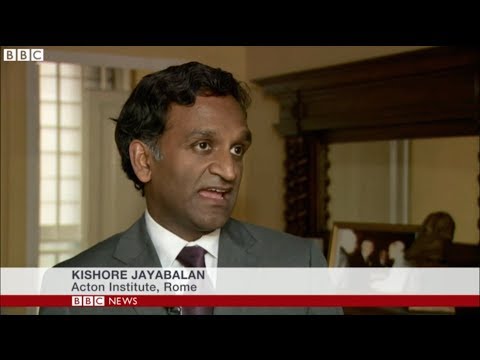
Kishore Jayabalan
posted by on Friday, July 25, 2008

In his weekly column, the National Catholic Reporter‘s John Allen notes Pope Benedict XVI’s references to the environment during the recent World Youth Day events in Australia.

Allen writes:

Although the point didn’t get much traction amid the pageantry of World Youth Day, it’s a striking fact that the most frequent social or cultural concern cited by Pope Benedict XVI in Australia was the environment. The pope talked about ecological themes seven times.

[snip]

If there was a distinctive twist to what the pope said in Australia, it was the need for reconfiguration of lifestyles, beyond and beneath policy questions. Repeatedly, Benedict warned against what he called the “folly of the consumerist mindset.”

One sign that somebody was paying attention: the Acton Institute, a Grand Rapids-based think tank with a pro-free market message, put out a press release rejecting impressions that the pope has “gone green” in the secular sense. Benedict wasn’t warning against a climate crisis, the Acton release stated, but a moral crisis.

Allen, the most reliable English-speaking journalist covering the Vatican during my time there, appears to have gotten this one wrong by misunderstanding the point of the Acton press release, which did in fact mention the Pope’s criticism of consumerism, but as a moral problem rather than an environmental one.

More seriously, Allen seems to misunderstand the Pope’s use of environmental issues. The Pope is not interested in the particular issues in themselves; rather he is more concerned with what our use or abuse of the rest of creation says about our relationship with God.

Whatever Benedict’s concerns for the environment may be, it is absolutely clear that he follows traditional Catholic doctrine by placing man at the center of all creation. Here is the key passage that follows the quotation cited by Allen from the World Youth Day welcoming address:

And there is more. What of man, the apex of God’s creation? Every day we encounter the genius of human achievement. From advances in medical sciences and the wise application of technology, to the creativity reflected in the arts, the quality and enjoyment of people’s lives in many ways are steadily rising. Among yourselves there is a readiness to take up the plentiful opportunities offered to you. Some of you excel in studies, sport, music, or dance and drama, others of you have a keen sense of social justice and ethics, and many of you take up service and voluntary work. All of us, young and old, have those moments when the innate goodness of the human person – perhaps glimpsed in the gesture of a little child or an adult’s readiness to forgive – fills us with profound joy and gratitude.

Read more on Pope Benedict’s Human Ecology…

In the July 14-15 Italian edition article of the Vatican newspaper L’Osservatore Romano, Luca M. Possati examines the crisis of the Italian university system. Where most secular intellectuals blame the Church for its suppression of “academic freedom,” it turns out the real culprit is the vast education and research bureaucracy propagated by the national government.

Read more on Bureaucracy, not the Church, Blocks Italian Academic Research…

Paola Fantini
posted by on Friday, June 20, 2008

On Tuesday the 17th Mons. Rino Fisichella was called by Pope Benedict XVI to succeed Mons. Elio Sgreccia as the head of the Pontifical Academy of Science, Social Sciences, Life. His Excellency was also raised to the title of archbishop while maintaining his role as Rector of the Pontifical Lateran University of Rome.

Read more on Science or Religion? A False Choice…

The new Italian government was sworn in on May 9, headed for the third time by Prime Minister Silvio Berlusconi. The center-right coalition has a vast majority both in the Chamber of Deputies and the Senate, giving it a good chance of serving its full five-year term.

Read more on Italy’s New ‘Post-Catholic’ Government?…

Over the last two days, Italians have been heading to the polls to select a new parliament and a new government. As I’ve already noted, despite its commitment to moral and ethical issues, the Catholic Church in Italy does not have a favorite political party.

Read more on Classically Liberal, Pro-Life, and Isolated…

If you’re looking for the latest on how “Sensationalist Reporting Muddles Catholic Social Teaching”, check out these recent contributions:

Yesterday, the New York Times ran a perceptive op-ed, noting the negative consequences of relaxed strictures on items such as sex and eating meat on Fridays. The author uses economic thinking to justify more traditional mores:

Read more on More on the Vatican’s “New Sins”…

Michael Severance
posted by on Thursday, April 3, 2008

The Roman Catholic Church’s authoritative reference source, the Annuario Pontificio (Papal Yearbook), is published in March of every year. It is a weighty book in more ways than one: It comprises of over 2,500 pages, has a very limited print production of 10,000 copies, and contains just about every bit of information you would want to know about the make-up of the Church.

The publication of the 2008 Annuario made news earlier this week when, in an interview with the Vatican newspaper L’Osservatore Romano, the editor announced that for the first time in history there are now more Muslims than Catholics in the world. Read Acton’s translation of the article below.

According to Msgr. Vittorio Formenti, in 2006 the Muslim population became the single largest segment among world religions, surpassing Roman Catholicism by 1.8 percentage points: 19.2 percent compared to 17.4 percent.

It should be noted, however, that the Church is only sure of its own numbers; the Muslim statistics come from the United Nations. Comparing two sets of numbers gathered with different methodologies does not necessarily result in an accurate picture.

It is not, however, all that surprising to those who are aware of current demographic studies. The Church has also issued widely-documented warnings on diminishing family size among Catholics as the result of widespread use of contraception, public advocacy of non-procreative and delayed marital unions, and unfriendly fiscal policies on the family. These negative trends are particularly evident in Catholic Western nations such as Spain, Italy, Ireland and Portugal.

It would be a mistake to read Msgr. Formenti’s interview as alarmist, however. He notes that when Orthodox, Anglicans and Protestants are also taken into account, Christians remains a much larger segment of the world’s religious population, totaling about 33 percent, nearly double that of all Muslims.

Catholicism has also experienced a modest upward growth trend in three areas: the total number of faithful (+1.4 percent); ordained diocesan priests (+0.023 percent); and seminarians (+0.9 percent). These percentages are small but demonstrate growth in areas that had been in decline in the last few decades.

And finally, despite what the statistics say, Catholics are prohibited from giving in to the sin of despair. “The gates of hell shall not prevail….” (Matthew 16.18-19) Read more on Muslims Outnumbering Catholics?…

“Recycle or go to Hell, warns Vatican”. “Vatican Increases List of Mortal Sins”, “Vatican lists ‘new sins’, including pollution”. These were three of the most sensationalist headlines in yesterday’s English-speaking press, picking up on an interview with a Vatican official published in L’Osservatore Romano on Sunday.

Read more on Sensationalist Reporting Muddles Catholic Social Teaching…

Acton PowerBlog RSS

Google Plus

Twitter Feed

Facebook Fan Page

Support the Acton Institute

The Acton Institute is funded through the generous contributions of individuals such as yourself. Learn more about how you can advance the cause of freedom and virtue.