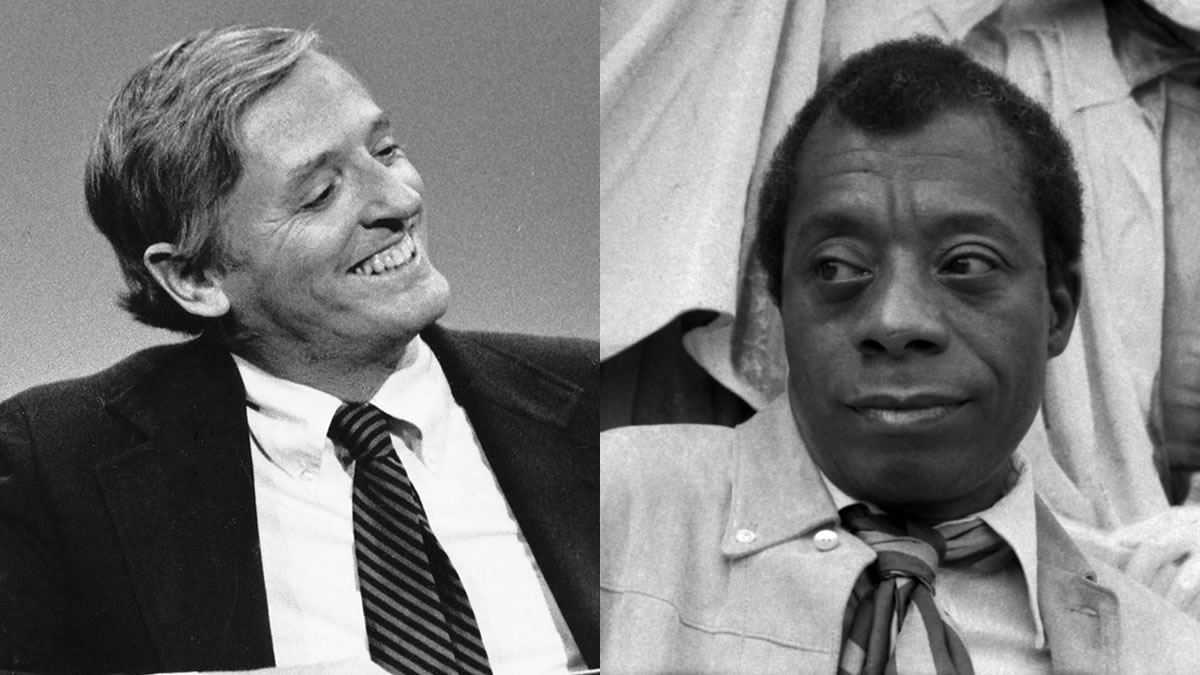
Posts tagged with: william f. buckley

Review of The Tyranny of Cliches: How Liberals Cheat in the War of Ideas, by Jonah Goldberg, (New York, NY: Sentinel, 2012)

With proper training, and maybe a bit of experience on the debate team, it’s easy to recognize logical fallacies in an opponent’s argument. When it comes to popular give and take, the sort of thing we have so much of now on opinion websites and news channels, there hasn’t been decent preparation for arguments outside the columns and blog posts of Jonah Goldberg.

In The Tyranny of Cliches, the National Review contributor, syndicated columnist, author of the bestseller Liberal Fascism, and American Enterprise Institute fellow, convincingly demolishes the Left’s oft-repeated, bumper-sticker slogans that seemingly defy repudiation by many who fear being depicted as a heartless jackanape.

For example, if an impassioned public figure pleads that yet another government expansion and encroachment is “for the children” it is therefore ipso facto in the best interests of everyone. This is a “case-closed” logical fallacy that circumvents rational discussion by declaring that if millions of cute kids benefit, only meanies, bullies, or some contemporary amalgamation of Attila the Hun, Adolph Hitler, Pol Pot, Joseph Stalin, and Darth Vader could oppose it.

Not so fast. Goldberg’s new book wonderfully dissects such liberal shibboleths as “social justice,” “diversity,” attacks on organized religion in general and Roman Catholicism in particular, and “separation of church and state” to reveal the hollowness within. In this regard, Goldberg resembles most William F. Buckley, with the difference that the latter stood athwart history yelling stop, and the former stands astride postmodernism to scream “enough!”
Read more on A Field Guide to the Baseless Claims and Outrageous Canards of the Liberal-Progressive…

Hunter Baker
posted by on Saturday, September 4, 2010

The Thomas Nelson company sent me AmSpec alumnus Jeremy Lott’s William F. Buckley. I will write a full review later, but I have just begun the book and can already tell that Lott is going to bring attention to some underappreciated territory.

Read more on Jeremy Lott’s Life of William Buckley…

Ray Nothstine
posted by on Friday, June 11, 2010


Lee Edwards calls William F. Buckley Jr. “The St. Paul of the conservative movement.” No other 20th century figure made such a vast contribution to the intellectual force of political conservatism. He paved the way for the likes of Ronald Reagan and all of those political children of Reagan who credit the former president for bringing them into politics. He achieved what no other had done and that was his ability to bring traditional conservatives, libertarians, and anti-communists together under the same umbrella. Late in life, when asked why he continued working so hard despite fame and wealth, a surprised Buckley said, “My Father taught me that I owe it to my country. It’s how I pay my debt.”

Read more on Review: William F. Buckley Jr….

In this week’s Acton Commentary, I reviewed a new book by George H. Nash on the history of the American conservative movement:

Reappraising the Right

By Bruce Edward Walker

In his 1950 work, “The Liberal Imagination,” Lionel Trilling famously stated that American liberalism was the one true political philosophy, claiming it as the nation’s “sole intellectual tradition.”

Unknown to him, two young men — one toiling as a professor at Michigan State Agricultural College (now Michigan State University) and the other finishing his degree at Yale University – would publish two articulate, galvanizing works. The first, Russell Kirk, unleashed “The Conservative Mind,” in which he defined conservatives as being wary of change, revolutions and ideologies in the manner of Irish statesman Edmund Burke. The second, William F. Buckley, first published “God and Man at Yale” and later inaugurated The National Review, the first issue bearing Buckley’s definition of a conservative as one who stands “athwart history, yelling stop!”

Slight differences, to be sure, but, as George H. Nash notes in his excellent “ Reappraising the Right ,” these variations are indicative of the inherent schisms in the modern American conservative tradition from its beginning.

Both Kirk and Buckley agreed that the conservative tradition had its roots in spirituality –specifically, the Judeo-Christian tradition. Morality and right-thinking come not from man, but from a higher power. Furthermore, humankind will continue to succumb to the temptations and appetites of the flesh it has been heir to since the Fall. The two men took as articles of faith that humanity is not perfectible and that the striving for earthbound utopias is foolhardy.

Kirk, writing from the “stump country” of Mecosta, Michigan, and Buckley, writing and speaking in his Brahmin-drenched New England patois, differed in their views of where conservatism derived, what precisely it was and where it should go. Despite their differences, Kirk wrote a column for nearly every issue of National Review from its inception and for almost 30 years.

The early 1950s were watershed years, to be sure, because as soon as a new conservative front was established, the fortress was besieged from within and without. The 1964 Barry Goldwater campaign against Democrat incumbent President Lyndon Johnson notwithstanding, the high water mark of conservatism in the lifetime of most readers would more than likely be defined as the victory of Ronald Reagan over Jimmy Carter in the 1980 election. Reagan, a former Hollywood actor, supporter of Goldwater in the 1964 election, and former California governor, became an icon for all that modern conservatism came to represent: low taxes, personal responsibility and small government.

Read more on Acton Commentary: Reappraising the Right…

Saturday February 27 was the second anniversary of the death of the conservative giant William F. Buckley, Jr. I first saw Buckley in person when Ole Miss hosted Firing Line in 1997. I read National Review in High School even though I admit I did not always understand some of his words at that age. It was a wonderful reminder of the importance of  intellectualism and conservatism, and that I still had a lot to learn. The political left too had to respect Buckley’s brand of conservatism because of the seriousness of those ideas. It didn’t hurt that he was charming, gracious, and extremely generous.

Read more on Acton’s William F. Buckley Tribute Video…

John Couretas
posted by on Thursday, January 8, 2009

For those concerned with a vigorous intellectual engagement of the religious idea with the secular culture, these past 12 months have been a difficult period.

On February 28, 2008, William F. Buckley, Jr. the intellectual godfather of the conservative movement in America, died. Only last month, Avery Cardinal Dulles, SJ, passed away at 90 years old. Cardinal Dulles was one of the Catholic Church’s most prominent theologians, a thinker of great subtlety, and a descendent from a veritable American Brahmin dynasty.

Father Richard John Neuhaus

The third in this towering intellectual triumvirate is Father Richard John Neuhaus, who died in New York after an on and off again battle with cancer, about which he had written in his now mini-classic, As I Lay Dying: Meditations Upon Returning.

This book is unlike any written in our time in that it is a profoundly serious reflection on questions everyone has, issues everyone thinks about in private, but hardly anyone is willing to speak about or perhaps capable of writing about. Fr. Neuhaus confronts it to the point in which we feel discomfort – and he did this on nearly every issue he wrote about in his long writing career.

How will we be held accountable at death for what we did in life? What does mortality mean? What does it mean to face judgment? How should we live with the questions we have about eternity, and what is the impact on culture and responsibility?

In times past we had a greater clarity about these questions than we do today. Today, if we think about death at all, it is only to keep it as far away as possible, to forestall it, to deny it, and pretend that it doesn’t happen to others and will not happen to us.

Fr. Neuhaus wrote the following:

We are born to die. Not that death is the purpose of our being born, but we are born toward death, and in each of our lives the work of dying is already underway. The work of dying well is, in largest part, the work of living well. Most of us are at ease in discussing what makes for a good life, but we typically become tongue-tied and nervous when the discussion turns to a good death. As children of a culture radically, even religiously, devoted to youth and health, many find it incomprehensible, indeed offensive, that the word ‘good’ should in any way be associated with death. Death, it is thought, is an unmitigated evil, the very antithesis of all that is good. Death is to be warded off by exercise, by healthy habits, by medical advances. What cannot be halted can be delayed, and what cannot forever be delayed can be denied. But all our progress and all our protest notwithstanding, the mortality rate holds steady at 100 percent.

Fascinating, provocative, fearless, counter-cultural, and absolutely impossible to ignore. It puts matters of faith at the center, making them impossible to deny. That is the power of Fr. Neuhaus’s mind at work, and it worked for many decades producing an incredible literary legacy. Read more on Remembering Father Richard John Neuhaus…

John Couretas
posted by on Wednesday, November 5, 2008

We’ve posted Rev. Robert A. Sirico’s Oct. 30 speech delivered at the Acton Institute annual dinner in Grand Rapids, Mich. The dinner also featured a keynote address from Rev. John Nunes, president and chief executive officer of Lutheran World Relief, and remarks from Kate O’Beirne, National Review’s Washington Editor, who accepted the Acton Institute Faith & Freedom Award in honor of the late William F. Buckley, Jr.

Read more on The Way Forward…

Ray Nothstine
posted by on Wednesday, July 23, 2008

The Winter issue of Religion & Liberty is now available online. The interview with David W. Miller is titled, “Theology at Work: Faithful Living in the Marketplace.” Miller is the executive director of the Yale Center for Faith and Culture at Yale Divinity School, and co-founder and president of the Avodah Institute. Miller brings an unusual “bilingual” perspective to the academic world, having also spent sixteen years in senior executive positions in international business and finance. Miller’s book, God at Work: The History and Promise of the Faith at Work Movement was published in 2007.

Read more on Religion and Liberty: Theology at Work…

Jordan J. Ballor
posted by on Friday, February 29, 2008

From a CT interview in 1995 by Michael Cromartie:

Certain things which the market authorizes simply in terms of law are unchristian and ought not to be done. The big issue today has to do with the fidelity of marriages. The tendency now to leave your wife because you have an infatuation with a younger woman of tenderer flesh is an enormous temptation. It’s carnal, and it’s also easy to justify with all the solipsistic reasoning that we hear today. That is about the gravest offense that a human being can commit, to throw away a wife.

From this it doesn’t follow that the state should make the law tougher, but rather that the culture needs to be reformed. Modifying the law is only one way, and often not the best, to do that: “…unless we create a virtuous society, it’s not a society that’s going to endure. So the right things should be encouraged and the wrong things discouraged. Today, roughly speaking, there is zero taboo against fornication.”

Read more on Buckley on Law and Christian Morality…

Jonathan Spalink
posted by on Thursday, February 28, 2008
Buckley and Sirico
Buckley & Sirico – Acton’s 2nd Annual Dinner – May 12, 1992

Rev. Robert Sirico reflects on the life of William F. Buckley, Jr., who died in his study on Wednesday, praising him as a friend, a literary genius, and a supporter of the Acton Institute. Sirico writes, “He will be lauded by numerous pendants and scribes for the incredible number of his accomplishments, preeminent of which is his historic role as godfather of the modern conservative/libertarian movement in the founding of the National Review.”

Read more on WFB: In Memoriam…

Acton PowerBlog RSS

Google Plus

Twitter Feed

Facebook Fan Page

Support the Acton Institute

The Acton Institute is funded through the generous contributions of individuals such as yourself. Learn more about how you can advance the cause of freedom and virtue.