Posts tagged with: zero-sum game

Give and Take: A Revolutionary Approach to SuccessWhen discussing economics, we frequently encounter the zero-sum fallacy: the notion that the economic pie is fixed, that there is always a winner and a loser, and that, for someone to grow rich, another must become poor.

Yet in a market wherein rule of law, contracts, and property rights are properly established, the pie will surely grow. We are not static balls of flesh nestled comfortably in a static universe. We are spiritual beings made in the image of a creative God, and mutual trade and exchange help accelerate our efforts to create and collaborate alongside our neighbors. As Jay Richards notes, the uniqueness of the human person feeds into how economic value is actually determined.

But although we typically discuss the errors of such thinking in matters of basic material exchange, we should note that such a fallacy can just as easily filter into our broader social and spiritual activities in the workplace. Such limited thinking can trap us in a sort of self-centered tunnel vision, whether with our clients, co-workers, or competitors, leading us to assume that success cannot come if we allow any wiggle room for generosity, whether in basic service, various collaborations, or even end-game negotiations.

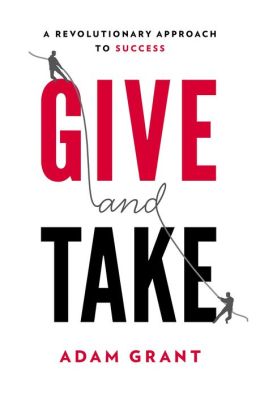
In an article for The Atlantic, Emily Esfahani Smith touches on these themes by highlighting a new book, Give and Take: A Revolutionary Approach to Success, wherein organizational psychological Adam Grant seeks to challenge such zero-sum thinking, arguing that by having a fuller, more healthy perspective of mutual gain, we can move forward together toward a more productive, more fulfilling economic and social environment. Read more on Generosity vs. Zero-Sum Thinking in the Workplace…

The folks over at the Comment magazine site have generously run an essay by me, “Business and the Development of Christian Social Thought.” This piece is a web-friendly version of my editorial from the current issue of the Journal of Markets & Morality, which highlights the call for papers for next spring’s issue on the theme “Integral Human Development.” If you have an interest in this theme as it appears particularly in the Roman Catholic social encyclical tradition, or analogous ideas from other religious traditions, including notably the idea of “integral mission” as appears in the evangelical ecumenical movement, be sure to check out and share the CFP.

One of the points I highlight in this essay is what biblical scholar Craig Blomberg, in his paper in the issue’s “Theology of Work and Economics” Symposium, identifies as the “theory of limited good.” He describes this perspective as that of the biblical world, when

most people were convinced that there was a finite and fairly fixed amount of wealth in the world, and a comparatively small amount of that to which they would ever have access in their part of the world so that if a member of their society became noticeably richer, they would naturally assume that it was at someone else’s expense.

Read more on Murray, Mariana, and Montaigne’s Fallacy…

Jonathan Witt
posted by on Wednesday, July 22, 2009

A recent Fox News piece on President Obama’s “science czar,” John Holdren, makes for spooky reading, dramatizing where well-intended intellectuals can end up when they take a zero-sum view of our planet’s resources.

Acton PowerBlog RSS

Google Plus

Twitter Feed

Facebook Fan Page

Support the Acton Institute

The Acton Institute is funded through the generous contributions of individuals such as yourself. Learn more about how you can advance the cause of freedom and virtue.