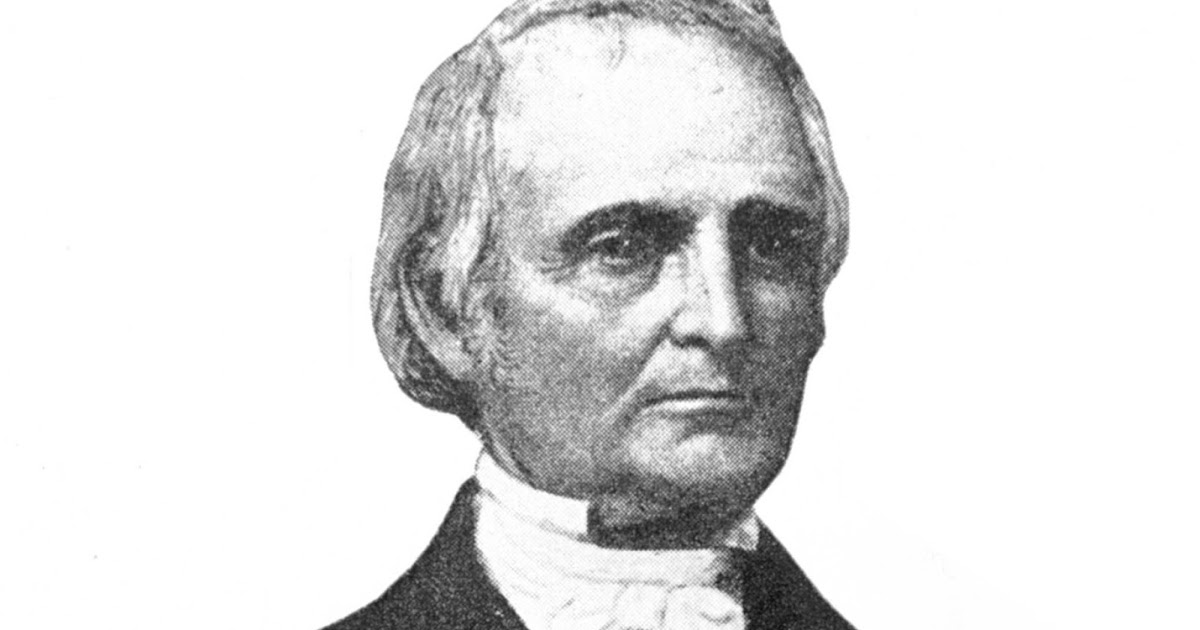
We are about a month away from Acton University, and another keynote speaker is William B. Allen. He is an expert in the American founding and U.S. Constitution; the American founders; the influence of various political philosophers on the American founding. He is Emeritus Professor of Political Philosophy in the Department of Political Science and Emeritus Dean, James Madison College, at Michigan State University. Currently he serves as Visiting Senior Professor in the Matthew J. Ryan Center for the Study of Free Institutions and the Public Good at Villanova University.

Allen’s keynote address is entitled, “To Preserve, Protect and Defend: The Emancipation Proclamation.” In this 150th anniversary of the Emancipation Proclamation, Allen focuses on who were the true beneficiaries of that statesmanlike act. This presentation will look at Lincoln’s intentions in the emancipation proclamation. Although this proclamation was later called a “war measure,” it was inspired by a comprehensive understand of how susceptible free institutions are to neglect and rejection. In a 1989 Imprimis article, Allen says this:

Following the war and Emancipation there was a fairly vigorous effort in this country to realize the promises of the Declaration of Independence as those promises were restated through the 14th Amendment. Many things occurred about which Americans were justifiably proud and particularly in the lives of the ex-slaves. There was a spontaneous flowering of entrepreneurial activity and indigenous development of educational mechanisms—schools, teachers, and even the onset of university education to a significant degree. Communities had formed structured expectations built upon recognized moral practices and certainly congruent with the hopes and ambitions encouraged thereby. (more…)

Private schools are for the privileged and those willing to pay high costs for education; everyone else attends public school or seeks alternate options: this is the accepted wisdom. In the United States, the vast majority of students at the primary and secondary level attend public school, funded by the government.

When considering education in the developing world, we may hold fast to this thinking, believing that for those in severely impoverished areas, private education is an unrealistic and scarce option, leaving the poor with public school or no education at all.

Indeed, this was the opinion held by James Tooley, a Professor of Education Policy at Newcastle University, until he experienced the landscape firsthand, traveling throughout the developing world, conducting research on educational systems in poor and prosperous areas, documenting numerous case studies, and reporting findings that prove the prevalence of low-cost private schools in poor areas.

In an Education Next article, Tooley discusses his observations and unmasks two common myths associated with education for the poor.

Myth #1: Private Education for the Poor Does Not Exist

We sometimes treat “the poor” as if they were somehow uniquely incapable of rising out of poverty without our assistance. We often assume, if we don’t provide them with everything they need, including education, that no one will. Yet if we look closely (and with a bit more humility), we see indigenous solutions everywhere. (more…)

economic growthValues & Capitalism, a project of the American Enterprise Institute, has published a primer of sorts entitled, Economic Growth: Unleashing the Potential of Human Flourishing. The text is just over 100 pages, and gives the reader a thoughtful, concise and essential source on free market economics and its correlation to human flourishing and economic growth.

Authors Edd S. Noell, Stephen L. S. Smith and Bruce G. Webb say this about their work:

[T]he core proposition of this book is that growth is a moral issue because of its impact on the flourishing – or shriveling – of human society. The neglect of growth has moral consequences just as surely as the encouragement of growth has. At its best, sustained growth raises the poor out of poverty, improves the lives of the rich, and helps nations avoid intergenerational conflicts and the deprivations of fiscal crises. Even more basically, growth provides nations with the means and interest to protect the environment and to cultivate a vibrant and humane civilization.

Let’s examine just one of these topics: poverty. The authors note that the growth of a nation’s per capita income positively correlates to the income of its citizens, even the poorest. When a country’s economy grows, a series of events is set in motion, if you will. The example is given of the growth of India’s call-center industry, which required literate English-speakers, presumably fairly well-educated. The call-centers did not directly help less-educated citizens, but the growth of that industry caused the growth of areas requiring lesser-skilled workers: construction, food-service and the like. Of course, the authors are quick to point out that economic growth in any nation requires strong democratic governance, civil rights, rule of law and perhaps most importantly, a citizenship that values a culture of dignity, responsibility, trust and other virtues.

Economic Growth: Unleashing the Potential of Human Flourishing is a terrific addition to the casual economist’s library, and offers a solid grounding in why economic growth and morality are necessarily intertwined.

Joseph Sunde
posted by on Wednesday, May 15, 2013

Rooted & Grounded, Abraham KuyperIn Abraham Kuyper’s recently translated sermon, “Rooted & Grounded,” he explains that the church is both “organism” and “institution,” drawing from both nature and the work of human hands. Pointing to Ephesians 3:17, he writes that, “the church of the Lord is one loaf, dough that rise according to its nature but nevertheless kneaded with human hands, and baked like bread.”

Yet, as he goes on to note, this two-fold requirement is not limited to the church, but also applies “to every kind of life that comes into contact with human consciousness.” Further, it is a “fundamental law of creation.”

What follows is a stunningly poetic portrait of God’s created order and the call to human stewardship and cultivation therein:

Creation was fashioned by God, fashioned with life that surges and scintillates in its bosom, fashioned with the powers that lie dormant in its womb. Yet, lying there, it displayed but half its beauty. Now, however, God crowns it with humanity, who awakens its life, arouses its powers, and with human hands brings to light the glory that once lay locked in its depths but had not yet shone on its countenance. (more…)

There are currently two sets of laws in America: laws that apply to everyone and laws that apply to everyone except for friends of the Obama administration.

In January I wrote about how the executive branch had argued that the Migratory Bird Treaty Act of 1918 should be broadly interpreted in order to impose criminal liability for actions that indirectly result in a protected bird’s death. The administration used that reasoning to file criminal charges against three energy companies.

american-bald-eagleThe U.S. District Court of North Dakota rejected this sweeping interpretation of the MBTA and dismissed the charges, noting that the words “kill” and “take” in statute should be interpreted narrowly to mean actions taken with the intent to kill or take a bird, not actions that merely happen to kill or take a bird. The ruling seemed fair-minded but the Department of Justice appealed to the Eighth Circuit Court of Appeals.

While one section of the Obama Administration is arguing that they should be able to prosecute energy companies (oil and gas) for killing birds another section of the Obama Administration is arguing that energy companies (wind) should be exempt from prosecution for killing birds.

According to the Associated Press:
(more…)

Jordan J. Ballor
posted by on Wednesday, May 15, 2013

2009-07 wpy 28Over at Think Christian today, I lend some broader perspective concerning the link between money and happiness occasioned by a piece on The Atlantic on some research that challenged some of the accepted scholarly wisdom on the subject.

The Bible is our best resource for getting the connection between material and spiritual goods right. I conclude in the TC piece, “As Jesus put it, ‘life does not consist in an abundance of possessions.’” Or to put it another way, we live on bread but not bread alone.

And so money is a good, but not a terminal good. It isn’t an end in itself, but rather is a means to pursuing other good ends. The Heidelberg Catechism teaches us, for example, that we work “faithfully” so that we might “share with those in need.”

Another piece just out today argues that money, when used rightly, can be a means to make us happy. But significantly, the findings of Elizabeth Dunn and Michael Norton show that such uses of money often correspond to ways not motivated directly by our own pursuit of happiness. Thus, among the “five key principles” they find that helps “turn cash into contentment” is one that resonates directly with the wisdom of the catechism noted above: “Invest in Others.” This means recognizing that “spending money on other people makes us happier than spending it on ourselves.”

Check out the work of Elizabeth Dunn and Michael Norton in their new book, Happy Money: The Science of Smarter Spending.

Joe Carter
posted by on Wednesday, May 15, 2013

Religious Literacy Training for Law Students?
Dan Crane, Center for Law and Religion Forum

Comments drawing on religious teachings or metaphors—Moses’ smashing of the tablets, the parable of the Good Samaritan, etc.—are often greeted with blank stares, uncomfortable silence, or nervous giggles, as if I were making oblique references to early 80s Swedish disco music.

For Most Atheists, Atheism is a Lifestyle Choice
Conor Cunningham, American Orthodox Institute

Atheists, if they are true to their premises, embrace nihilism. Conor Cunningham looks at what is involved in the claims of ‘atheism’ and why those claims can be useful to the studies of the theologian.

Was Jesus religious enough for HHS mandate?
Terry Mattingly, Patheos

When describing how his disciples should serve the needy, Jesus told a parable about a Good Samaritan who rescued a traveler who had been robbed and left for dead. This businessman didn’t care that his act of kindness took place in public and that the injured man didn’t share his faith.

How Missionaries Are Changing Medicine
Ken Walker, Christianity Today

Why we’ll see more impressive discoveries in the field.

escape-from-camp-14-fc2“I escaped physically, I haven’t escaped psychologically,” says Shin Dong-hyuk. His remarkable journey out of a deadly North Korean prison to freedom is chronicled in Escape from Camp 14 by Blaine Harden. Shin didn’t escape for freedom. He had little knowledge of such a concept. He had heard that outside the prison, and especially outside North Korea, meat was available to eat.

Shin was born at Camp 14 in 1982 and was strictly forbidden to leave because of the sins of his family line against the state. His crime? Long before his birth, some of his relatives defected to South Korea. He was constantly told he could repent of his sins for hard labor and hunger. “Enemies of class, whoever they are, their seed must be eliminated through three generations,” declared Supreme Leader Kim Il Sung in 1972. Before his escape, Hardin summed up Shin’s prison experience:
(more…)

factory collapseThe horrific factory collapse in Bangladesh, now surpassing 1,100 in total deaths, has caused many to ponder how we might prevent such tragedies in the future, leading to plenty of ideological introspection about economic development and free trade.

Describing the situation as “neither too simple nor too complex,” Brian Dijkema encourages a healthy mix of confidence and caution. With folks calling for the complete take-down of global capitalism on one end and elevating stiff pro-market arguments on the other, Dijkema reminds us that we should respond, first and foremost, to the simple “brutality of death,” with clarity, prayer, and compassion.

Yet when it comes to understanding the drivers of the disaster, we should recognize the complexity of things. Responding to Pope Francis’s corresponding critique of profit-driven business decisions, Dijkema warns that by “conflating what is complex into what is simple or vice-versa,” we risk dishonoring the “dignity of the human person” and “the dignity of labour.”

Over at Ethika Politika, Andrew Haines places a similar emphasis on complexity, focusing on an argument free-market advocates routinely make in response to such circumstances:

If you know a free market champion, then you’ve heard the argument that low-wage, low-skill, mostly mindless jobs are better than no jobs at all. The idea works well in theory. I admit, I’ve even made the case myself from time to time.

On the other hand, you might have heard recently about things like the collapse of an industrial building in Savar, Bangladesh—home to five garment factories—where the death toll recently topped one thousand.

I say “on the other hand” since the any-job-is-better-than-no-job argument (AJBNJ) works well, until it doesn’t.

Haines proceeds to offer what I think is a fair critique of the any-job-is-better-than-no-job maxim (AJBNJ), arguing that it “suffers a huge blind spot when it comes to connecting ‘better’ economics with ‘better” humanity.’” (more…)

Those who’ve attended Acton University in the past know that the Evening Speakers are memorable, uplifting and often the highlight of the day for many. This year, one speaker is Marina Nemat, currently teaching at the University of Toronto. Nemat is set to speak on her book, Prisoner of Tehran. The memoir details her imprisonment, with a life sentence, at age 16 in the notorious Evin Prison in Tehran during the Khomeini Regime.

While the memoir, by its nature, is extremely personal, it touches on the themes of religious and intellectual liberty that are foundational to the learning at Acton University. In fact, Nemat was imprisoned for the “crime” of asking her calculus marina nematteacher to teach calculus, rather than spouting the politics of the regime. Her request led to her fellow students walking out of class, and Nemat found herself accused of communist and anti-revolutionary activities.

Part of the memoir focuses on Nemat’s Christian faith, a faith passed on to her from her Russian grandmother. While Nemat’s parents were distant emotionally, her grandmother was a source of strength for Nemat, especially as Nemat grew to learn that her grandparents had survived the Russian revolution. (more…)

Acton PowerBlog RSS

Google Plus

Twitter Feed

Facebook Fan Page

Support the Acton Institute

The Acton Institute is funded through the generous contributions of individuals such as yourself. Learn more about how you can advance the cause of freedom and virtue.