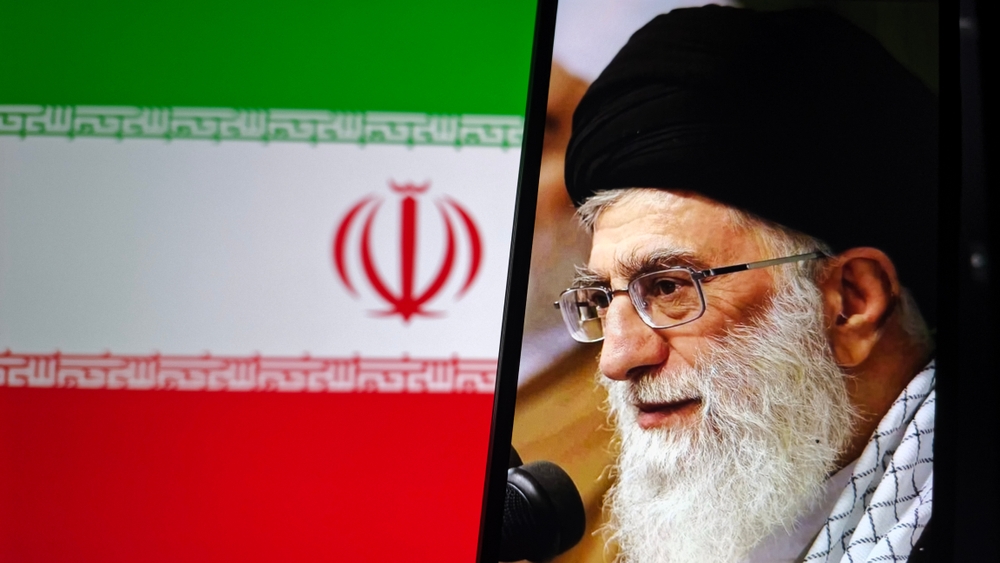
Iran’s Islamist regime is staggering toward its unofficial 47th birthday: the return of Ayatollah Khomeini to Tehran on February 1, 1979. Although a broad coalition overthrew the long-ruling dictator Shah Mohammad Reza Pahlavi, Islamic hardliners took control and created a regime that was even more brutal.
The result is one of the world’s most repressive governments, a bottom-dweller alongside Belarus, China, Russia, and Saudi Arabia. According to Freedom House: “Ultimate power rests in the hands of the country’s supreme leader, Ayatollah Ali Khamenei, and the unelected institutions under his control. These institutions, including the security forces and the judiciary, play a major role in the suppression of dissent and other restrictions on civil liberties.” Alas, this aseptic description does not adequately communicate the horror recently visited upon the Iranian people by the Islamic Revolutionary Guard Corps, the regime’s chief enforcer and protector.
Underlying Tehran’s murderous hostility to dissent is a fundamental unwillingness to accept freedom of conscience in any form, most importantly moral and spiritual. The shah pursued a forced modernization campaign that reduced Islam’s public role, inflaming opposition from many fundamentalists, but he largely left religious minorities, other than Baha’is, alone. In contrast, the Islamist regime seeks to stigmatize and ultimately eradicate all disfavored faiths. As researcher John Mac Ghlionn explained back in April: “Apostasy—leaving Islam—became a crime punishable by death. Churches were outlawed, converts were hunted, and Farsi Bibles became contraband.”
This approach continues. In its report last year, the U.S. Commission on International Religious Freedom (USCIRF) found that
religious freedom conditions in Iran remained poor, particularly for religious minorities, religious dissidents, and women and girls. Authorities subjected prisoners detained on religious grounds to torture and severe punishment, including by denying them medical care. The government also continued to systematically harass, intimidate, and target religious minorities through its arbitrary arrests, enforced disappearances, forced closure of businesses. Iran’s government carried out over 900 executions in 2024 and issued scores of death sentences for religiously based charges.
No one is safe. The most populous majority-Shia nation, Iran persecutes Sunni and Sufi Muslims. From the USCIRF report: “The government continued targeting Sunni Muslims through executions, arrests, disappearances of prominent clergy, destruction of homes, and denial of building permits.”
Baha’is, essentially viewed as apostates, suffer even more. Regime attacks intensified dramatically last year. Human Rights Watch reports that
between June and November 2025, the [Baha’i International Community] documented more than 750 persecutory acts across Iran, three times the number recorded during the same period in 2024. These incidents include over 200 raids on homes and businesses, followed by interrogations, resulting in the detention and arrest of at least 110 Bahá’ís. Revolutionary Courts held hearings for more than 100 individuals and issued new sentences against Bahá’ís, each ranging from two to ten years in prison.
Jews have long been targeted by a regime that routinely demonizes Israel, and their situation also deteriorated last year. As Janatan Sayeh of the Foundation for the Defense of Democracies reported in November: “After the Twelve Day War in June, and repeated failures to strike Jewish targets in Europe, Tehran has redirected its hostility toward its own Jewish citizens.” More than 30 Iranian Jews were arrested on espionage charges, numerous Jewish leaders were interrogated, and members of the country’s small Jewish community were pressed to express support for Khamenei and the regime.
Most threatening to the regime, however, is the growth in Christianity. Ironically, the misuse of Islam to justify political oppression has long pushed people away from that faith. In 2018 my Cato Institute colleague Mustafa Akyol, author of Reopening Muslim Minds: A Return to Reason, Freedom, and Tolerance, reported that “there are signs that quite a few Iranians are now also disenchanted with Islam itself. Often silently and secretly, they are abandoning their faith. Some opt for other faiths, often Christianity.”
This process continues. Nima Alizadeh, a Muslim convert to Christianity and founder of Revelation Ministries, which serves Farsi-speaking Christians, noted three years ago that “in the past two decades, Iran has had the fastest growing church in the world.” Last November, Dr. Pooyan Tamimi Arab of the Group for Analyzing and Measuring Attitudes in Iran observed: “The younger people are [turning away from Islam] … and that means that in a situation in which the majority religion is being doubted, some people will not choose, for example, non-religiosity, but they will choose another religion, like Christianity.”
For this reason, the Khamenei regime has undertaken a particularly harsh campaign against converts. During Iran’s 2024 “Universal Periodic Review” before the UN Human Rights Council, four NGOs, Middle East Concern, Article 18, Christian Solidarity Worldwide, and Open Doors, filed a joint comment on the Tehran government’s misbehavior: “The Iranian authorities do not permit converts to attend the churches of the Armenian and Assyrian communities, who are themselves prohibited from holding services in Persian, the national language, in a further measure to dissuade converts from attending. Converts are targeted for involvement in informal meetings in private homes, known as ‘house-churches.’”
Early last year, Mai Sato, the UN Special Rapporteur for Iranian human rights, highlighted attacks on Christians: “The situation of Christians in the Islamic Republic of Iran is a matter of serious concern that demands our continued attention.” As reported by Human Rights Watch last year: “Iran has significantly stepped up its persecution of Christians, with a reported total of 96 converts sentenced to a combined total of 263 years in prison last year, compared with 22 Christians sentenced in 2023.” Nevertheless, emphasized Ghlionn, the Christian church is still expanding: “Iran now has one of the fastest-growing Christian populations in the world. Not in grand cathedrals. Not in public squares. But underground, spreading quietly and carefully. … For the most part, however, it’s just ordinary Iranians—students, workers even former mullahs—who have seen the darkness of the Islamic Republic and want something else.”
The fact that Christianity is spreading organically has made it more resilient and harder to suppress. Lela Gilbert of the Hudson Institute discussed the result of her research:
New Christians’ witness to others is mostly shared in quiet conversations, encouraged by low-profile online Bible studies, and affirmed by visions, dreams, and miraculously answered prayers. Due to their risky circumstances, recent Christian converts are enthusiastically communicating about their changed lives with friends and loved ones—but quietly and carefully. However, their discreet but persistent witness accounts for the extraordinary number of new Iranian believers, who meet in small house churches.
Tragically, the punishment of some religious believers never ends. As the four-way NGO submission explained:
Pressures on Christians and their families continue after they are released from imprisonment, or following arrest or detention, including monitoring and harassment; denial of employment; denial of education and qualifications; the cycle of new charges or reopening cases; enforced Islamic re-education classes, during which converts are pressured to return to Islam; additional post-prison penalties, such as internal exile, flogging, fines, travel bans, and deprivation of social rights, including membership of any group; the imposition of community-service orders, for example grave-digging or washing dead bodies before burial; and coercion through threats to leave Iran.
For the regime, an Iranian believing in something other than the prescribed faith is a permanent crime.
Iran has become a pariah state. Surely the thousands of Iranians killed during the recent protests deserve justice. However, the Tehran regime’s offenses go much deeper than mimicking other authoritarian regimes in attempting to hang on to power at all costs. Khamenei and the IRCG are committed to extirpating individual conscience, a spiritual as well as political crime. But they are fighting a battle they cannot win. The fact that other faiths continue not only to survive but to thrive offers hope for Iranians of all faiths.