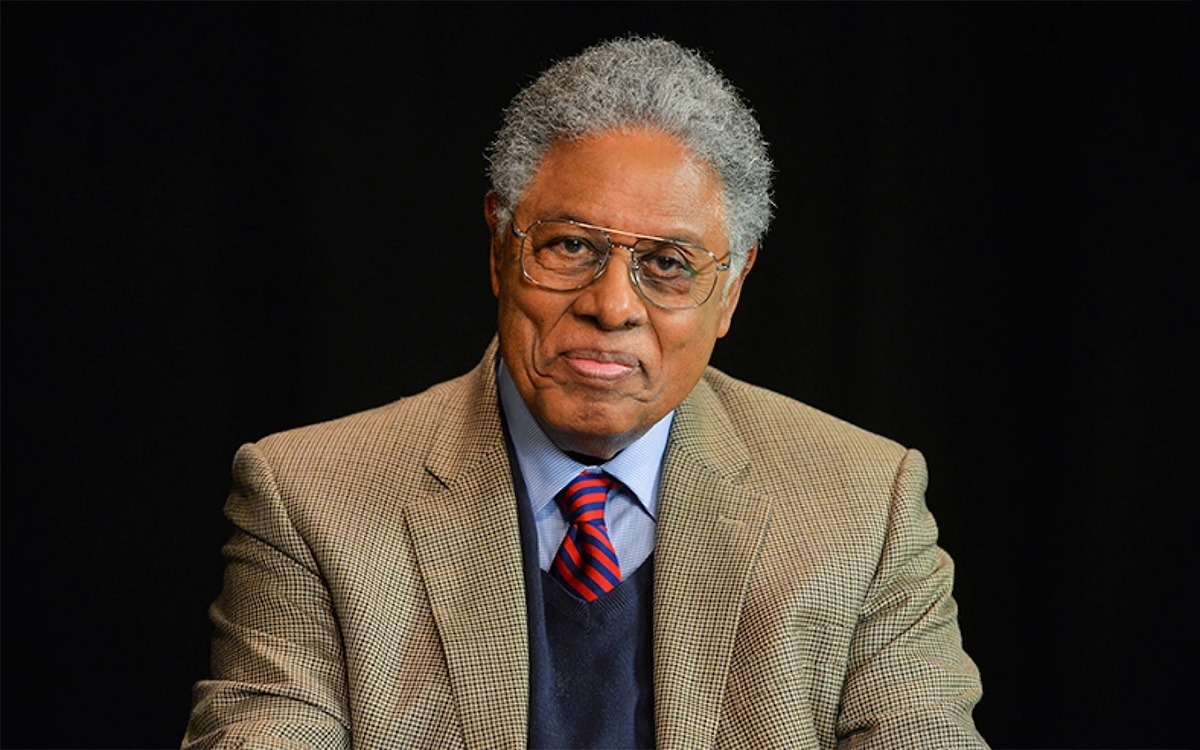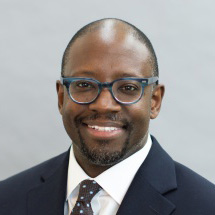
Anthony Bradley
Dr. Anthony Bradley, a former high school teacher and administrator, holds a BS in biological sciences from Clemson University, a Master of Divinity from Covenant Theological Seminary, and a Doctor of Philosophy degree from Westminster Theological Seminary. As a research fellow, Dr. Bradley lectures at colleges, universities, business organizations, conferences, and churches throughout the U.S. and abroad. His writings on religious and cultural issues have been published in a variety of journals, including: the Atlanta Journal-Constitution, Detroit News, and World Magazine. Dr. Bradley is called upon by members of the broadcast media for comment on current issues and has appeared on CNN/Headline News, Fox News and Court TV Radio, among others. He studies and writes on issues of race in America, hip hop, youth culture, issues among African Americans, the American family, welfare, education, and modern international forms of social injustice, slavery, and oppression. His dissertation explores the intersection of black liberation theology and economics. Dr. Bradley is Assistant Professor of Apologetics and Systematic Theology at Covenant Theological Seminary in St. Louis, MO.
Public schools flunk the test on black males
Friday, October 30, 2009
My latest Acton commentary:
Do at-risk black males need to be emancipated en masse from America’s public school complex? A new study released about high school dropout and incarceration rates among blacks raises the question. Nearly 23 percent of all American black men ages 16 to 24 who have dropped out of high school are in jail, prison, or a juvenile justice institution, according to a new report from the Center for Labor Markets at Northeastern University, “Consequences of Dropping Out of High School.”
High school dropouts cost the nation severely. Not only are American taxpayers getting no return on the $8,701 we spend on average per student, each dropout costs us $292,000 over their lifetime in lost earnings, lower taxes paid, and higher spending for social programs like incarceration, health care, and welfare.
Given the many social pathologies plaguing black males in low-income and fatherless households, the best place for at-risk black males is not the dominant failed public school paradigm. Since public schools are forbidden to teach virtue and often reduce children to receptacles of information, expanding private and faith-based options to black parents is the only compelling solution.
The Office for Standards in Education, Children’s Services and Skills (Ofsted), England’s chief education inspection agency, recently released a report lauding the attributes of faith schools. The report, “Independent Faith Schools,” examined the quality of formation provided by Christian, Jewish, Muslim, Buddhist and Hindu religious schools. The inspectors found “pupils demonstrating an excellent understanding of spiritual and moral attributes.” In all the schools visited, “pupils gained a strong sense of identity and of belonging to their faith, their school and to Britain.” In other words, faith-based schools, by simply teaching about religion, are forming their students to be virtuous citizens.
Has America given up on making virtuous citizens out of black males? In England’s faith schools, “good citizenship was considered by all the schools visited to be the duty of a good believer because this honoured the faith,” the report says. In contrast, American public schools have become prisoner factories for at-risk black males. Because producing educated, virtuous citizens is unrelated to funding, the problem cannot be addressed by the simplistic expedient of increasing government allocations to education. The deeper problem is that the American education system seems no longer to value what faith schools in England are recognized for: producing students with good “spiritual, moral, social and cultural understanding.” (more…)
3
commentsshare yours
Category: Acton Commentary
Related Tags:
black males, culture, Educational Choice, public education
Less Religion Means More Government
Thursday, October 8, 2009
My article from this week’s Acton News & Commentary:
Soviet communism adopted Karl Marx’s teaching that religion was the “opiate of the masses” and launched a campaign of bloody religious persecution. Marx was misguided about the role of religion but years later many communists became aware that turning people away from religious life increases dependence on government to address life’s problems. The history of government coercion that comes from turning from religion to government makes a new study suggesting a national decline in religious life particularly alarming to those concerned about individual freedom.
The American Religious Identification Survey, published by Trinity College in Hartford, Conn., reports that we should expect one in five Americans to identify themselves as having no religious commitments by 2030. The study, titled “American Nones: The Profile of the No Religion Population,” reports that Americans professing no religion, or Nones, have become more mainstream and similar to the general public in marital status, education, racial and ethnic makeup and income. The Nones have increased from 8.1 percent of the U.S. adult population in 1990 to 15 percent in 2008.
According to the study, 22 percent of American 18 to 29-year-olds now self-identify as Nones. For those promoting dependency on government to handle the challenges of everyday life, as well as those who wish to take advantage of a growing market for morally bankrupt products and services, the news of declining religious life is welcome. (more…)
4
commentsshare yours
Category: Acton Commentary
Related Tags:
American Religious Identification Survey, faith, secularism, youth
Acton Commentary: Too Much Government Makes Us Sick
Thursday, September 3, 2009
I take a look at the way corn subsidies skew our eating habits — and not always for the good of our health — in this week’s Acton Commentary. Excerpt:
Read “Too Much Government Makes Us Sick” on the Acton Web site and come back here for comments.
2
commentsshare yours
Category: Acton Commentary
Related Tags:
farm subsidies, health care, obesity
Compassion for the poor?
Thursday, July 17, 2008
Denver’s homeless may get free tickets to see a movie or go to the zoo next month while the Democratic National Convention is in town next month, according to the Rocky Mountain News.
The Colorado Coalition for the Homeless plans to get 500 movie tickets and passes for places such as the Denver Zoo and the Denver Museum of Nature and Science for the homeless that they work with. This plan obviously raises many questions, one of these being: how are we to deal with the poor among us?
One of the Acton Institute’s areas of study, effective compassion, lays forth six essential principles for truly helping the poor.
0
commentsshare yours
Category: Effective Compassion
Related Tags:
democratic national convention, Effective Compassion, homeless
European Commission Attacks its Own Scientists
Friday, May 9, 2008
On Wednesday the European Commission again delayed a decision on whether European farmers may grow more genetically modified (GM) crops. The commission claimed that more scientific analysis is needed before three new crops can be approved. But curiously, the European Food Safety Authority (EFSA) has already twice analyzed the crops and found that they pose no danger to public health.
Divisions seem to have broken out within the commission on how to proceed with GM food. This comes at a time when biotech investors are increasingly exasperated with European procrastination on the issue.
The intra-Commission conflict on GM food is most bizarrely expressed in the open attempts by Environment Commissioner Stavros Dimas to discredit the EFSA, an agency set up by the Commission in 2002 in order to specifically investigate food safety concerns. By undermining the authority of the EFSA, Dimas is colliding with Agriculture Commissioner Mariann Fischer Boel, who has defended the agency. The result is a complete stalemate which may leave the Europe years behind in biotech investment compared to the US and other countries.
Dimas’s hostility to GM food is cheered on by some environmental NGOs, in particular Greenpeace and Friends of the Earth. Greenpeace boasts that it orchestrated a campaign of 130,000 emails in order to obstruct the approval of the crops.
These NGOs have virtually no expertise in the area of consumer health research but join Dimas’s ritual attacks on the risk assessments done by the EFSA. It is particularly striking that they try to bring the EFSA into disrepute by implying that the World Health Organization (WHO) is speaking out against GM crops. But here’s what the WHO actually says:
“GM foods currently available on the international market have passed risk assessments and are not likely to present risks for human health. In addition, no effects on human health have been shown as a result of the consumption of such foods by the general population in the countries where they have been approved.”
European worries about food safety are to a large extent based on the experience of the 1990s when a number of food scandals, in particular BSE or mad cow disease, caused understandable anxiety among consumers. All of these scandals, however, were entirely unrelated to GM food; it is irresponsible to exploit these fears in the current debate on biotechnology.
It is not difficult to see that at bottom the controversy is not so much about health and science but about politics and whose ox is being gored. In the European Council of Ministers, more agrarian-based countries like Greece (Dimas’s home country), Italy, Austria and Poland tend to vote against GM foods while states where traditional farming is not as dominant like the UK and the Netherlands are more open to biotech.
The politicization of the GMO debate is especially damaging at a time of global food price inflation. Future improvements in agricultural productivity will become increasingly necessary and biotech can play an important role in this area. The Commission must not allow pseudo-scientific excuses to stand in the way of serving the interests of the European, and indeed the global, consumer.
2
commentsshare yours
Category: Technology and Regulation
Related Tags:
biotechnology, european commission, European Food Safety Authority, european union, gmo, Stavros Dimas
Wake Up Black Democrats: Hillary Camp Disrespects And Patronizes Blacks
Thursday, January 17, 2008
Every Black democrat in America should read today’s column by Nathan McCall in the Atlanta-Journal Constitution titled “Clinton gets proxy to play race card.” Hilary and her supporter’s antics are now playing the race card against Obama. Why? Perhaps the Clinton’s didn’t expect a non-white person to be in contention against established power brokers. Democrats with black leadership is meant for rhetoric only many would say.
McCall reminds us that Hillary Clinton seems ultimately self-interested and will use blacks as a means of getting into office if necessary (just as her husband did). Of course, this is not new. Democrats have been pimping the black community for years now.
This explains why the Democrats refuse to address the black genocide in America through abortion. Nearly 90 percent of all abortion facilities are in or near minority communities and over 43 percent of all black pregnancies end in abortion– this is nothing less than a predatory removal of blacks from American society.
What’s even worse is that many blacks are willing to be reduced to being political pawns in the Clinton power surge.
Did Hilary Clinton recruit Bob Johnson, the billionaire former owner of Black Entertainment Television, to work in her “house” to do her bidding against Obama? Johnson made reference to Obama’s drug use while proffering the mythology about the Clinton’s deep commitment to black issues. What commitment? There is no evidence that the Clinton’s did anything for black people other than offering rhetoric and empty platitudes.
McCall reminds us that Johnson contributed little to black progress himself by creating a network to peddle misogynistic and denigrating images of black life as normal. Clinton’s enlisting a man who developed dehumanizing programs is even more evidence that black people are just a means to her political ends. John Edwards would never stoop to that level.
As McCall observes “having an African-American do her bidding on the racial front frees Hillary to stake out the moral high ground.” Black America’s beginning to see this more and more.
It gets worse. Bill Clinton’s reference to Obama’s vision as a “fairy tale” should be seen as nothing less than condescending. A fairy tale? Why does Bill think it ridiculous that a man like Obama could become president? What is it about Obama that stands out?
Clinton also referred to Obama as a “kid.” Or maybe Clinton should have just called him “boy” like the Jim Crow era ideologies would dictate. What do the Clinton’s really think of Obama? We’re learning America! It’s leaking out as the Clinton’s panic and recruit hoodwinked blacks into their house to do their bidding as McCall suggests. Why do the couple not feel that Obama is intelligent or mature enough to be president?
As McCall points out was Clinton “a kid” at 46 when he became President?
The Clinton’s have turned the democratic race into one about race. Their true views are leaking as they realize that their dream of ascending to presidency using blacks as a means may be collapsing because of a brown man.
Does the Clinton camp believe blacks to be stupid and not to catch their reductions of Obama in such a way that has nothing to do with the content of his character?
I am not an Obama supporter, by any means, but why black Democrats believe that Hilary Clinton actually cares about black issues exposes just how well the Clinton’s have bamboozled black America. McCall is right that the Clinton’s “aggressively racial maneuvers” may backfire on them on them in the end as their true views of blacks get exposed.
5
commentsshare yours
Category: News and Events
Related Tags:
barack obama, democrats, election 2008, hillary clinton, presidential campaign
Black America Is Just As Class Divided As The Rest Of America
Wednesday, November 14, 2007
The Pew Research Center released a new report stating: “African Americans see a widening gulf between the values of middle class and poor blacks, and nearly four-in-ten say that because of the diversity within their community, blacks can no longer be thought of as a single race.”
Here are the key findings:
This report is not telling us anything new. Here’s why:
(1) Blacks have always been heterogeneous. In previous generations blacks were all forced to live in the same neighborhoods during segregation so the profound diversity among the black community was masked. This Pew report should remind America of the fact that all blacks do not think alike and never have. Therefore, using language like “the black vote” is as silly as using a phrase like “the white vote.”
(2) The report should awaken us to the fact that blacks are so heterogeneous that to talk about “black leaders” is brutish and primitive. Are there “white leaders?”
(3) The only people who seem to pimp the idea the lack of black progress in 2007 is due to white racism are the black elite. It seems that people on the street, Juan Williams, Bill Cosby, and others seem to understand that the lack of black progress, in some sectors, is the fault of individuals not taking advantage of the freedoms granted by the blood, sweat, and tears of their ancestors.
(4) The black middle-class are analogous and have the same materialistic worldview as middle-class whites but more hypocritical in some ways. While middle-class whites seem to despise “white trash,” middle-class blacks despise “ghetto” black folks, doing nothing to help them other than writing occasional checks during black history month or during the holiday season–as they live in gated communities, drive luxury vehicles, and send their kids to private schools– many middle-class blacks are oddly the first to come out and defend communities and lifestyles that they refuse to embrace themselves. Many middle-class blacks who defend the 6 boys in Jena, Louisiana would never live in the neighborhood from which the boys came.
Overall, this report confirms what many of us have always known: black America is divided by class just like the rest of America.
3
commentsshare yours
Category: News and Events
Related Tags:
black males, black progress, race
Misguided Hop Hip Protests: Media Companies Aren’t The Problem
Monday, November 5, 2007
The New York Times reports of a well-intentioned protest by a pastor to protest the ridiculous and dehumanizing lyrics of the type of hip hop shown on networks like BET and MTV.
This is well intended but I doubt it will help much. Perhaps the Pastor should focus more on preaching about Jesus to fans of hip hop music as opposed to attacking the media corporations. Here’s why:
(1) As long as consumers want music that degrade women and celebrate stupidity someone is going to produce it and distribute it. No one forced to buy stupid music.
(2) The best way to protest is with your wallet. If people didn’t buy this music, or attend the concerts of the artists who produce the music, this type of hip hop would die.
(3) Viacom does not force artists to rap lyrics that degrade themselves and women. They freely choose to rap about those things on their own volition.
(4) If the public wants Viacom to act virtuously consumers are going to have change their preferences, artists are going to have to refuse to rap about ignorance, and, then, Viacom executives are left to make the risky decision to opt out of distributing filth. If Viacom could make money off of virtue it would.
Viacom does NOT need to create universal standards for content. Maybe morally debased consumers need to embrace virtuous preferences. If the culture is not morally formed citizens will not make moral decisions. Why isn’t this group protesting the malformed desires of hip hop’s consumers and artists as well?
12
commentsshare yours
Category: Business and Society
Related Tags:
Business and Society, hip-hop
Patterson Stops Too Short In Jena Six New York Times Piece
Monday, October 1, 2007
Orlando Patterson, professor of sociology at Harvard University, penned a challenging piece on Jena 6 and our current racial tensions. I have learned much from Patterson over the years. For example, he was the first person to help me realize that we often confuse issues of race and class in America by assuming the race as the single variable accounting for the cyclical plight of poor blacks.
In a September 30th New York Times op-ed piece Patterson rightly says that what happened in Jena, LA and the current state of black America goes well beyond the antiquated appropriation of racial reasoning. Patterson writes:
Like many others, Patterson fails to see is that the crisis in black America, especially among black males, is primarily a moral one. To what Patterson said, I would add the following:
(1) Patterson calls for prisons to reintroduce rehabilitation as an integral method of dealing with offenders. Sadly, the best any government-run rehabilitation can do for a struggling inmate is to offer shallow behavior modification which has been proven not to work long-term. A man in prison has deep emotional, psychological, and spiritual issues. Prison rehabilitation is incapable of transforming and healing the soul of man who has acted out of his own lacerated wounds.
(2) Black fatherlessness is having a devastating affect on the masculine formation of black boys. This is a moral issue. Cultivating the attributes of love, commitment, intentional formation, care, teaching, time, and discipline that boys need to learn from their fathers, and other men who care about their development, cannot be engendered by a tax incentive.
(3) Rejecting the ghetto-fabulous mindset is a moral problem. On what basis do we expect a young black male to reject the self-sabotaging ghetto-mentality? Money and success? In a country as vain and immoral as America at times the market not only supports and encourages stupidity it also provides incentive for young black boys to pursue with recklessness. “Do yo’ chain hang low?” “Read a book!”
(4) The type of healing and restoration men need when exiting the prison system is moral at the core. While it is true that these men will need job training, new skills, etc., these men need, more than anything else, to embrace a new vision for what it means to be a man. Having a masculine identity that pursues whatever is true, honorable, just, pure, beautiful, commendable, praiseworthy, and the like requires a radically transformed and renewed mind and soul. It takes a morally formed masculine identity to make job skills and family commitments cultivate cycles of human flourishing.
When black men are given the moral formation to pursue a radically transformed view of themselves as men they will become the kinds of men who fight evil in the world instead of fighting each other and are intentional about raising another generation of girls and boys to do the same thereby making the world a better place.
1
commentsshare yours
Category: Effective Compassion
Related Tags:
black males, Effective Compassion, jena 6, jena six, race, racism
Minds that Matter
Wednesday, September 19, 2007
In his recent and fascinating book Five Minds for the Future, Harvard professor Howard Gardner outlines the 5 basic types of intelligence people have:
Gardner makes the striking point that the Synthesizing Mind is becoming more important than ever, given our highly technological, highly informational world. The Disciplinary Mind — or what we think of as classical intelligence, the stuff child prodigies are made of — has dominated the intellectual landscape throughout history. But, Gardner argues, now that the Internet, technology, and media are making massive amounts of very dense information available to the average person, the type of mind that can acquire and store information is still impressive, but ultimately less useful than a mind that can process, connect, and communicate cross-disciplinary information to others in a meaningful way.
Thanks to the Internet, everyone can now access the vast storehouses of intellectual wealth that once belonged only to a concentrated elite. It makes sense, then, that the new elite could turn out to be those who can receive information rapidly, sift it, connect the dots, and put the whole picture to the best possible use for others.
In my mind, the Synthesizer concept parallels entrepreneurship in a few interesting ways. Just as information can behave like a type of good or service, it seems a person with a Synthesizing Mind can make prudent use of knowledge for the good of the entire human community. Technology makes it possible for the Synthesizer quickly to select the most relevant material from the experts — who have divided their labor to manage whole disciplines and systems of thought — without laboring to build a monolithic knowledge base of every field on his own, which would take a long time and allow him to share only a few authoritative insights at the end of all his pursuits. This does not mean the Synthesizer hurries or skips over important steps: he still must be a careful scholar who humbly stands “on the shoulders of giants,” as Sir Isaac Newton put it. It simply means he is free to use his creative powers to illuminate more readily for others the way various disciplines interact and the consequences they have for human life. That in turn makes him able to harness and combine the talents of others to form a serviceable “product” faster than a person with a Disciplinary Mind.
If thinking truly is “connecting things,” as G.K. Chesterton wrote in Orthodoxy, the concept of the Synthesizing Mind has a great deal to offer to people of every category of intelligence. Even if you disagree with Gardner’s categorizations, having a Synthesizing Mind might help you to figure out why.
1
commentsshare yours
Category: Technology and Regulation
Related Tags:
entrepreneurship, five minds for the future, howard gardner, internet, technology, Technology and Regulation
The Acton Institute PowerBlog © 2009
Powered by WordPress