The PowerBlog is managed by the Acton Institute, a non-profit think tank dedicated to promoting a free and virtuous society characterized by individual liberty and sustained by religious principles. Its authors are a diverse group of scholars, writers, clergy, and businesspeople who discuss a wide variety of topics connected to the relationship between religion and economics. Click here to learn more about the Acton Institute...

Hunter Baker

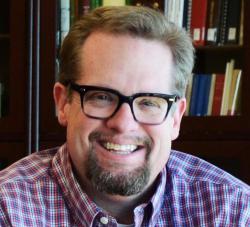
Hunter Baker, J.D., Ph.D. serves as contributing editor to The City and to Salvo Magazine. In addition, he has written for The American Spectator, American Outlook, National Review Online, Christianity Today, Human Events.com, the Atlanta Journal-Constitution, and a number of other outlets. His scholarly work has appeared in the Journal of Law and Religion (“Competing Orthodoxies in the Public Square: Postmodernism’s Effect on Church-State Separation”), the Regent University Law Review (“Storming the Gates of a Massive Cultural Investment: Reconsidering Roe in Light of its Flawed Foundation and Undesirable Consequences”), and the Journal of Church and State. In 2007, he contributed a chapter “The Struggle for Baylor’s Soul” to the edited collection The Baylor Project, published by St. Augustine’s Press. He has also been a guest on a variety of television and radio programs, including Prime Time America and Kresta in the Afternoon. As a law student in the late 1990s, Hunter Baker worked for The Rutherford Institute and Prison Fellowship Ministries where he focused primarily on defending the constitutional principle of religious liberty. Prior to beginning doctoral studies in religion and politics at Baylor University in 2003, he served as director of public policy for the Georgia Family Council. While at Baylor, Baker served as a graduate assistant to the philosopher Francis Beckwith and the historian Barry Hankins. He assisted Beckwith in the editing of his landmark book Defending Life which has now been published by Cambridge University Press. He also provided research assistance to Hankins in his forthcoming biography of Francis Schaeffer. Baker currently serves on the political science faculty at Houston Baptist University and is the special assistant to the president, Robert Sloan. He is married to Ruth Elaine Baker, M.D. They have a son, Andrew, and a daughter, Grace.

Posts by Hunter Baker:

Secularism and Poverty

Wednesday, November 11, 2009

A colleague recently mentioned that a wag had observed the church had failed to solve poverty, so why not let the federal government have a try?

I think it is interesting that anyone, such as the wag in question, could think that the federal government can effectively solve the problem of poverty. I don’t think it can because it resolutely refuses to confront the sources.

Really, truly, don’t we know the cause of a great deal of the poverty in our midst? Here’s a hint: Adam Smith thought the poor who gravitated to the fiery preachers were wise. Why? Because the hell and brimstoners alone preached the doctrines that might prevent the poor from the catastrophic consequences of things like losing their jobs and money on liquor and gambling.

I can recall having lunch with Micah Watson, a colleague who teaches at Union, and he was talking about the trouble Jackson, TN has with some of its public schools. He said something that stuck. He said, “Many families in our school district lack the cultural capital to succeed.”

And he is right. Anyone who looks at the research in a dispassionate way will discover that people who do just a few things will almost never live in poverty. Those few things are that they will graduate from high school, get married, and delay childbearing until after marriage. If you do that, you will probably not spend your life below the poverty line.

Going a little further you will also find that children who come from intact, two parent families are significantly more likely to do better in school, to have fewer behavioral problems, to commit fewer crimes, to stay out of jail, to avoid sexual and physical abuse, and to stay off of public assistance than are their peers from broken homes or from single parent homes. These things are true even if you control for race.

For some reason, and I would argue that it is partially because of our silly secular mindset that favors avoiding moralism, we are unwilling to embody some of this knowledge in our public policy. When President Bush suggested that maybe we just might consider trying to encourage marriage among the poor, protest erupted. It was the same old thing, theocracy, blah, blah, blah . . . For some reason the morality that extends welfare to poor people is perfectly fine while the morality that would gently urge them toward the things that help human beings flourish is threatening and terrible and ultra-religious.

Does the church do enough? It does not, but I would argue that in part we fail to combat the problem of poverty adequately in the church because we think the duty has been subcontracted out to the state. The larger the state becomes, the less air is left in the community space for everyone else, especially the church because we buy into the idea of a secular state. (This is a point I talk about, by the way, in The End of Secularism.) The state eats up both resources and social influence. The system does not realize it has a soul, or if it does it is busy trying to kill it.

2

comments
share yours

Machiavelli, the Prince, and the Tradition of Liberty

Thursday, November 5, 2009

Machiavelli’s succinct and semi-diabolical advice to the prince is one of the most enduring works of political philosophy in the world. This man, writing in a time roughly contemporaneous with the Reformation, was less concerned with seeking the will of God than with winning at all costs. I wrote about him in my book The End of Secularism.

He is famous for advising the prince that it is important to appear honest, humane, religious, faithful, and charitable, but that it is equally important the prince be ready to abandon any of those attributes when opportunity presents itself. The prince should not worry about whether he will gain a bad reputation for deception, because, as Machiavelli suggests, there are always ordinary people willing to be deceived and the world is FULL of ordinary people.

The primary thrust of the book is advice about how to gain principalities and to maintain control of them. Many things work to a prince’s advantage, such as traditions of servitude and customs that reinforce the reign of a prince. But there is one thing that puts sand in the princely engine and grinds things to a halt. That thing is a tradition of liberty. If a people are accustomed to liberty, Machiavelli writes, then they will never stop trying to regain it. Even if they haven’t had it for a hundred years, the ancestral memory of liberty will be overpoweringly strong. It may be so strong that no manipulative device of the prince will be able to defeat it and he may have no other option than to destroy such a city.

Might I suggest to you that on Tuesday night we saw Americans in New Jersey and Virginia issue notice that they are not prepared to trade their liberty for hyper-statism and that they are not ready to become Europeans, always more subservient to the state than we have been, instead of free citizens of a great republic? The tradition of liberty is one of the greatest weapons we have in this struggle.

When William F. Buckley thought about the possible triumph of the United States in the Cold War, he imagined that American children would someday be thankful that “the blood of their fathers ran strong.” Let our blood, too, run strong with the cherished memory of our past and present liberty.

1

comments
share yours

Category: News and Events


Related Tags:
, ,

Share/Save/Bookmark

The End of Secularism Is Here . . .

Wednesday, September 16, 2009

Well, at least the book is, anyway. The End of Secularism is now in stock at Acton.org and should be available in stores, too. Help me, faithful readers.

I don’t think I’ll disappoint you. Francis Beckwith, David Dockery, Russell Moore, Father Robert Sirico, Herb London, Jennifer Morse Roback, and Glenn Stanton all liked it. I hope you will, too.

Did you get the best part, by the way? FATHER ROBERT SIRICO. Here is his take on the book:

The task of discerning the alternative to practical atheism lived by many nominal Christians and the pretense of a neutral secularism has been made easier by this rich study. Once authentic Christians grasp the ramifications of the incarnation of Christ, then and only then will it be apparent that, as Baker argues, secularism only makes sense in relation to religion.

3

comments
share yours

The Political Double Standard for Religion

Sunday, September 13, 2009

The point has been made by outstanding thinkers like Stephen Carter and Richard John Neuhaus that the New York-Washington, D.C. establishment eats up left wing religion and declares it delicious. Give a radical a cross and we have activists bravely “speaking truth to power” and “speaking prophetically.” Put the cross in the hands of a conservative and suddenly secularism is the better course and church and state must be rigorously separated lest theocracy loom every closer.

I tried to draw attention to this double standard in my new book The End of Secularism by talking about both history and current events which prove the point. Mollie Ziegler Hemingway provided an excellent example in her Houses of Worship column for the Wall Street Journal last Friday as she reminded readers about the way faith-based initiatives have been viewed in this administration and its predecessor.

Bush filled the faith-based initiatives office with a prominent Ivy League sociologist and then with a former lawyer for Mother Theresa. Obama has chosen a Pentecostal preacher in his twenties to head up the office. Barry Lynn of the Americans for the Separation of Church and State was an avid critic of the Bush office. His position today? He serves on the advisory council’s task force for the office. Strangely, his concerns about the interaction of religion and politics seem to have dissolved now that the presidency has changed hands.

As I read Ms. Hemingway’s cutting piece, I couldn’t help but think about the Swedish socialists of the late 19th and early 20th centuries who were determined to destroy the tie between the nation’s church and state. Once they gained power, however, they had a change of heart. The church could prove useful under their enlightened leadership. I wonder if Barry Lynn feels the same way.

2

comments
share yours

Cash for Clunkers and the Poor

Tuesday, August 4, 2009

I just read today that the cars traded in for the Cash for Clunkers program are rendered unusable by running liquid glass through the engines.

Has anyone considered the impact of this on the poor? What has happened is that a huge number of low cost cars are being removed from the market. These are cars low income earners would ordinarily drive or teenagers would buy them who need to get to school or work.

What happens when we radically reduce the supply of a particular good? If there are no good substitutes, then the price goes up. In effect, this is a tax on the lower end of the market.

“Progressive” policy isn’t always good for the poor. Acton has been making that point for years. Hopefully, it is becoming more obvious.

10

comments
share yours

Five Simple Arguments Against Government Healthcare

Wednesday, July 29, 2009

The argument from federalism: One of the great benefits of federalism is that the states can act as the laboratories of democracy. If a new public policy is tried in the states and works (as happened with welfare reform in Michigan and Wisconsin), then a similar program has a good chance of succeeding at the national level. The welfare reform went national and proved to be one of the most successful public policy initiatives of the last half century. On the other hand, major governmental healthcare initiatives have been tried in Tennessee and Massachusetts. Neither of those have panned out. That should be a cautionary sign to avoid rushing ahead to just get a bill done!

The argument from misery: I cannot think of any encounter with my government that I willingly seek out. I hate going to the DMV. I hate going to the post office. I hate getting my car inspected. I hate getting a passport renewed. All of these things eat up productive time in my day and are filled with useless, inefficient waiting. This basic situation also applies to people who rely on the government for their healthcare. When my wife did indigent care in Houston, her clients did not pay for her services. They paid with their time. LOTS OF WAITING. I don’t need more waiting in my life. And because government employees are typically unionized, I don’t need to be at the mercy of a bunch of unionized employees any more than I already am.

The argument from incentivization: If the government provides the care too cheaply, then there will be a glut of clients who overwhelm the system and create the nightmare of waiting as the price to pay. If the government offers the care too expensively, people will opt out which is exactly what they wanted to avoid. If the government tries to control utilization by deciding what services you can and can’t have, then you are up against a far worse foe than the worst HMO you ever faced. And the government will go where the insurance companies fear to tread. They will decide who should live or die.

The argument from missing the verdammten point: It is exceedingly clear that a huge reason for the skyrocketing costs of medicine is the problem of predatory litigation driven by lawyers looking for 30-40% of a bloody fortune from an industry thought to be able to afford it. Between the cost of malpractice insurance, the payouts, and the defensive medicine that must be practiced to ward off lawsuits, it is easy to see why healthcare is outrageously expensive. Yet, the president very clearly said he would not seek to deal with that problem in the legislation. WHAT? WHY? Because the trial lawyers are very good political donors? Not a compelling reason for the formation of a particular public policy.

The argument from economic theory: Look at two sectors of the healthcare market that are typically paid out of pocket without the influence of insurance providers or the government. I am thinking of plastic surgery and lasik procedures for improving eyesight. Both of those services are becoming less expensive in real dollars rather than skyrocketing out of control. This happens to be the portion of the healthcare industry where actual market conditions apply. Customers pay for and receive value at a price that is becoming more reasonable all the time.

2

comments
share yours

Category: Public Policy


Related Tags:
, ,

Share/Save/Bookmark

Wilhelm Ropke for Today

Wednesday, July 29, 2009

Spurred on by listening to and reading Samuel Gregg, I’ve been making my way through Wilhelm Ropke’s A Humane Economy which is really a special book.

The following passage (on p. 69) really caught my attention with regard to our current situation:

Democracy is, in the long run, compatible with freedom only on condition that all, or at least most, voters are agreed that certain supreme norms and principles of public life and economic order must remain outside the sphere of democratic decisions . . . It is this fundamental agreement which imbues the concept of inviolable law as such with an absolute content, and once it can no longer be taken for granted, we are in the presence of mass democracy of a pretotalitarian kind.

Ropke is making a very important point here. We are naturally quite comfortable with saying that certain rights are not really within the ambit of the democratic process. For example, a simple majority cannot take away my right to stand on a soapbox on a street corner and declaim on American politics. The right of free speech has our fundamental agreement, despite the fact that our mood may change from time to time. The right is firmly enshrined. But shouldn’t that same agreement hold with regard to our economic freedom? What good are our so-called civil rights if we enact a system that continues to eat up giant chunks of our economic prerogatives?

The Supreme Court, for example, has made much of how important it is that we each be able to make our own decisions about the mysteries of sex and reproduction. Are the questions of how we earn our living, how we plan for our financial future, how we choose to protect ourselves against health problems, and the ability to start a business without excessive encumbrance from the government not equally massive in their implications?

4

comments
share yours

Category: Public Policy


Related Tags:
,

Share/Save/Bookmark

More Thoughts from a Protestant on Caritas in Veritate

Sunday, July 12, 2009

In an earlier post, I already set out my own attitude of humility before the pope’s encyclical. I recognize the respect due both his office and his tremendous personal learning. There is no question that what the pope has said about the nature of truth is stupendously good.

In that post, I expressed a degree of unease with some of the economic thought, at least as I perceived it, in the encyclical. Looking it over again, here are the parts (more than any others) that cause me the most trouble:

In section 32:

The dignity of the individual and the demands of justice require, particularly today, that economic choices do not cause disparities in wealth to increase in an excessive and morally unacceptable manner and that we continue to prioritize the goal of access to steady employment for everyone (italics original to the document).

And then just a little further:

Lowering the level of protection accorded to the rights of workers, or abandoning mechanisms of wealth distribution in order to increase the country’s international competitiveness, hinder the achievement of lasting development.

Now, when I read those parts of the document, I recognize a type of thinking about the economy that I would typically associate with western Europe and pre-Thatcherite Britain. At least, it is possible to interpret the document in that fashion. When I think about prioritizing “the goal of access to steady employment for everyone” I contemplate the kind of worker security initiatives that slowly bankrupted General Motors or government programs that subsidize anti-productive schemes for workers as a class.

I may be guilty of reading too much into the words I’ve selected because I know the pope is a western European accustomed to exactly the brand of economics which gives rise to my concern.

The great question, of course, is what does the pope mean when he says we must provide access to steady employment? Does he mean that we should educate citizens and provide a culture that gives individuals initiative and the desire to be productive so they will be worth employing? Or does he mean that we should attempt great governmental schemes of guaranteed employment for working age people? Or does he mean both? Or something else entirely? I’m not sure we can know because the pope says the church does not offer technical solutions.

And when he writes about protecting the rights of workers and retaining mechanisms of wealth redistribution it is difficult to imagine he is referring to any action of the free market. But again, it is difficult to say because he is purposefully vague. What I keep thinking is that some of those mechanisms could be exactly the things preventing a nation from attaining greater prosperity. Indeed, that very question is part of why the work of the Acton Institute is important, to make sure that the faithful (particularly seminarians and clergymen) do not assume that collectivist approaches are necessarily better for people.

39

comments
share yours

Category: Vatican


Related Tags:

Share/Save/Bookmark

Quick Conservative Protestant Take on Caritas in Veritate

Thursday, July 9, 2009

I remember once reading an author who began by saying that he wasn’t a big fan of Paul. I was offended by that because I thought, “Who are you to pronounce yourself a non-fan of Paul? Furthermore, who cares whether you’re a fan of Paul?”

I say this because I have been reading Caritas in Veritate by Pope Benedict. As I read, I find I agree and disagree with different portions of it. I can imagine a Catholic saying, “Who are you to disagree with the Pope? And who cares, Protestant boy?” I am very sensitive to that sentiment.

The quick version is this. The pope is very impressive as he writes about the nature of knowledge. He has very clearly grasped that the way we view knowledge is unnecessarily stunted and frankly, unworkable.

The part that brings me up a little short is the way he writes about economics. There are some very substantial insights there about how capitalism has a tendency to undermine its own foundations. At the same time, however, he seems to be hinting at the kind of social programs and employment guarantees that have often proved harmful to the development of productive lives by whole groups of human beings.

I’ve noted Dr. Gregg’s remarks in this regard and will keep reading for greater clarity. He is certainly a greater authority than I on these matters.

5

comments
share yours

Category: Vatican


Related Tags:

Share/Save/Bookmark

Habermas on Christianity, Europe, and Human Rights

Wednesday, June 3, 2009

From Philip Jenkins at Foreign Policy:

Ironically, after centuries of rebelling against religious authority, the coming of Islam is also reviving political issues most thought extinct in Europe, including debates about the limits of freedom of speech, freedom of religion, and the right to proselytize. And in all these areas, controversies that originate in a Muslim context inexorably expand or limit the rights of Christians, too. If Muslim preachers who denounce gays must be silenced, then so must charismatic Christians. At the same time, any laws that limit blasphemous assaults on the image of Mohammed must take account of the sensibilities of those who venerate Jesus.

The result has been a rediscovery of the continent’s Christian roots, even among those who have long disregarded it, and a renewed sense of European cultural Christianity. Jürgen Habermas, a veteran leftist German philosopher stunned his admirers not long ago by proclaiming, “Christianity, and nothing else, is the ultimate foundation of liberty, conscience, human rights, and democracy, the benchmarks of Western civilization. To this day, we have no other options [than Christianity]. We continue to nourish ourselves from this source. Everything else is postmodern chatter.” Europe may be confronting the dilemmas of a truly multifaith society, but with Christianity poised for a comeback, it is hardly on the verge of becoming an Islamic colony.

14

comments
share yours

Category: General


Related Tags:
, ,

Share/Save/Bookmark