The PowerBlog is managed by the Acton Institute, a non-profit think tank dedicated to promoting a free and virtuous society characterized by individual liberty and sustained by religious principles. Its authors are a diverse group of scholars, writers, clergy, and businesspeople who discuss a wide variety of topics connected to the relationship between religion and economics. Click here to learn more about the Acton Institute...

Ray Nothstine

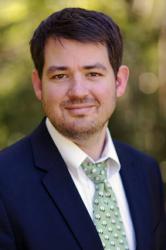
Ray Nothstine is Associate Editor at the Acton Institute, and Managing Editor of Religion & Liberty. In 2005 Ray graduated with a Master of Divinity (M.Div) degree from Asbury Theological Seminary in Wilmore, Ky. He also holds a B.A. in Political Science from The University of Mississippi in Oxford. Before coming to Acton, Ray worked as a free-lance writer for several organizations, including the Institute on Religion and Democracy. He gained ministry experience in churches in Mississippi and Kentucky. After college, he also served on the staff of U.S. Congressman Gene Taylor (D-Miss) in Gulfport in 2001-02. The son of a retired Air Force pilot, Ray has also lived in Okinawa, Philadelphia, New England, Hawaii, and Egypt.

Posts by Ray Nothstine:

Veterans Day Review: As You Were

Wednesday, November 11, 2009

373613_cover.indd Washington Post reporter and author Christian Davenport has told a deeply raw and emotional story in his new book As You Were: To War and Back with the Black Hawk Battalion of the Virginia National Guard. This book does not focus on battlefield heroics but rather it captures the essence and value of the citizen- soldier. Most importantly this account unveils through narrative, the pride, the pain, and the harrowing trials of the life of America’s guardsmen and reservists. Davenport tells the stories of Mark Baush, Kate Dahlstrand, Craig Lewis, Miranda Summers, and Ray and Diane Johnson. He tells of their deployment and return home. For some it means the end of a marriage, Post Traumatic Stress Disorder diagnoses, career and schooling problems, getting gamed by a grueling bureaucracy, and perhaps most common, a disconnect from the society at home after deployment.

Davenport focuses on some very important themes related to the disconnect some soldiers feel. It may be that guardsmen and reservists experience it to an even greater extent than soldiers in the regular Army. They in fact live and work in the civilian world. One example from the book is Craig Lewis, a former teacher who tries to find a job after his return from Iraq. He performs above and beyond the call of duty as a Blackhawk pilot, is promoted and given command of a company in the guard. But in the civilian world he had immense difficulty finding any sort of quality employment. Davenport notes:

Federal law required that employers, and even small companies, hold jobs for deploying reservists. Swept up in the wave of patriotism after 9/11, many sent their citizen-soldiers off to war with pats on their backs, flags waving. Many employers even made up the difference in pay. But as the wars slogged on, and soldiers were called to active duty again and again, the word reservist suddenly had a stigma attached to it.

Miranda Summers’ story in some ways mirrors the experience of many guardsmen and reservist in college at the time of deployment. Summers balances academics, social and sorority life, and her National Guard commitment. She is a student at The College of William & Mary, and later a graduate student at Brown University after her return from Iraq. At William & Mary she is asked when somebody finds out she is going to Iraq, “I thought only poor people go to war?” At Brown the experience is a little different when a student proclaims, “I have never met anybody in the military.” The opening of this book is deeply moving, when Davenport tells how Summers is embraced by a World War II veteran at the memorial commemorating that conflict in Washington D.C.

There is a saying that was put on a dry erase board at a Marine Corps operation center in Iraq which read, “America is not at war. The Marine Corps is at war; America is at the mall.” It conjures up all the frustration some in the military feel about the lack of sacrifice on the American home front and the general disconnect. It’s an alien concept to the total war of World War II or even the draft obligations of Vietnam. The soldiers, sailors, airmen, and Marines currently represent an all volunteer force. The Founders understood the dangers of the disconnect and Davenport makes note of this in his account:

The framers, having thrown off a king who could wage war without the hindrance of popular sentiment, knew this, and they had designed the system so that burdens of war were spread through out the population. Citizen-soldiers, then, weren’t a mere check against executive power, but rather the conscience of a nation. The cause had better be worthy of their sacrifice.

Davenport cites the famous Robert E. Lee quote, “It is well that war is so terrible, lest we grow too fond of it.” He sharply then notes a concern shared by some military and civilian leaders alike, “What happened instead is that America had grown ignorant of war, which was just as dangerous, if not more so.”

But it is the masterful ability to tell a story that makes this author shine. Davenport hauntingly captures the pride, emotions, and frustrations of the citizen-soldier. Some of the stories can be quite heartbreaking and the reader feels sympathy for those profiled. At the same time, Davenport is able to articulate the pride and importance the characters feel towards the nation and their service in it. My own brother Chris was a reservist in the Marine Corps who served in Iraq in an intense combat environment. He said the disconnect and alienation is real. “It’s not like you can just go back to whatever it is you were doing and things would be the same,” he told me. Kate Dahlstrand not only had her husband leave her when she was in Iraq, she suffered nightmares and flashbacks after her return. When she tried to contact Veterans Affairs for help, she was brushed aside. Kate was able to remarry and eventually receive some quality help after meeting James Peake, former Secretary of Veterans Affairs.

This is an amazing book and the theme that examines the isolation and brokenness that some soldiers feel is very penetrating. For the Christian, and being somebody who has worked in ministry and studied for the ministry myself, I had one overarching thought through this entire account. And it’s an appropriate thought especially during the coming Christmas season, and that is Christ felt all of the emotions of pain, hurt, loss, abandonment, abuse, and betrayal. Augustine said of the incarnation, “nothing was lacking that belongs to human nature.” The account by Davenport is also a reminder of the complexity and the enormous task so many military chaplains face in the Armed Forces. On this Veterans Day it is important to remember all our service men and women, and Davenport has achieved that by telling the unique stories of just a few who represent so many.

9

comments
share yours

America’s Uncontrolled Debt and Spending is the Real ‘Waterloo’

Wednesday, October 21, 2009

In my commentary this week, “America’s Uncontrolled Debt and Spending is the Real ‘Waterloo,’” I offer the well known point that debt and spending threatens our liberty and prosperity. It is becoming very evident that it will be up to citizens to demand accountability from their lawmakers, as I mentioned. What has been tried before has not worked.

In terms of liberty, Thomas Jefferson declared, “The natural progress of things is for liberty to yield and government to gain ground.” What the Founders articulated was that democracy and liberty is not the natural order of things, and that consolidated power moves toward tyranny. The U.S. power structure has borrowed from the income of future generations in an irresponsible and immoral manner, and citizens are culpable as well. What does that mean? I thought U.S. Senator Judd Gregg (R-N.H.) recently articulated the consequences of the crisis very passionately on CNN with journalist John King.

1

comments
share yours

Review: Billy Graham and the Rise of the Republican South

Friday, October 16, 2009

graham1 Explaining the realignment of American Southern politics is often a favorite area of study among historians and scholars. A region that was once dominated by yellow dog Democrats, has for the most part continued to expand as a loyal region for the Grand Old Party. Among the earliest and most common narrative among liberal historians and writers is the belief that the realignment in the South had to do with a backlash against desegregation. Steven P. Miller in his new book Billy Graham and the Rise of the Republican South puts considerable emphasis on Graham’s role in desegregation, public evangelicalism, and Graham as a spiritual and political adviser to presidents. Miller argues that Graham played a formidable role in reshaping the political climate of the South.

Early on Miller describes some of the dynamics of Graham’s insistence on holding desegregated crusades in the South, and his relationship with many fellow Southern Baptist ministers who supported segregation. Miller labels Graham a “racial moderate” largely by comparing him to Dr. Martin Luther King. Graham also at various times called for Civil Rights protesters to obey federal court orders and was quick to defend the South as having better racial relations than many places north of Dixie. With quips like, “prejudice is not just a sectional problem,” and, labeling criticism of the South “one of the most popular indoor sports of some Northerners these days,” Graham became an endearing figure to many fellow Southerners. It also allowed him to take fairly progressive positions on race without losing a large part of his Southern audience. Miller notes:

By appealing to law and order but also to such seemingly nonpartisan qualities as neighborly love and spiritual piety, Graham supplied a path upon which moderates could back away from segregationism in a manner acceptable to regional mores.

Graham linked racism as a problem directly related to the absence of God that pointed to the need of regeneration for the individual. True racial reconciliation and integration would require regeneration in the life of an individual. It was a reasoning that also made political sense when Graham would make pronouncements for more gradualism when it came to integrating the Deep South. He understood there were limits to solving segregation through legislation alone. Miller also notes Graham’s forward thinking when he addressed how much segregation stained America’s image abroad in relation to Cold War dynamics.

Another large portion of the book covers Graham’s relationship with political figures and presidents. Graham, a lifelong Democrat, is well known for his close relationship to President Richard Nixon and how his regional leadership in the American South helped Nixon’s “Southern Strategy.” Graham also had a very good relationship with President Lyndon Johnson and even lent his endorsement to his War on Poverty programs, citing Scripture as a basis for support. While Graham supported many of Johnson’s big government initiatives and his Vietnam policies, he also had harsh criticism for other areas of 1960s liberalism, especially related to judicial activism as it related to school prayer and criminal rights.

Nixon’s political comeback made Graham a serious player within that administration. Graham was criticized by the left for being a court prophet to Nixon, and his reputation would suffer again decades later through the release of tapes where Graham was heard agreeing with Nixon as he railed against all the Jews in the media. Defenses of Nixon late into Watergate proved to be an issue as well, as Graham often called the scandal further proof of a larger national problem that called for personal and national repentance.

An overarching point of Miller’s theme is that Graham gave considerable cover for Southerners to distance themselves from their segregated past. An evangelical understanding of the sins of racism allowed many to declare themselves healed and absolved from past guilt. Graham then criticized forced busing as a desegregation tactic, he further lauded law and order policies, and continually criticized the secularizing of America through the courts. Miller also argues that his close association to Nixon and his vocal pronouncements on many conservative positions, especially social positions and the moral breakdown in society further made the region ripe for change. His public pronouncements and leadership according to Miller, would also help spawn the religious right as a force in American politics.

All of these dynamics helped further fuel the political transition of the Sun Belt South Graham so celebrated through out his life. Miller also appropriately observes a statement about Jimmy Carter by Graham:

‘I would rather have a man in office who is highly qualified to be president who didn’t make much of a religious profession than to have a man who had no qualifications but who made a religious profession.’ The statement, which probably derived in part from a suspicion that Carter’s theology was in reality more liberal than evangelical, emphasized the primary vulnerability of the candidate (inexperience) at the expense of his perceived advantage (spirituality).

The epilogue substantially deals with some of the complexity of Graham’s positions, as he distanced himself from many religious conservatives by separating himself from campaigns in the pro-life movement and by taking no stance on the Equal Rights Amendment. “Now, in the pages of Sojourners, Graham called for “Salt X,” by which he meant ‘total destruction of nuclear arms,’” says Miller. Most conservative evangelicals had already lined up behind Ronald Reagan’s administration who called for more aggressive measures against the Soviets. Graham’s involvement in antinuclear activism didn’t cloud his strong relationship with Reagan however. Reagan, who had a tremendous personal interest in Christian eschatology, often spoke to the evangelist about his views on the topic. Another area of interest in the epilogue is Graham’s close relationship with the Bush family, and President George W. Bush in particular. Graham of course played a significant role in Bush’s conversion narrative. Miller discusses Bush’s repackaging of Graham’s critique on liberalism, through policies called “compassionate conservatism”, and Graham while not openly endorsing Bush in 2000, would drop many clear hints of support for the then Texas Governor.

This book provides a lot background on Graham’s career as an evangelist and as a force in 20th Century American politics. Its academic style makes it less popular for the casual reader. But readers of Civil Rights history, those interested in Graham, and those interested in the topic of faith and politics will find value in this publication. I wish Miller would have provided some more balance by discussing the importance of upward trending incomes in the South and other economic indicators directly related to the rise of the GOP in the region. Miller appropriately concludes though by noting that “Graham’s central theme never altered; the evangelist preached Christ crucified and resurrected, with salvation available through Him available to all who would invite Him into their hearts.” Far beyond any political statements, it is what Graham is known for and will especially be known for when he is called home.

0

comments
share yours

Religion & Liberty Interviews Amity Shlaes

Friday, October 9, 2009

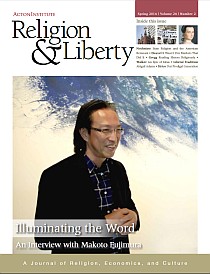
shales-rl1The new issue of Religion & Liberty features an interview titled “Debating the Depression” with noted columnist and author Amity Shlaes. Shlaes does a superb job at reminding us about some of the consequences associated with massive government spending and regulation. First and foremost among these consequences is the burden of debt and taxes we are heaping upon future generations. This kind of expansion, without the means to pay for it, will sadly have a negative impact upon the quality of life of future Americans.

Another tremendous contribution comes from Grand Rapids orthopedic surgeon Dr. Donald P. Condit. Religion & Liberty has published an excerpt from his Acton monograph, A Christian Prescription for Health Care Reform. As we have seen, health care is an issue that inspires passion, activism, and tremendous debate, and it’s impossible to have a holistic understanding of this topic outside of a moral framework. The Acton Institute has been at the forefront when it comes to examining the moral implications related to our health care issues.

If you missed the book reviews that have already been previewed on the PowerBlog, we have a review of two books on Byzantium from Religion & Liberty’s Executive Editor John Couretas. I reviewed Dr. Jay Richard’s book Money, Greed, and God. I stated in the review some thoughts, which are essential for defending and expanding the influence of free markets:

Richards understands that for capitalism or free markets to succeed and flourish they must have a moral framework and hold a moral value for the believer. Even if one is, however, not a person of faith, it’s hard to argue against a need for a moral component for business and industry given the current economic crisis.

There is more content in the issue, including commentary on Pope Benedict’s encyclical Caritas in Veritate. Lester DeKoster was profiled for the “In the Liberal Tradition” this issue. DeKoster was first and foremost a Christian man of faith, who while serving our Lord, defended the Church against Marxist liberation theologies. Which was just one of his many accomplishments.

0

comments
share yours

A Resurgence of Military History on Campus?

Friday, September 25, 2009

Several writers have exposed the alarming decay of important military history programs on college campuses. Two great articles worthy of mention are John J. Miller’s “Sounding Taps” and Justin Ewers “Why Don’t More Colleges Teach Military History?” David J. Koon at The John William Pope Center for Higher Education Policy has contributed an important piece titled “Retreat, But No Surrender for Military History,” which takes the view that military history might be poised for a comeback. Koon explains:

Just as surrender seemed imminent, military history has gathered unconventional reinforcements—less well-known colleges and, of all things, war and violence. These, along with broad student interest and an academy that now listens when military historians speak, may have positioned military history to climb out of the trenches and regain the field.

In his article I was glad to see him quote Dr. Andrew Wiest of the University of Southern Mississippi. I had the privilege of sitting in on a few of Dr. Wiest’s classes on Vietnam during a trip to Hattiesburg, Miss. a few years ago. One of things I really enjoyed is that he brought in veterans of that conflict to tell their stories. On the PowerBlog I have often made contributions on the important relationship between the U.S. Armed Forces and the strong tie to liberty. Additionally, I have told the faith stories of courageous veterans like Robinson Risner and Donovan Campbell.

The story of America and its freedom is intertwined with our first defenders, the farmers, merchants, and even clergy who took up arms in defense of liberty on the road to Lexington and Concord. Indeed, continued study of military history is important in a free and virtuous society.

2

comments
share yours

Rev. Robert Sirico at Mars Hill

Tuesday, September 22, 2009

Rev. Robert Sirico delivered a sermon titled “Whistling Past the Graveyard” at Mars Hill mega-church in Grand Rapids, Mich on September 20. You can listen to his sermon in its entirety by clicking on the sermon title above. Mars Hill was founded by Rob Bell in 1999.

Rev. Sirico addressed Christology, mortality, atonement theology, and the problem of evil. In his remarks Rev. Sirico declared:

And the vision of that hill, there on Golgotha’s bloody mount, is the answer to the riddle of human existence. There in the crucified Christ, we see one who not only suffers for us…but he suffers with us. He enters our grief, our solitude, our pain. And because the one who is suffering so is innocent, he has the capacity to subsume into himself, into his divine person, all of humanity’s suffering, all the history of limitation and death.

2

comments
share yours

Review: Faith Under Fire

Friday, September 11, 2009

chaplain-faith “But here in the crowd of teenagers and twenty-somethings, the thought of death was about to become a constant companion.” These words end the first chapter of Roger Benimoff’s new book Faith Under Fire: An Army Chaplain’s Memoir.

Benimoff with the help of Eve Conant crafts a harrowing narrative of his second and final tour as an Army Chaplain in Tal Afar, Iraq in 2005. It is a tour that results in him almost abandoning his faith, threatens his marriage, and will cause him to go from an assignment where his duties were ministering and counseling at Walter Reed, to a broken individual who would join the ranks of the patients at the very same hospital. Benimoff begins to lose almost all the will to even cope with the simplest of tasks and routines as chronic post - traumatic stress disorder debilitates him (PTSD). While in Iraq, the soldiers he shepherds constantly face death and intense fighting that will finally unnerve the author when he returns to safety in the states. Benimoff himself describes what the soldiers faced:

These guys trained together, joked around together, slept in the same room. In time, and for a time, they knew their buddies better than they knew their families. I know from my thousand or so counselings with soldiers over the past two years that losing a buddy is not the same as losing a friend. It’s like being a big brother and not grabbing your little brother’s hand fast enough before he slips off a bridge. He looks up at you in wonder and disbelief as he falls to his death. Soldiers are supposed to protect each other. When they fail, the guilt can be debilitating.

This account is an interesting look at the life of soldiers as they struggle with the problems of deployment, war zones, fatalities, as well as the trials of a military chaplain. In fact, much of the strength of this account is that we get a look at the war on the ground in Iraq from a highly trained minister, counselor, and theologian.

While chaplains are non-combatants and do not carry a weapon, Benimoff is a chaplain who comes under sniper fire and has several close encounters with death. Benimoff of course is not overly concerned about his own safety and does whatever it takes to be close to his flock. Early in his deployment he is called to a scene of unimaginable carnage, as an Army Stryker vehicle is blown apart by an improvised explosion device. Almost all in the vehicle were lost. So much of the narrative of his time in Iraq is heartbreaking, and the author does an excellent job of articulating his goals to minister to those in need in a time of chaos. He also has a skill for articulating and trying to understand God’s purpose.

The second part of Benimoff’s account focuses on his own downward spiral as PTSD begins to encompass him. It is a disorder he has been masterfully trained to detect, but is not empowered to stop. Benimoff begins to break down in large crowds and displays various degrees of erratic and aggressive behavior. Eventually Benimoff checks into a PTSD clinic, spending his days and nights there for a protracted time. During his time of trial he says, “I was not talking to God because I had nothing good to say. I still believe in God, but not necessarily a compassionate one and perhaps not one to whom I should be devoting my life.” He would go on to further denounce the God he had known calling “religion a crutch for the weak” and followers of God “weak minded.” His own wife writes in her journal:

When he began to bring home ceramics on his weekend visits it hit me that he was in a mental facility. On TV you always see people who are going through various types of rehabilitation painting or doing art of some sort, and when I pictured my husband doing this, I began to see the extent of his brokenness. I feel shocked and have much grief over my husband being in a psych ward. I never imagined we would end up in a place like this, and I wonder if he will ever get better. I wonder why God has allowed this.

This is a very moving book and it deals wonderfully and honestly with theodicy. It’s also an inside account to the sacrifices and rehabilitation made by many in the United States Armed Forces, some who face serious physical and emotional wounds for the rest of their life. Even when Benimoff doesn’t have the answer to certain questions he doesn’t pretend that he does. The road back to faith in Christ for Benimoff is also very moving. He finally came to a point where he was so broken and destroyed he realized, “I needed God’s grace more than I needed answers. It’s a lesson from Sunday school, the most basic of all, but one I had lost completely since returning from Iraq.” The Apostle Paul himself pleaded to God for relief from the thorn in his flesh in 2 Corinthians 12, and Paul wrote these words in the 9th verse: “But he said to me, ‘My grace is sufficient for you, for my power is made perfect in weakness.’ Therefore I will boast all the more gladly about my weaknesses, so that Christ’s power may rest on me.”

5

comments
share yours

Film Review: Taking Chance

Thursday, June 4, 2009

chanceLieutenant Colonel Mike Strobl began his 2004 essay “Taking Chance” by saying, “Chance Phelps was wearing his Saint Christopher medal when he was killed on Good Friday. Eight days later, I handed the medallion to his mother. I didn’t know Chance before he died. Today, I miss him.”

HBO turned Strobl’s essay into an emotional film about the journey of Chance’s body from Dover Air Force Base in Delaware to his home in Dubois, Wyoming. Taking Chance is excellent at depicting the dignity, honor, and respect involved with the preparation and transport of an individual in the military who have been killed in action. Every military KIA is given a military escort that accompanies the remains of the deceased to their final resting place.

In the film Lt. Col. Strobl is played by actor Kevin Bacon. Bacon does a tremendous job playing a U.S. Marine officer who exudes leadership and professionalism. Normally senior officers don’t serve as escorts, but for reasons explained in the film Lt. Col Strobl volunteers to serve as the escort for the all too young 19 year old Private First Class Chance Phelps, who was later promoted to Lance Corporal posthumously.

One of the real moving parts of the film has to do with Strobl’s encounters with the civilians he meets along the way as he accompanies the fallen Marine whose remains travel in the cargo hold of a commercial flight. Many of the civilians just want to pass their sympathies on to the family and let them know that people are thinking about and praying for them. Still others want Strobel to know what the military has meant to them or want to share with them some sort of experience that has touched them. A particularly moving scene is when a Northwest flight attendant hands Strobel a crucifix for him to keep that obviously is a possession that means a lot to her. Strobel passes it on to Chance’s mother who places it on the top of his casket before burial.

Another moving scene from the film comes early on as the hands and feet of Chance are being meticulously washed at the military mortuary at Dover Air Force Base. This evokes an excellent piece that Chris Jones wrote for Esquire Magazine in May 2008 titled, “The Things That Carried Him.” The article by Jones is a descriptive account of what happens during the final homecoming for one Army Sargent. In his piece Jones also wrote generally about the intimacy and honor for those who prepare the remains of the fallen:

Karen Giles tells a story about another young airman, who was polishing the brass on a dead soldier’s uniform jacket. He was using a little tool, a kind of buffer, to make sure that every button shined. A visitor complimented him on his attention to detail. ‘The family will really appreciate what you’re doing,’ the visitor said. But the airman replied, ‘Oh, no, sir, the family won’t know about this.’ The airman told him that the family had requested that their son be cremated, and just a short while later, he was.

Interestingly, if the story in this film was to happen right now instead of 2004 it would be remarkably different. As of Jan 1, 2007 the Holly Provision, a part of the 2007 Defense Authorization Act, changed the law when it comes to how the remains of soldiers, sailors, airmen, and marines killed in the line of duty are transported to their final resting place. The Department of Defense must use a military transport plane or charter flights because of the concerns raised about proper respect. Remains can no longer be transported by a commercial carrier.

There is little dialogue in this film, and part of the allure of the film is the pageantry the military provides for its fallen. It almost has to be a film with considerably less dialogue to keep the focus on Chance’s sacrifice and journey home. The slow salute is very moving and well executed by any U.S. Marine in their dress blues, and is very emotional in this film.

While this HBO portrayal is ultimately about Chance Phelps and his heroic sacrifice it emphasizes several other important points. When Strobel meets a Marine veteran from the Korean War who came to pay his respects to Chance, we see the camaraderie and special bond between fellow Marines no matter the age, rank, or theater of service. Marines love and cherish their traditions and their accomplishments on the field of battle. The famed nickname for Marines is “Devil Dog,” a moniker of respect they earned by defeating a war hardened and entrenched German enemy at the Battle of Belleau Wood in 1918. The Germans on the front lines sent dispatches to their headquarters saying the Marines fought like “hounds from hell.”

The courage, tradition, and fighting spirit of the Marines today shows just how dedicated they are to the principles that made our country free. When my own brother was in Iraq with the Marines and I was living in D.C. a few years ago, I decided to go to Arlington National Cemetery. Just months before I had remembered reading a special report about the fresh graves from Iraq and Afghanistan in section 60.

I felt like I should pay my respects since I was mostly just enjoying a warm D.C. summer. As I walked through the headstones the newness of it all was very haunting, some just buried days before. Flowers, teddy bears, letters, and pictures adorned section 60. This section is tucked away from the notable attractions and graves tourists visit at the cemetery. There was an eerie stillness and quietness there. And then I saw a picture of a very attractive young girl against one particular headstone. I read the name and date and realized the girl in the picture was buried below me. She was only eighteen and killed by a roadside bomb in Iraq while serving in the Army. It’s times like that when war is just too overwhelming and heartbreaking for those even somewhat distanced from it. I believe that is why Taking Chance is a film worth watching, it also celebrates a nation that often struggles to show just how thankful they are of those who make the ultimate sacrifice.

4

comments
share yours

Review: Money, Greed, and God

Friday, May 15, 2009

richards-book1The belief that the essence of capitalism is greed is perhaps the biggest myth Jay W. Richards tackles in his new book, Money, Greed, and God: Why Capitalism is the Solution and not the Problem. One reason for confronting this challenge is that many free market advocates subscribe to the thought that capitalism produces greed, and for them that’s not necessarily a negative. But for those with a faith perspective, greed and covetousness are of course serious moral flaws.

It’s also the kind of myth that less articulate writers would rather not challenge, especially in this troubling economic climate. Richards does however have a skill for tightly honed logical arguments, and he not only is able to defend free markets but tear lethal holes into many of the economic ramblings of the religious left. He even takes on holy of holies like fair trade and Third World debt relief. Richards argues that the free market is moral, something that may come as a surprise to many people of faith. This book provides a crushing blow to those involved in the ministry of class warfare or those who wish to usher in the Kingdom of God through “nanny state” policies.

The book divides into eight chapters, with each chapter discussing a common held economic myth like the “piety myth” or “nirvana myth.” Richards says the piety myth pertains to “focusing on our good intentions rather than on the unintended consequences of our actions.” The nirvana myth characterizes the act of “contrasting capitalism with an unrealizable ideal rather than with its live alternatives.” Richards himself states, “The question isn’t whether capitalism measures up to the kingdom of God. The question is whether there’s a better alternative in this life.”

The influence of libertarian economist Henry Hazlitt and Wealth and Poverty author George Gilder are evident through out this book. But the overarching strength of Richards work is how he places the free market message into the context of Christian discussions and debate. Unfortunately before this response, many of the economic arguments by the Christian left weren’t properly countered in popular mediums. Furthermore, the wanton excess of prosperity gospel advocates only fueled or provided ammunition for the religious left’s rebuke of the free market. (more…)

8

comments
share yours

Review: Joker One

Wednesday, May 6, 2009

joker It is appropriate that Donovan Campbell offers an inscription about love from 1 Corinthians 13:13 at the beginning of his book, Joker One: A Marine Platoon’s Story of Courage, Leadership, and Brotherhood. That’s because he has written what is essentially a love story. While there are of course many soldier accounts from Afghanistan and Iraq, some that even tell more gripping stories or offer more humor, there may not be one that is more reflective on what it means to be a leader, and what it means to love the men you serve and lead.

This book is receiving considerable press attention and Campbell’s ability to convey love the way he does has to be a big reason for the popularity of the book. Campbell movingly says about his own Marines in the opening chapter, “And I hope and pray that whoever reads this story will know my men as I do, and that knowing them, they too might come to love them.”

Campbell’s account looks at the seven and a half months in which he serves as a platoon leader in some of the fiercest fighting of the Iraq war, which occurred in Ramadi in 2004. Before the Marine Corps, Campbell was an undergraduate at Princeton who spent a summer completing the Marine Corps Officer Candidate School (OCS) because he thought it would look good on his resume. Campbell says he hated the entire program, and didn’t think twice about joining since he hadn’t taken any money from the Corps, and therefore didn’t owe them anything. He would ultimately change his mind however as graduation approached.

If love and leadership are recurrent themes, it is often discussed from a faith perspective, and Campbell is somebody who has thought seriously about his own faith and what that means for him and his men. Campbell talks about how before each combat mission he huddles up with his platoon for prayer, which often included reciting the twenty-third Psalm. “I had a responsibility to my men to provide for all their needs, and those included their spiritual as well as their material ones,” says Campbell. He also discusses some of his early thoughts on the prayer ritual before each mission:

Deep in my heart, I believed that prayer would work without fail, that if together Joker One prayed long and hard enough, God would spare us all from Mac’s fate [another Marine seriously wounded by a road side bomb]. What I know now, and which didn’t occur to me then, was that by praying as I prayed, and hoping what I hoped, and believing what I believed, I was effectively reducing God to a result-dispensing genie who, if just fed the proper incantations, would give the sincere petitioner (me) the exact outcome desired.

This book is masterful at tracing the growth and experience of Campbell’s theological progression just as it does concerning his leadership skills, decision making ability, and the moral questions he asks himself. Where prayer before was focused more on personal safety, He says it changed even more as the chaos and random violence surged. “To those who sought it, the prayer also provided some comfort that God was in control, that their lives had worth and meaning stemming from an absolute source,” says Campbell.

After one of his own Marines, Lance Corporal Todd Bolding was killed in action, Campbell understandably lost much of his enthusiasm to continue the mission. He had promised himself that he would bring all of his platoon home. He says:

For whatever reason, [Private First Class Gabriel] Henderson’s tender heart kept a close watch on me, and one day, roughly two weeks after Bolding’s death, he walked up to me and said out of the blue: ‘Hey sir, you know that none of the platoon blames you for what happened to Bolding. It’s okay, sir.’ I didn’t know what to say to that. Henderson broke into a smile. ‘Bolding’s in heaven now, sir, and I know that he’s smiling down at us right now, just like he always smiled at us when he was here. He’s okay, sir. Don’t worry, sir. He’s okay. And someday you will get to see him again, sir.’ I had to turn away to keep from crying. I think that Henderson’s profound, simple faith was what finally allowed me to pick myself back up, and, in some very real sense, regain my own faith.

This book deals with a lot of raw emotion, the frustrations with all the problems in Iraq, and tragedy. At the closing of Campbell’s account, he does a beautiful job of articulating the greater-love principle from John’s Gospel (15:13).

In seminary I took a class on leadership and I know Campbell’s book teaches more lessons about leadership than classes or many other books could. His account is a strong reminder that some of America’s best, regardless of policy debates or politics, are the ones silently shouldering a heavy burden in America’s current conflicts. While much of the country goes to the mall, shops, and attends sporting events, there are those who suffer and have to make quick life and death decisions where the consequences of combat often result in bad or worse.

This is definitely one of the best books of 2009. The narrative is somewhat similar to Nathaniel Fick’s book from 2005, One Bullet Away: The Making of a Marine Officer, in that both authors do a wonderful job at baring their heart and telling the stories of young men who do courageous acts solely for others and not themselves. Interestingly enough, both authors were officers in the Marines who came out of Ivy League schools. All of the wonderful sacrifices Campbell’s platoon made for a largely unappreciative civilian Ramadi population in 2004, and the havoc they wreaked on their foe, is a reminder of the truth that rings out from the great unofficial U.S. Marine motto, “No greater friend, no worse enemy.”

8

comments
share yours