The PowerBlog is managed by the Acton Institute, a non-profit think tank dedicated to promoting a free and virtuous society characterized by individual liberty and sustained by religious principles. Its authors are a diverse group of scholars, writers, clergy, and businesspeople who discuss a wide variety of topics connected to the relationship between religion and economics. Click here to learn more about the Acton Institute...

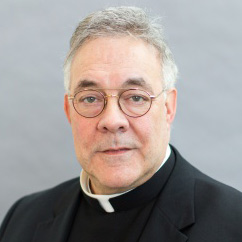
Rev. Robert Sirico

Rev. Robert A. Sirico received his Master of Divinity degree from the Catholic University of America, following undergraduate study at the University of Southern California and the University of London. During his studies and early ministry, he experienced a growing concern over the lack of training religious studies students receive in fundamental economic principles, leaving them poorly equipped to understand and address today's social problems. As a result of these concerns, Fr. Sirico co-founded the Acton Institute with Kris Alan Mauren in 1990. As president of the Acton Institute, Fr. Sirico lectures at colleges, universities, and business organizations throughout the U.S. and abroad. His writings on religious, political, economic, and social matters are published in a variety of journals, including: the New York Times, the Wall Street Journal, Forbes, the London Financial Times, the Washington Times, the Detroit News, and National Review. Fr. Sirico is often called upon by members of the broadcast media for statements regarding economics, civil rights, and issues of religious concern, and has provided commentary for CNN, ABC, the BBC, NPR, and CBS' 60 Minutes, among others. In April of 1999, Fr. Sirico was awarded an honorary doctorate in Christian Ethics from the Franciscan University of Steubenville, and in May of 2001, Universidad Francisco Marroquin awarded him an honorary doctorate in Social Sciences. He is a member of the prestigious Mont Pèlerin Society, the American Academy of Religion, and the Philadelphia Society, and is on the Board of Advisors of the Civic Institute in Prague. Father Sirico also served on the Michigan Civil Rights Commission from 1994 to 1998. He is also currently pastor of St. Mary Catholic Church in Kalamazoo, Michigan. Fr. Sirico's pastoral ministry has included a chaplaincy to AIDS patients at the National Institute's of Health and the recent founding of a new community, St. Philip Neri House in Kalamazoo, Michigan.

Posts by Rev. Robert Sirico:

Ralph McInerny, Renaissance Man

Saturday, January 30, 2010

Ralph McInerny

Ralph McInerny

The Church and the world has lost an immense soul in the passing into eternity yesterday of Dr. Ralph McInerny, long time professor of philosophy at Notre Dame University. He was the modern epitome of the Renaissance Man: a towering intellectual, a Latinist, raconteur sublime, a writer of doggerel, a mystery writer (the Father Dowling series) and the list could go on. Of all this, I suspect the role in which he took most pride was in being a husband and a father.

He was also a good, dear and abiding friend who could stick with you in hard times and throw wisdom on your befuddlement. The joy and sense of hope he indefatigably exuded was tested over the years by his own beloved Notre Dame, especially of late, as I would often remind him (as a Trojan to a Domer). But if he did not have confidence in the administration of the university, he never for a moment lost confidence in the Lady in whose honor it was named.

I recall, some years ago when Ralph spoke at a lecture I had sponsored. Someone stood to ask this erudite and learned man what I thought was a rather simple and base question. I cannot recall the details of the question now, only that I felt painfully embarrassed by the situation. Ralph received the question as though it were a rare gift and responded with the utmost respect to the questioner – thereby, and once again, teaching us not merely the propositions and abstractions of the Christian Faith, but their meaning and how to live them.

May the road rise to meet you,
May the wind be always at your back,
May the sun shine warm upon your face,
May the rains fall soft upon your fields,
And, until we meet again,
May God hold you in the hollow of His hand.

(Attributed to St. Patrick)

6

comments
share yours

Category: News and Events


Related Tags:
,

Share/Save/Bookmark

Recall Aristide to Haiti? No way.

Tuesday, January 26, 2010

Jean-Bertrand Aristide, the ex-president of Haiti who has lived lavishly in exile as a guest of the South African government for the past six years, recently announced he was ready to go back and help Haiti rebuild from its catastrophic earthquake. Allowing the former despot Aristide — a long time proponent of liberation theology — back into the country would be the worst thing we could do to Haiti right now. The American government must resist any move by Aristide to return.

In 2004, I wrote a piece for the Wall Street Journal in which I reminded readers of Aristide’s violent past:

In sermons later published in his book “In the Parish of the Poor,” [Aristide] called for forming “battalions” to perform “acts of deliverance” and for overthrowing the regime by “any means necessary” and pined for a Haitian version of the Sandinista Revolution. He did not hide his sincere devotion to Christian communism, which preferred its humanitarianism soaked in blood.

Ultimately, this former priest’s flawed understanding of the human person and economic realities added great suffering and injustice to a Haitian people who have endured so much: (more…)

18

comments
share yours

Haiti and Solidarity

Monday, January 18, 2010

Published today on National Review Online:

When I first heard the news from Haiti and watched the horrible stories on television, I had the same impulse I imagine millions around the world experienced: I found myself thinking of catching the next plane to Port-au-Prince to help in whatever way I could.

What was the basis of this impulse? It is our moral intuition, sometimes called the principle of solidarity. This is the recognition of ourselves in the other. We feel pain when others feel pain and joy when they experience joy; we slow down on the freeway when we pass an accident not merely for some macabre or prurient interest, but because we recognize that “there but for the grace of God go I.” We help others who are suffering because we would like to be helped in a similar situation.

And yet I had to ask myself the practical question: What would I actually do when I got off the plane in Haiti? I do not know how to set broken bones. I can’t fix mudslides. I cannot operate on limbs and eyes. Only after all these things were done would I be able to fit into the division of labor to authentically serve people.

I am deeply grateful for those who can do these things, and I am inspired that they are there. In fact, aid workers have been emphatic that the last thing Haiti needs right now is a massive influx of people bringing only their good intentions. Such a run on the country right now would increase the need for food, shelter, transportation, and more.

The impulse to help, to do anything — largely and understandably based on our emotions — is exactly what confuses our thinking about charity and economics. It is the confusion between sentiment and practicality, between emotion and reason, between piety and technique.

On the other hand, it would be a cold and spiritually dead person who sat back without any sense of emotion over this Haitian calamity. If we merely said, “We should just forget this place. It is a poor country, the infrastructure is not in place, they have been unable to accumulate capital . . .” — if we said only these things, we would be callous. And yet, we know that what has compounded the suffering in Haiti is not only the earthquake as such but the poverty that hindered the necessary preparation and at all levels of society.

The practical and the emotional are at war right now.

More generally, the fundamental problem in Haiti is not bad weather or natural disasters. It is a problem of economics. Haiti has suffered from various forms of dictatorship for many decades, which has eviscerated from Haitian culture a general sense of entrepreneurship and enterprise.

This is not to say that Haitians aren’t entrepreneurial. One need only observe Haitian immigrants selling goods on the streets of New York to be convinced of their entrepreneurial spirit. Rather, what has made Haiti as a culture resistant to entrepreneurship has been the inability of Haitians themselves to gain control their own lives by ridding themselves of government policies that have made the country dependent on foreign aid and powerful dictators.

We like to imagine that we could send our favorite things — such as cars, computers, and the best medical equipment — to help. But when there is no electricity and few sources for fuel, and when the roads can’t be used for heavy transportation, all our gizmos and products and conveniences become useless.

Nor is it the case that piles of paper money are going to be a magic cure-all. When there is nothing to buy, and when replacement parts are not available, and the retail- and wholesale-trading sectors cannot support an advanced economy, money alone cannot do much good.

Haiti needs practical help and generous charity right now — implemented intelligently, and with a keen eye for existing conditions. We need to support aid agencies that provide water and medicine. In the long run, we have to look at what Haiti needs to prevent such disasters and minimize their impact. What the country needs is economic development and a culture that can support such development.

We are a very long way from that, and this catastrophe has set Haiti back even further. However, this is an opportunity to build a society that is prosperous, industrious, virtuous, and free. The unromantic truth is that charity does not really ameliorate poverty. Rather, it provides a necessary and temporary fix for an unusual problem. What Haiti needs are the institutions that provide protection and cushioning in cases of emergency. Most of all, it needs to develop economically.

No matter how many of us leave tonight for Haiti, that process will take a very long time, and it can only be carried out by the Haitians themselves.

3

comments
share yours

Column: Christmas message should inform environmentalism

Tuesday, December 22, 2009

In a new column in The Detroit News, I set authentic environmental stewardship against the goings-on at the recently concluded UN Copenhagen conference. A slightly longer version of this commentary will be published tomorrow in the weekly Acton News & Commentary. Merry Christmas to all!

The not-so-subtle politicizing of science revealed by the Climategate affair, along with the alarmist and at times downright silly antics of some proponents of environmentalism (a word that has acquired numerous shades of creedal commitment), ought not drive reasonable people to abandon a sense of moral and civil obligation for the care and well-being of the planet.

The world that surrounds us and all the creatures upon it have human beings as their protectors. The human family has a primordial calling to “care and tend the garden.”

The point of conjecture now, however, is often over whether this world is indeed a garden — to be cultivated and tended, with care, reason and even love — or whether, as some of those gathered at the UN climate change conference in Copenhagen demonstrated last week, the world is best seen as a jungle, to be left wild, untouched by human hands and thereby preserved unsullied and uncontaminated.

In the vocabulary of too many environmentalists, humans appear as the greatest threat to creation, at times leaving the impression that the human family is the most unnatural thing in nature.

The world and the people who inhabit it are at the center of the concern and love celebrated at Christmas. The controlling anthropology of the Nativity says that the human person, created in the image of the Creator, and the environment humans live in, is of such importance to their Creator that He chose to insinuate Himself into this world so as to rectify the effects of the disorder of creation brought about by human rebellion against the natural order and their origin.

This anthropology and cosmology presupposes that the creation has a purpose and was designed by a rational mind that imbued it with meaning. Ask yourself, which provides more protection for the environment: this view of the natural world that contends the order of the universe reflects the intentionality of a Creator who, in turn entrusts beings created in His image to care for and bring forth from creation its flourishing through a kind of environmental stewardship; or, the belief that the world is a chance collision of inanimate material forces that somehow produced being with no intrinsic dignity much less an august vocation to tend and perfect creation?

If you can grasp the disparate approaches to life of these two ideas, then you can understand why the rejection of a secularism hostile to the transcendent is so critical, not merely for some kind of abstract “spiritual” reason, but for the concrete care of our world and for the construction of a civilization based not on some assemblage of facts, but on the meaning behind and underneath the facts.

Christmas is precisely that. In the narratives we will hear and read in our homes and in our churches, we will be reminded of a world of infinite value to God, created with love and care, and entrusted to the human family to be tended and brought to its proper fruition. This is the message of God’s entrance into human history in the form of a vulnerable baby, born at a particular time and in a particular place, through the agency of a particular woman. It is the story of the Word who created the world, and who was rejected by that world.

The incarnation of Christ in human form offers hope to all “who dwell in darkness and the power of death.” It is this belief that protects, sustains and gives meaning — to our environment, and to much, much more.

How sad that message did not seem to be heard in Copenhagen.

2

comments
share yours

Blessed are the shoplifters?

Monday, December 21, 2009

If ever G.K. Chesterton’s old quip about heresy being “truth gone mad” was in full view, here comes a report from England whereby Fr. Tim Jones, an Anglican minister, had actually encouraged the poor to shoplift from large chains this holiday season.

… the minister’s controversial sermon at St. Lawrence Church in York has been slammed by police, the British Retail Consortium and a local MP, who all say that no matter what the circumstances, shoplifting is an offence.

Delivering his festive lesson, Father Jones told the congregation: ‘My advice, as a Christian priest, is to shoplift. I do not offer such advice because I think that stealing is a good thing, or because I think it is harmless, for it is neither.

‘I would ask that they do not steal from small family businesses, but from large national businesses, knowing that the costs are ultimately passed on to the rest of us in the form of higher prices.

It is true, according to St. Thomas Aquinas and a long tradition of Christian social teaching that private property, while sacred, is not absolute, so that in certain, rare and exceptional circumstances those whose lives are endangered may avail themselves of the property of another. (See this section of the Summa Theologica, for example.)

What is it about Fr. Jones’ language that raises the suspicion that he is less motivated by the well being of his poor parishioners than he is by a disdain for private property, especially when it is employed successfully (i.e., becomes “big chains”)? Follow the consequences of such a disregard for the 8th Commandment: levels of shoplifting rise in chain stores, which disproportionately attract lower income shoppers; the chain stores respond by either passing on their losses to their customers (thereby making life even more difficult for them) or the retailers reduce their overhead and fire their marginal employees (made up of lower income workers).

Need I continue? Anyone who wants to support a scholarship for Rev. Jones or other clergy like him to come to Acton University in June, please contact Kara Eagle here.

1

comments
share yours

Recommended Reading: The Galileo Code

Saturday, December 12, 2009

Over at the Catholic Thing, Scott Walker looks at Climategate and the intolerant groupthink undergirding the “consensus” on global warming. He starts by offering a quote from sociologist Robert Nisbet on “the Enlightenment myth that the Catholic Church brutally oppressed Galileo. Our own time, Nisbet insisted, has seen much worse.”

Galileo, as it turns out, was more concerned about the reaction of fellow scientists than he was about Pope Urban VIII and the Inquisition:

Most important for our purposes is Galileo’s fate after his enemies forced the Inquisition to find him “guilty” of Copernican teachings. Though made to take a pro forma oath of recantation, he was not imprisoned. Instead, he was given “house arrest” at his wealthy patron’s estate where he had long conducted most of his research. He lived for years, and far from being daunted or suppressed, he produced some of his most important writings, “was in constant communication with the leading scientific lights of Italy and all Europe,” and had “as many students as he wished” to assist him and continue his work after his death.

Contrast Galileo’s flourishing in the seventeenth century, funded by the private sector, with the situation of scientists in our day. They face governments that grow grander and more controlling by the minute, as well as an academic climate in which the disinterested search for truth withers in the cold glare of skepticism, relativism, and materialism.

In controversies over man-made global warming, there’s the added factor of something that smacks of religious fanaticism. Fr. James Schall and historian Paul Johnson have observed how some strains of environmentalism have religious features: a fall of man, a catalogue of sins, a call to repentance and asceticism (at least for those of us who aren’t ex-Vice Presidents living in Nashville mansions), the promise of salvation, and dire warnings of a secular apocalypse. No wonder the Savonarolas of solar energy are harsh with those who dissent from their calls to repress vices like burning coal or driving an SUV.

Read Scott Walker’s “Galileo Code” here.

1

comments
share yours

Category: News and Events


Related Tags:
, ,

Share/Save/Bookmark

Manhattan Declaration: A Call of Christian Conscience

Tuesday, November 24, 2009

Last week, I joined a group of Christian leaders in Washington to announce the publication of the Manhattan Declaration. This is a landmark document signed by Catholic, Orthodox and Protestant leaders who joined together to “reaffirm fundamental truths about justice and the common good, and to call upon our fellow citizens, believers and non-believers alike, to join us in defending them.” These truths are the sanctity of human life, the definition of marriage as the conjugal union of husband and wife, and the rights of conscience and religious liberty.

The Manhattan Declaration’s statement on religious liberty is, of course, something that fits perfectly with the core principles of the Acton Institute for the Study of Religion & Liberty. Here is a key passage:

The struggle for religious liberty across the centuries has been long and arduous, but it is not a novel idea or recent development. The nature of religious liberty is grounded in the character of God Himself, the God who is most fully known in the life and work of Jesus Christ. Determined to follow Jesus faithfully in life and death, the early Christians appealed to the manner in which the Incarnation had taken place: “Did God send Christ, as some suppose, as a tyrant brandishing fear and terror? Not so, but in gentleness and meekness…, for compulsion is no attribute of God” (Epistle to Diognetus 7.3-4). Thus the right to religious freedom has its foundation in the example of Christ Himself and in the very dignity of the human person created in the image of God - a dignity, as our founders proclaimed, inherent in every human, and knowable by all in the exercise of right reason.

Christians confess that God alone is Lord of the conscience. Immunity from religious coercion is the cornerstone of an unconstrained conscience. No one should be compelled to embrace any religion against his will, nor should persons of faith be forbidden to worship God according to the dictates of conscience or to express freely and publicly their deeply held religious convictions. What is true for individuals applies to religious communities as well.

The rationale for this statement is simple and powerful. Though historically many Christians have had differences related to doctrine, we feel we must come together, make common cause, to affirm our right — and more importantly to fulfill our obligation — to defend principles of justice and the common good that are now under assault. As the Manhattan Declaration states: “We will fully and ungrudgingly render to Caesar what is Caesar’s, but we will under no circumstances render to Caesar what is God’s.”

The drafting committee for this statement included Robert George, Professor, McCormick Professor of Jurisprudence, Princeton University; Timothy George, Professor, Beeson Divinity School, Samford University; and Chuck Colson, Founder, The Chuck Colson Center for Christian Worldview in Lansdowne, Va. Go here to see a list of the initial signers. When I last checked, some 87,000 people had signed since Friday.

Those of us involved in this important project invite other Christians to advocate for these foundational biblical and rational principles and to stand in solidarity with us by signing the Manhattan Declaration at ManhattanDeclaration.org

Again, the full text of the Manhattan Declaration is available for download here.

5

comments
share yours

Column: Health reform threatens practice of charitable care

Tuesday, November 24, 2009

My new column on health care was published in the Detroit News today. Full text follows:

As the health care debate moves to the U.S. Senate, much of the focus has been on how the Catholic bishops’ support of the amendment by U.S. Rep. Bart Stupak, the Menominee Democrat, to prohibit the use of tax dollars to fund abortion was a major victory for the pro-life side. The bishops urged the House of Representatives, through local parishes and in a Nov. 6 letter, to ensure that “needed health care reform legislation truly protects the life, dignity, health and consciences of all.”

All people of good will, all those who value human life and dignity, should cheer this development.

But there’s more to this health care juggernaut that should give us reason to oppose it in its current form. We should first be concerned with the vast expansion of government reach into the private lives of millions of Americans.

This “reform” will create a system that will put bureaucrats in charge of personal health care decisions — not doctors. It will give the federal government an avenue to nationalize more than 15 percent of the U.S. economy, putting bureaucrats and elected officials in the role of manager and regulator — much as we’ve seen in banking and automobiles.

Amazingly, with the push for a $1 trillion-plus health care package and the attendant debt, we may soon see Canada with lower government spending (as a percent of gross domestic product) on heath care than the United States. All this, too, is a threat to human dignity.

What will this heavy burden of government spending and regulation have on U.S. health care innovation and competitiveness, which has to date pioneered so many advances? How many medical research and development firms would leave our shores under threat of higher taxes and regulation?

All the assurances from President Barack Obama that health care reform will not add “even one dime to our deficit over the next decade” seem more fantastic with every passing day.

A new report shows that projected Medicaid cuts, on which rests much of the financial funding for health care reform, would prove to be so onerous to hospitals and nursing homes that they would simply stop taking such patients. The report, by the chief actuary for Medicare and Medicaid, also questions how doctors and hospitals would cope with an additional 30 million people to the ranks of the insured, many of them into public health programs.

As it’s been said, if you think health care is expensive, wait until it’s free.

I also worry about the crowding out effect that this vast expansion of the government into health care will have on voluntary charitable action. Somewhere along the line, we have lost sight of the fact that charity and health care was not an invention of Washington bureaucrats.

How did the more than 600 Catholic hospitals and clinics, and many more hospitals bearing the names Jewish, Presbyterian, Methodist, Adventist and Baptist, get built in this country? It wasn’t through the sufferance of government.

Faith is the source of these works, not policy initiatives. Faith, because it involves the entire scope of the human person, body and soul, has not only a larger claim on our allegiance but a deeper commitment to our well-being. Our faith communities know us as persons, not as welfare case numbers or voting blocs.

The effect of the proposed massive expansion of government and vast increase in federal debt is unknown, but if the experience of other countries is any guide, it will lay a crushing burden on the lives of future generations.

The Senate health care reform package should be scrapped. The ill-conceived plan will break the budget, provide fewer opportunities for market-driven health care solutions and limit those who want to practice real charity.

3

comments
share yours

The Fall of the Berlin Wall: Reminiscence and Reflection

Monday, November 9, 2009

Excerpts from remarks delivered at the Acton Institute annual dinner in Grand Rapids, Mich., on Oct. 29, 2009:

Twenty years ago today, a growing tide of men and women in Eastern Europe and northern Asia were shaking off the miasma that had led so many to imagine that central economic planning could work. The socialist regimes of Eastern and Central Europe—accepted as ontological realities whose existence could not be questioned—were, well, being questioned.

On November 4th, 1989, a million anti-Communist demonstrators took to the street in East Berlin. Three days later the entire East German Politburo resigned. In short order — the sort of event that television journalists live for — a hole appeared in the Berlin Wall, a hole big enough for hope to pour through. The East German borders opened and by Christmas, thousands were dancing atop the dead body of the Leviathan wall, that hideous symbol, tearing at it with bare hands, champagne bottles, hammer and sickles—anything that was available.

How could we in the West have tolerated that Wall in Germany for so long? From our perspective today it is obvious that the wall would eventually fall, but remember that in 1987 when Ronald Reagan called upon Mr. Gorbachev to “tear down this wall,” the international media either ignored his words or criticized them as the simplistic bravado of a Hollywood cowboy. The President’s own advisors were divided, with his National Security Adviser, Colin Powell, objecting to what Reagan planned to say.

It was only after 1989 that President Reagan’s words became iconic. Reagan understood something that many of the Beltway experts had somehow forgotten or never learned — there is, in the human heart, an innate thirst for liberty. I suppose this is so because it is so closely tied to our very nature as creatures fashioned in the image of a free, rational and creative God: We thirst for freedom because we are created for, and called to, freedom and its complement, personal responsibility.

The fall of the Berlin Wall, the fall of Soviet Communism, was a great triumph, but the danger has been and remains that this grand victory some 20 years ago will render complacent the free peoples of the West. The threat today is not a physical wall through the heart of Berlin but walls no mason ever dreamed about or touched.

The American founders understood this: They warned that freedom cannot long endure without virtue, without vigilance. Because our choices are those to be made by intelligent beings who were designed by Intelligence, these choices are not the result of mere instincts like those of animals. They are choices, furthermore, that should be appropriate to creatures whose beginning is purposeful and not random, oriented to the truth of all things.

And that is the scandal of the Berlin Wall — and every barrier like it against liberty. Some are great and others are small, some obvious and others discreet — yet all of them seek to wall us off from our own humanity, to alienate us from the very part of ourselves that cannot be slotted into some planner’s tidy equations, or reduced to the arithmetic of animal appetite.

We are blessed not to live behind walls that would force us to swim shark infested waters, or race through border guard crossings to the sound of bullets striking all around us. And yet the planners, those builders of walls, haven’t given up planning, haven’t given up laying brick upon brick upon brick.

I’m not talking about some secret conspiracy. I’m talking about more mundane things — mundane because they have so long been with us, mundane because—at least until recently — they grew so very gradually, the brick upon brick, the little and now not so little walls rising all around us, innocuously labeled “the mixed economy.”

These walls come in the guise of stimulus packages that distort our markets and our knowledge, that steal away a bit of your future and that of your children by inflationary polices and transgenerational tax liabilities; walls that discourage our charitable impulse and restrict entrepreneurial courage, that encourage fiscal irresponsibility and punish thrift; that encourage vice and envy, that sacrifice liberty for security and, in the devil’s bargain, lose them both.

Last year I noted the frustration and bewilderment that many were experiencing, especially those who believe in and have fought to build the free and virtuous society, a frustration and bewilderment at what we were seeing around us. That was a short time before a whole new political atmosphere took hold. Since then we have seen this breathtaking lurch toward greater centralized planning and redistribution turn into what to many of us feels like a runaway locomotive: Government banks, government mortgage companies, government automobile companies, government healthcare, government religious charities. And all of this is just a warm up for an appropriation of the entire energy sector—cap and trade. Cap and smother would come closer to the truth.

We are compelled to confront the danger of the political-economic scales tipping from productivity to dependency, from business to bureaucracy, from energy to envy, from trade to tariffs, and from creativity and courage to corporate-government collusion, collectivism and cowardice—where more people in society live, not off the noble work of their own hands, but out of the largess of the statist trough.

We might be weary of the struggle, fatigued and discouraged—amazed that people around us just don’t seem to “get it.”

And we would have cause for such pessimism.

Then I remember the years leading up to 1989. The people who brought that victory about were not defeatist or compliant.

A former Hollywood actor, undaunted by ridicule and the compromising lethargy of his own party; a Soviet prisoner, Alexander Solzhenitsyn, reaching from the frozen tundra of the Gulags of the Soviet Empire and wounding the omnivorous bear with a simple pen; an iron lady in England, Margaret Thatcher, who didn’t get the memo about the demise of capitalism and the rise of the Marxist dialectic; a rough and crude Polish shipyard worker, Lech Walesa, who led a workers’ revolt against the Worker’s Paradise, encouraged by another Pole, John Paul II, who on his appearance on the world stage bade the world to throw open the doors to Christ and who, without tanks or military resources, stood face to face with Soviet puppets who literally trembled at his calm articulation of the Truth.

It is a remarkable testament to the human thirst for freedom under such hardship and against such odds—in the midst of deprivation and with guns pointed at them—all they were able to achieve, these mothers and fathers of freedom. Their example calls us not to acquiesce to the softer, more insidious and seductive tyranny of our own time, but to redouble our efforts.

Their example also calls us to remember what too many of us today have forgotten: We are beings with a destiny both in and beyond this world—a destiny which can only be worked out in human freedom.

2

comments
share yours

Philanthropy Cannot Serve Two Masters

Thursday, October 1, 2009

This week’s Acton commentary looks at the trend by many in the charitable sector to become increasingly reliant on government support. Sign up for the free, weekly Acton News & Commentary newsletter in the form here (right hand sidebar).
—–
The independence of American charities has steadily eroded in recent years as more philanthropic institutions have come to see their mission as one of partnership or collaboration with the government. That’s a nice way of saying, “seeking government dough.” Now, in the throes of a severe economic crisis and budget cutbacks at state and local levels, many charities are in a panic about reduced levels of funding. Anyone with eyes to see could have seen this coming.

A recent report in The Chronicle of Philanthropy spoke of a California budget crisis where “charities there are braced for steep cuts to social services and health care.” In Chicago, one manager of a children’s home said, “We’ve never seen the likes of this.”

The growing dependence of many charities on government support has been accelerated by the federal government’s funding, over several recent administrations, of charitable organizations for managing various social service programs. This funding, its supporters argue, gives private initiative the resources it needs to accomplish good works — with a little extra help from the government. But at what cost? (more…)

1

comments
share yours