Category: News and Events

factory collapseThe horrific factory collapse in Bangladesh, now surpassing 1,100 in total deaths, has caused many to ponder how we might prevent such tragedies in the future, leading to plenty of ideological introspection about economic development and free trade.

Describing the situation as “neither too simple nor too complex,” Brian Dijkema encourages a healthy mix of confidence and caution. With folks calling for the complete take-down of global capitalism on one end and elevating stiff pro-market arguments on the other, Dijkema reminds us that we should respond, first and foremost, to the simple “brutality of death,” with clarity, prayer, and compassion.

Yet when it comes to understanding the drivers of the disaster, we should recognize the complexity of things. Responding to Pope Francis’s corresponding critique of profit-driven business decisions, Dijkema warns that by “conflating what is complex into what is simple or vice-versa,” we risk dishonoring the “dignity of the human person” and “the dignity of labour.”

Over at Ethika Politika, Andrew Haines places a similar emphasis on complexity, focusing on an argument free-market advocates routinely make in response to such circumstances:

If you know a free market champion, then you’ve heard the argument that low-wage, low-skill, mostly mindless jobs are better than no jobs at all. The idea works well in theory. I admit, I’ve even made the case myself from time to time.

On the other hand, you might have heard recently about things like the collapse of an industrial building in Savar, Bangladesh—home to five garment factories—where the death toll recently topped one thousand.

I say “on the other hand” since the any-job-is-better-than-no-job argument (AJBNJ) works well, until it doesn’t.

Haines proceeds to offer what I think is a fair critique of the any-job-is-better-than-no-job maxim (AJBNJ), arguing that it “suffers a huge blind spot when it comes to connecting ‘better’ economics with ‘better” humanity.’” Read more on The Bangladesh Factory Collapse and the Messiness of Economic Development…

Anyone who’s been to Detroit in recent years knows it’s a mess. Acres and acres of abandoned houses, a population decline of 25% in the past 10 years, an astronomical crime rate, and the city is literally leaking money to the tune of some $200 million in two months. Back in March, Gov. Rick Snyder appointed bankruptcy attorney Kevyn Orr as the city’s emergency financial manager, and Orr has just released his report on the city’s financial state.

farrier toolsBefore we begin weeping about the death of the Motor City, there are bright spots. Fast Company did a piece in April highlighting entrepreneurs who are taking advantage of low-rent and housing prices and the need for creative work to boost Detroit’s economy. Dan Gilbert is a real estate broker working on filling office space downtown. Andy Didorosi has created a bus service that takes patrons from night-spot to night-spot in safe, fun and comfortable buses. Alicia George has opened a coffee house, and is optimistic that several new businesses have opened near-by.

Now for the bad news. The city of Detroit is paying a farrier (that’s a person who shoes horses) $56,000 in pay and benefits. Right now, in 2013. Let’s just say that he’s not really earning his pay in today’s downtown Detroit. The Detroit Water & Sewer Department is telling the cash-strapped city they need more employees – union employees. And the city’s unionized teachers? They want to cash in unused sick days for over $14 million. Read more on Shoeing Horses in Detroit: How Unions Are Hindering A City’s Revival…

Jordan J. Ballor
posted by on Monday, May 13, 2013

Michael J. Gerson’s encomium to Jim Wallis’ book on the common good includes this curious paragraph:

Nearly every Christian tradition of social ethics encompasses two sorts of justice. The first is procedural justice: giving people what they deserve under contracts and the law. The second is distributive justice: meeting some needs just because human beings are human beings. This is not the same thing as egalitarianism; confiscation is not compassion. But distributive justice requires a decent provision for the vulnerable and destitute. And this is not just a matter of personal charity. Social justice is more than crumbs from the table; it depends on the existence of social and economic conditions that allow people to live, work and thrive.

Gerson should be applauded for grappling with such substantive doctrines as the common good and social justice. It is certainly brave to do so within the confines of a short opinion piece.

But his treatment of these in the context of this short op-ed illustrate the difficulty of doing so in a responsible fashion. For one thing, the common good is perhaps one of the most difficult concepts to get a handle on in the history of Christian moral reflection. In the end, Gerson summarizes it as “the set of social circumstances that allows everyone to flourish.” We might quibble with this description as not quite getting at the common good as a telos rather than a process, but given that he quotes John Paul II in the previous line, this isn’t that large of a quibble.

We might also note that even though it is commonly associated with modern Roman Catholic social thought, as Gerson notes, the idea of the common good is much more of a catholic legacy of Christianity shared by a variety of Christian traditions. See, for instance, Gerson’s claim that Wallis’ invocation of the common good is “further evidence of the intellectual advance of Catholic social teaching across Christian confessions.” I think this is probably true in the case of Wallis and many evangelicals, and in this Roman Catholic social thought has done a great service in preserving this inheritance and serving as a reminder and inspiration for those who have forgotten the place of the common good in their own tradition’s moral reflection.
Read more on Gerson on the Common Good…

Higher education is in serious trouble. Plagued with the pressures of escalating costs and retention challenges, all sorts of perverse incentives are being introduced that are changing the quality of the education delivered. In an effort to save money, many college students make the choice to spend their first two years at a community college and then transfer to a traditional school to finish out their college degree. Instead of being driven by education quality, students are making decisions on the basis of skyrocketing costs, but at what cost to the student?

The trade-off is that community colleges of today have lower standards which may compromise the ability of academic success in the future when students transfer for their junior and senior year. For those intending on a 4-year degree, going to a community college for two years might make them worse off in the long run.

Inside Higher Ed highlights new research demonstrating that “community colleges set a low bar for students during their first year of enrollment,” especially in academic standards in literacy and mathematics, according to a new study from the National Center on Education and the Economy. Moreover, the study reveals “disturbingly low standards among community college instructors,” said Marc S. Tucker, president of the center. “It’s clear that we’re cheating our students.”
Read more on Community Colleges Lower Standards And Cheat Students…

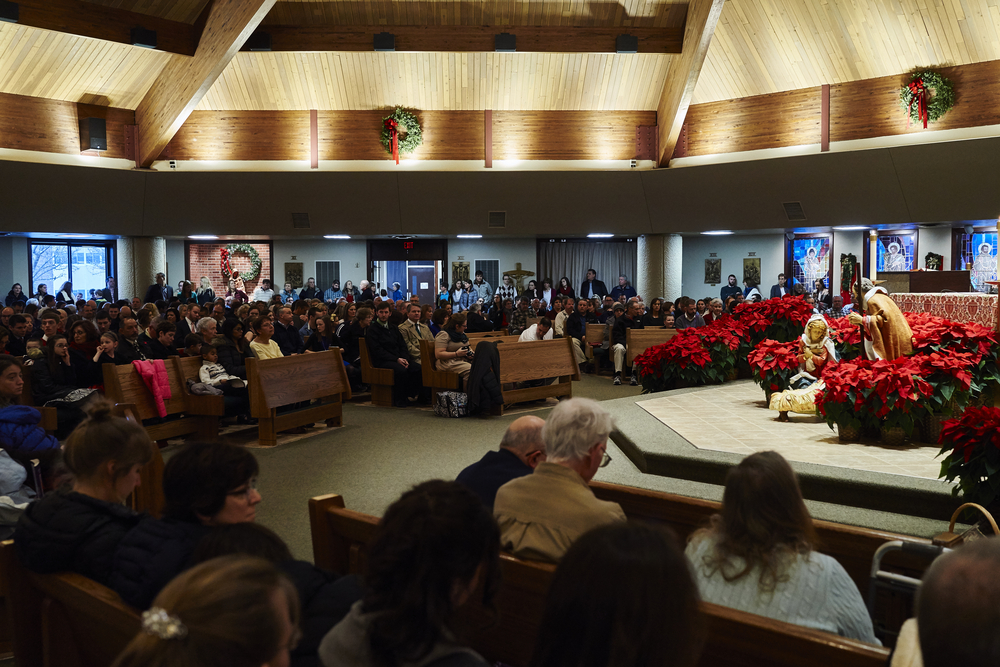
church_congregationOver at The High Calling, Michael Kruse observes that many pastors and church leaders are now looking for a “programmatic strategy” for helping their congregations integrate work and discipleship.

The problem, Kruse argues, is that such a strategy doesn’t exist:

As leaders, we need to realize that to make faith and discipleship integrated in our congregations, we cannot do it with our congregation’s existing knowledge and skills, requiring those in our congregation (including ourselves) to make a shift in our values, expectations, attitudes, and behaviors. You see, while some of us sense a need for better integration of faith with vocation, there are significant obstacles.

Most Christians do not have a theological framework that accommodates the integration of faith and vocation. Many are even hostile to the idea. They are more comfortable with a life that is not integrated, compartmentalizing work and discipleship. Any attempts at integration feel like intrusions into their private lives. Worship is viewed as an escape from “secular” concerns. And let’s face it, if we really pursue integration, we will discover uncomfortable things about our lives.

Indeed, as the Acton Institute’s Stephen Grabill points out in his foreword to Lester DeKoster’s Work: The Meaning of Your Life, despite many Christians having an “implicit sense that work is good because it carries out the cultural mandate,” we have failed to grasp that work is, further, “one of the core elements of discipleship and spiritual formation.”

To start chipping away at this convenient and comfortable disposition, Kruse offers some basic and broad ideas to help church leaders begin the integration process with their congregations. (Amy Sherman offered a similarly themed set of recommendations a few months ago.) Read more on How to Integrate Work and Discipleship in Your Congregation…

Barbara Hewson, a London barrister, has made the call for lowering the age of sexual consent in the United Kingdom from 16 to 13. Her reasoning (if one may call it that) is that the current age of consent leads to the harassment and “persecution of old men.” She also believes that under-age victims should have no right to anonymity, and that law based on the best interests of the child should not trump the “rights” of men who like to kiss a 13-year-old, or put one’s hand up a 16-year-old’s skirt.

It’s time to end this prurient charade, which has nothing to do with justice or the public interest. Adults and law-enforcement agencies must stop fetishising victimhood. Instead, we should focus on arming today’s youngsters with the savoir-faire and social skills to avoid drifting into compromising situations, and prosecute modern crime. As for law reform, now regrettably necessary, my recommendations are: remove complainant anonymity; introduce a strict statute of limitations for criminal prosecutions and civil actions; and reduce the age of consent to 13.

Read more on Lower the Age of Consent to Thirteen? Why Stop There?…

Sarah Stanley
posted by on Thursday, May 9, 2013

Yahoo! Sports recently posted this interesting video about the Angola Prison Rodeo. In the Volume 22, Number 3 issue of Religion & Liberty,  Ray Nothstine had a chance to go to Angola and interview Burl Cain, the longest serving warden. During the interview Cain says:

Read more on Video: This is Angola…

There has been ample evidence presented in the past several years to suggest shareholder activism exhibited via proxy resolutions not only wastes time but, as well, corporate funds. And yet, unions and “social justice” advocates such as the Interfaith Center on Corporate Responsibility and As You Sow perpetuate the practice to the detriment of targeted companies.

Read more on Anti- ‘Social Justice’ Shareholder Resolutions…

In The Examiner, Tim Carney asks, “When do 21 Republicans senators vote for higher taxes? Answer: When the biggest businesses and local politicians hire top K Street lobbyists to push for the tax-hike legislation.”

Read more on Big Business and Republicans Say Internet Sales Tax is States’ Rights Issue…

Sarah Stanley
posted by on Thursday, May 9, 2013

Does the free market encourage moral behavior? Virgil Henry Storr, Research Associate Professor in the Department of Economics at George Mason University, recently wrote a report called “The Impartial spectator and the moral teachings of markets.” He addresses critics’ concerns that the free market brings out and nurtures human vices.

Countless commentators have stated that “engaging in market activity can be corrupting.” Storr highlights two notable quotes. Aristotle “believed that there was something unnatural about the kind of wealth getting that occurred in the market.” Karl Marx “believed that the market could transform man into a ‘spiritual and physical monster.’”

Storr, who is also Director of Graduate Student Programs in the Mercatus Center, addresses these famous claims with quotes from those who have “made the point that markets are moral training grounds where virtues are rewarded and cultivated.” Michael Novak stated that engaging in trade “teaches care, discipline, frugality, clear accounting, providential forethought … fidelity to contracts, honesty in fair dealings, and concern for one’s moral reputation.” Deirdre McCloskey, Distinguished Professor of Economics at the University of Illinois at Chicago, says:

Capitalism has not corrupted the spirit. On the contrary, had capitalism not enriched the world by a cent nonetheless its bourgeois, antifuedal virtues would have made us better people than in the world we have lost. As a system it has been good for us.”

Read more on The Market is a Moral Teacher…

Acton PowerBlog RSS

Google Plus

Twitter Feed

Facebook Fan Page

Support the Acton Institute

The Acton Institute is funded through the generous contributions of individuals such as yourself. Learn more about how you can advance the cause of freedom and virtue.