Category: Publications

Jordan J. Ballor
posted by on Wednesday, September 28, 2011

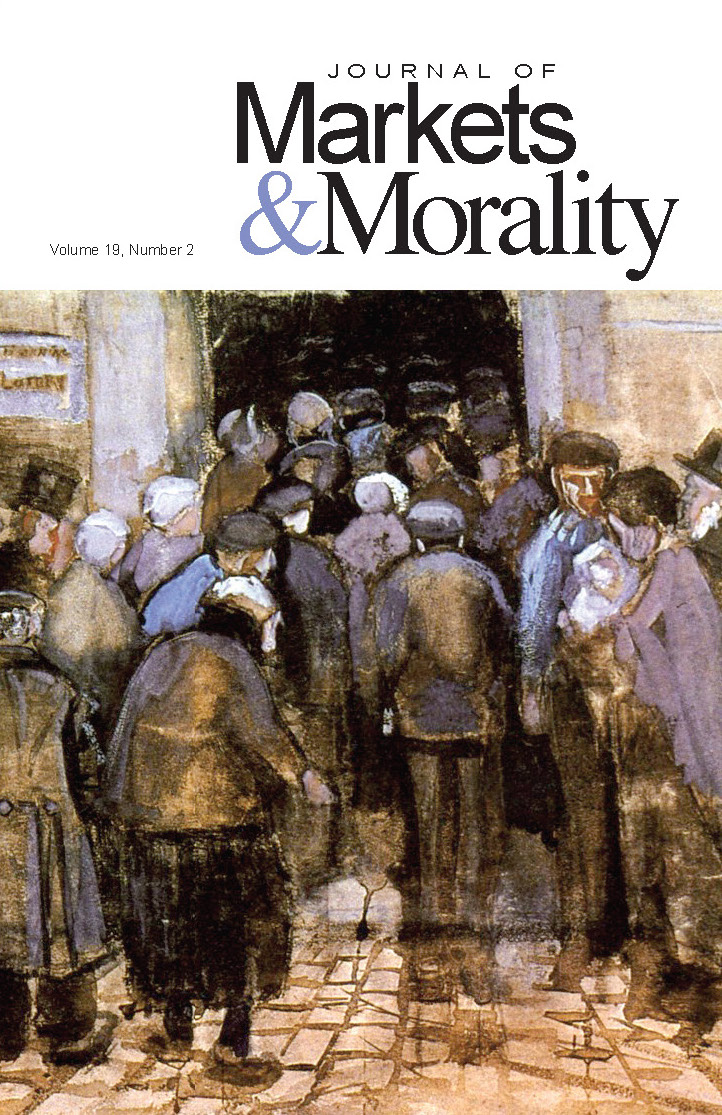
In the latest issue of Religion & Liberty, Acton Institute executive direct Kris Mauren answers the question, “Why does the Acton Institute publish the Journal of Markets & Morality?”

For more, check out my interview with Micheal Hickerson of the Emerging Scholars Network.

Read more on Why the Journal of Markets & Morality?…

Greg Forster’s latest response to Sam Gregg, Acton’s director of research, on the utility of John Locke’s thought today is up over at Public Discourse. There’s a lot to learn from reading these exchanges, but right now I want to focus just briefly on one of the criticisms that Sam levels against Locke. Comparing Locke’s definition of Law to that of Aquinas, Sam finds Locke to be quite wanting. For Locke, “Law’s formal definition is the declaration of a superior will.”

Read more on On Locke and Aquinas: Reason, Will, and Law…

Awhile back someone questioned the scholarly credibility of the Acton Institute on the Emerging Scholars Network (ESN) Facebook page in connection with one of our student award programs, specifically contending the institute is “not scholarly.” To be sure, not everything the institute does is academic or scholarly.

Read more on Evangelicals, Scholarship, and the Acton Institute…

Jordan J. Ballor
posted by on Friday, September 2, 2011

“Work gives meaning to life: It is the form in which we make ourselves useful to others, and thus to God.”

–Lester DeKoster, Work: The Meaning of Your Life—A Christian Perspective, 2d ed. (Christian’s Library Press, 2010).

Read more on A Thought for Labor Day Weekend…

Since its inception, the Journal of Markets & Morality has encouraged critical engagement between the disciplines of moral theology and economics. In the past, the vast majority of our contributors have focused on Protestant and Roman Catholic social thought applied to economics, with a few significant exceptions. Among the traditions often underrepresented, Orthodox Christianity has received meager attention despite its ever-growing presence and ever-increasing interest in the West.

Read more on CFP: Orthodox Christian Economic Thought…

Ray Nothstine
posted by on Friday, August 26, 2011

The August issue of Southern Living magazine offers a very good story on the faith of Smithville Baptist pastor Wes White and the community of Smithville, Miss. Smithville was devastated by a tornado that wreaked havoc across the South in late April.

Read more on Standing after the Storm…

Jordan J. Ballor
posted by on Thursday, August 18, 2011

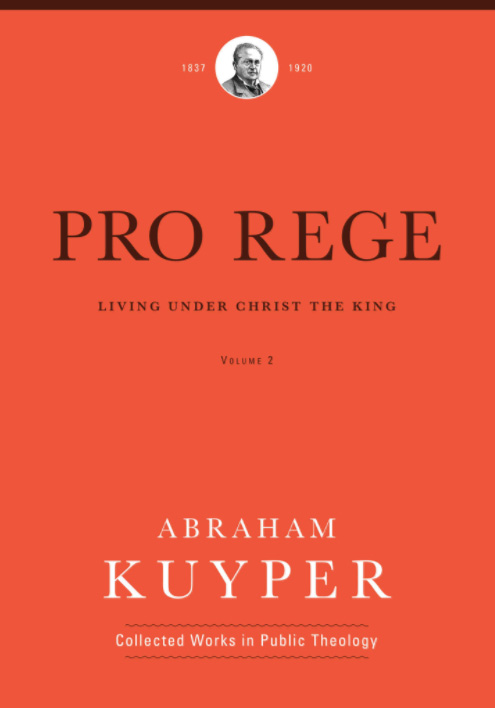
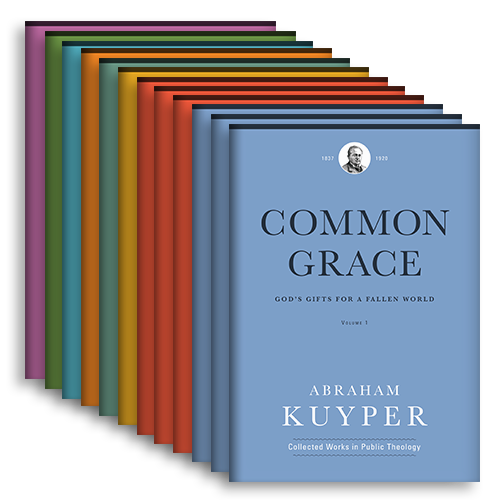
As part of our ongoing engagement with the Protestant world, the Acton Institute has taken on the translation of Abraham Kuyper’s Common Grace, under the general editorship of Stephen Grabill and in partnership with Kuyper College. We’re convinced that renewed interest in the thought of Abraham Kuyper (1837-1920), and in fact rediscovering aspects of his thought that have been lost or misconstrued in the intervening decades, is critically important for the reconstruction of Protestant social thought.

Read more on New Amsterdam Redivivus…

Update: If you missed yesterday’s show here is the entire interview with Wayne Grudem.

Audio clip: Adobe Flash Player (version 9 or above) is required to play this audio clip. Download the latest version here. You also need to have JavaScript enabled in your browser.

Today at 5 p.m. Wayne Grudem will be a guest on the Kresta in the Afternoon radio show on Ave Maria Radio. Grudem was interviewed in the Spring issue of Religion & Liberty . Grudem, the author of many books, also penned Politics According to the Bible and Business for the Glory of God. You can listen live to the interview at 5 p.m. here.

Read more on Wayne Grudem on Kresta in the Afternoon…

My editorial, “Intergenerational Ethics and Economics,” appears in the latest issue of the Journal of Markets & Morality (more details about that issue here). In this short piece I explore some of the implications and intergenerational consequences of public debt. For this I take my point of departure with the much-discussed “A Call for Intergenerational Justice,” but I also point out the importance of considering opportunity cost and how that concept has been applied in an analogous conversation about climate change. Focusing particularly on the current generations of workers, however, I observe:

Read more on Editorial: Intergenerational Ethics and Economics…

The Blauwpoort in Leiden in the winter.The newest edition of the Journal of Markets & Morality is now available online to subscribers.

This issue of the journal features a Scholia translation of selections from On the Observation of the Mosaic Polity by Franciscus Junius (1545-1602), the Huguenot, Reformed, scholastic theologian (a Latin version of Junius’ original treatise is available for download at Google Books, along with a host of his other works). Best known as a professor of theology at Leiden University from 1592–1602, Junius authored this treatise in order to address rising challenges in the young Dutch Republic. In his translator’s introduction, Todd Rester summarizes the Republic’s concern, “[I]f Scripture alone is the authority in the Church for faith and morals… how does it apply in the realm of the Christian State?” Junius’ careful and sober analysis of the various kinds of law and each law’s proper sphere of application transcends his time and context, standing as a significant reference for anyone who may seek to address the question, “What relation is there between the Law of Moses and the Law of the State?” Furthermore, the interdisciplinary character and depth of the work serve as an example of the fluidity and overlap of often-perceived contradictory disciplines and methods of the time, such as humanism and scholasticism, theology and law. Thus, for the student of political philosophy and historical theology alike, On the Observation of the Mosaic Polity stands as an excellent resource for the study of the engagement between historic, Christian faith and the rule of law.

Read more on Journal of Markets & Morality 14, no. 1 (Spring 2011)…

Support the Acton Institute

The Acton Institute is funded through the generous contributions of individuals such as yourself. Learn more about how you can advance the cause of freedom and virtue.