Posts tagged with: bill of rights

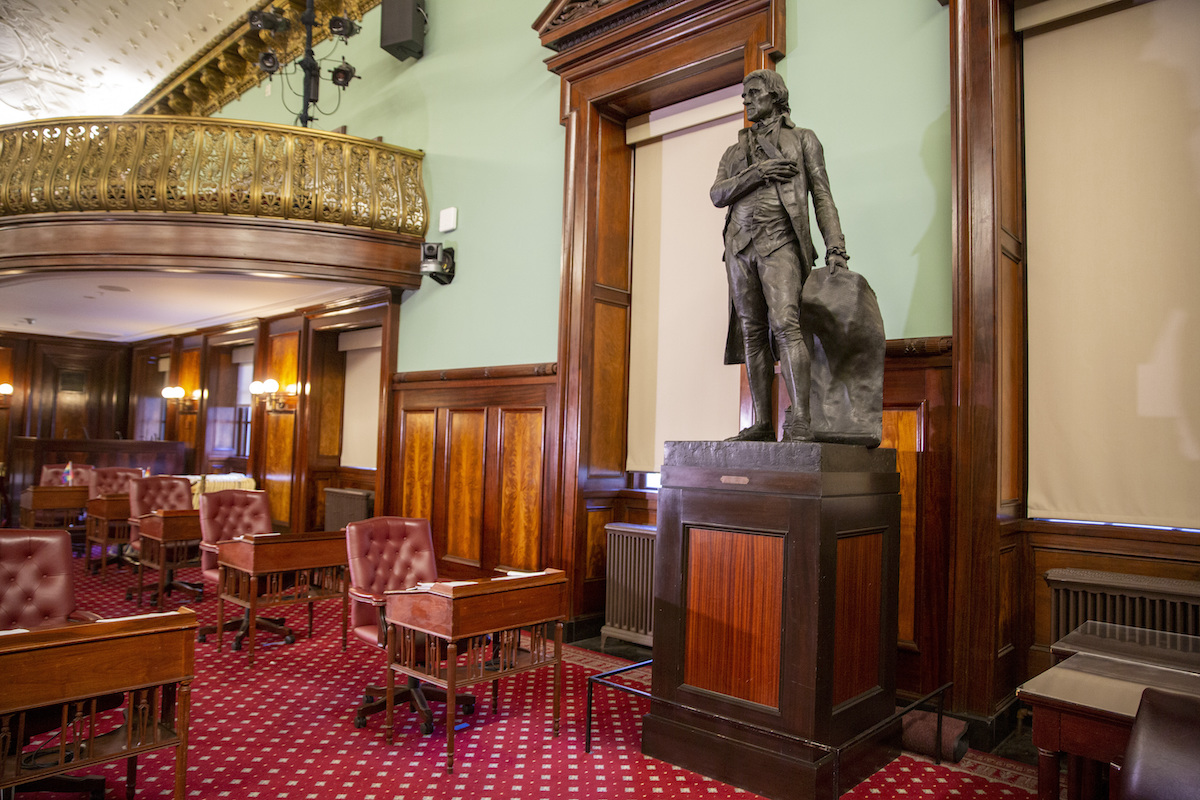
800px-Statue_in_Minute_Man_National_Historical_ParkSome politicians are calling for new regulation and restrictions on firearms, but why and how does the Second Amendment strengthen liberty? In a thoughtful post at the Carolina Journal today, Troy Kickler offers this historical assessment:

What did early jurists and constitutional commentators say regarding the Second Amendment? St. George Tucker in View of the Constitution of the United States (1803), the first systematic commentary on the Constitution after its ratification, describes the Second Amendment to be “the true palladium of liberty.”

As the preservation of the statue of Pallas in mythological Troy — the Palladium — needed to be protected for the ancient city’s preservation, so the Virginian believed that the amendment ensured liberty’s protection in the United States. If the nation had a “standing army” — Revolutionary era-Americans’ description for a full-time, professional army — while individual Americans were denied the “right to keep and bear arms,” then “liberty, if not already annihilated,” Tucker wrote, “is on the brink of destruction.”

To Tucker, the Second Amendment is the linchpin that ensures the existence of all the other liberties.

Tucker was not alone. Although U.S. Supreme Court Justice Joseph Story believed the national government should have more authority than did Tucker, both jurists interpreted the Second Amendment as liberty’s safeguard. In 1833, Story noted in his influential Commentaries of the Constitution: “The right of the citizens to keep and bear arms has justly been considered as the palladium of the liberties of the republic, since it offers a strong moral check against the usurpation and arbitrary power of rulers, and will generally, even if these are successful in the first instance, enable the people to resist and triumph over them.”

These jurists repeated a widespread interpretation that had been practiced by the states. The first state constitutions — which remained unaltered and in effect after the Constitution’s ratification — protected individual rights to possess and bear arms and allowed for a state militia.

Read more on Morality and the Origins of the Second Amendment…

Jordan J. Ballor
posted by on Friday, August 10, 2012

Call for Papers: “Our Entrepreneurial Future: East, West, North, and South”

The Association of Private Enterprise Education Annual Conference, Maui, Hawaii, April 14 – 16, 2013. “Our Entrepreneurial Future: East, West, North, and South.” The Association of Private Enterprise Education (APEE) invites the submission of papers for its 38th International Conference in Maui, Hawaii, April 14-16, 2013. The Association is composed of scholars from economics, philosophy, political science, and other disciplines, as well as policy analysts, business executives, and other educators. APEE’s annual meeting explores topics related to private enterprise in an atmosphere that respects market approaches. Presentations reflect the latest research in fields such as regulation, public choice, microeconomics, and Austrian economics, as well as development of instructional techniques. The submission fee for the society’s journal, The Journal of Private Enterprise, is waived for papers presented at the conference.

Article: “What is the Philosophy of Law?”
John Finnis, SSRN

Read more on ResearchLinks – 08.10.12…

Ray Nothstine
posted by on Friday, February 3, 2012

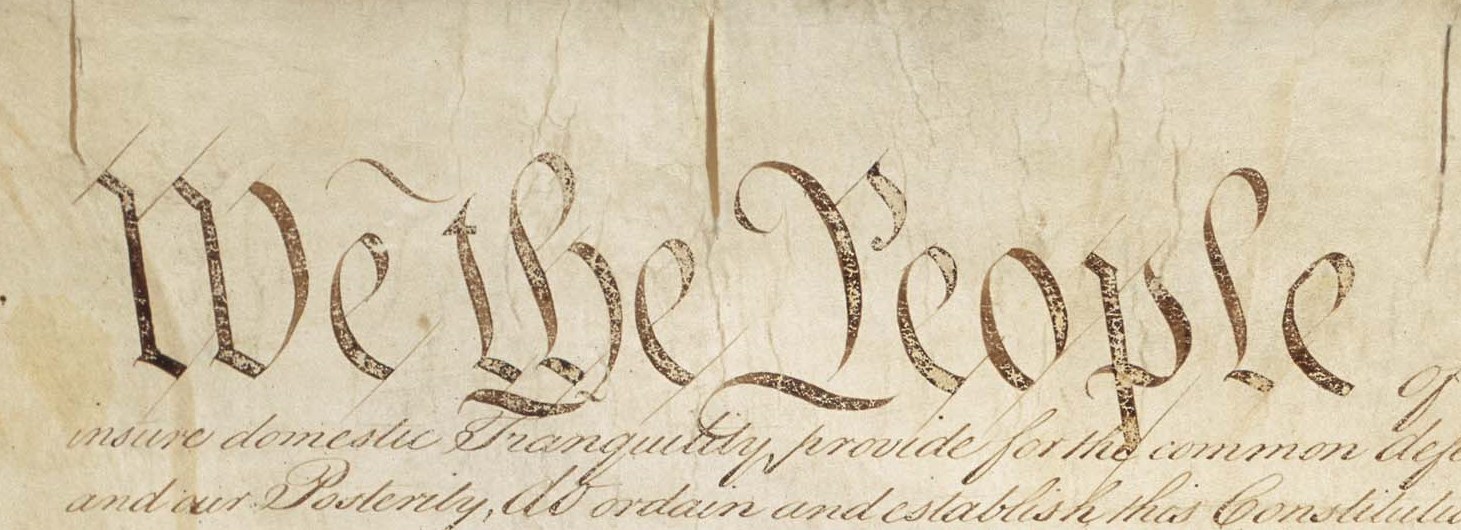
James Madison has rightfully been forever identified as father of the U.S. Constitution, author of the Bill of Rights and coauthor of the Federalist Papers. In his new biography of America’s fourth president, Richard Brookhiser introduces us to Madison the politician. In many ways, Madison is the father of modern American politics, with all its partisanship, wheeling and dealing, vote getting, partisan media, and popular opinion polling.

Read more on Madison the Politician…

A brilliant assessment of where we are. (HT: American Orthodox Institute Observer).

Subject to the governor of the universe: The American experience and global religious liberty

March 1, 2011 – Most Rev. Charles J. Chaput, O.F.M. Cap., Archbishop of Denver, addressed the Berkley Center for Religion, Peace and World Affairs at Georgetown University.


A friend once said – I think shrewdly — that if people want to understand the United States, they need to read two documents.  Neither one is the Declaration of Independence.  Neither one is the Constitution.  In fact, neither one has anything obviously to do with politics.  The first document is John Bunyan’s The Pilgrim’s Progress.  The second is Nathaniel Hawthorne’s The Celestial Railroad

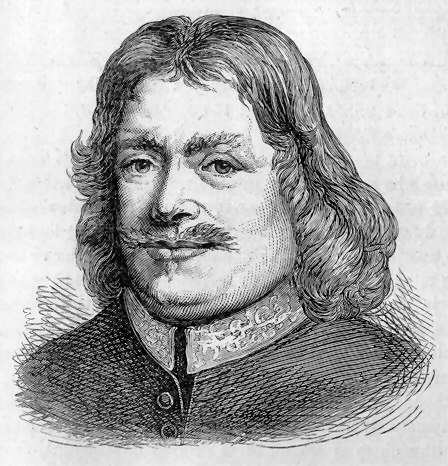
John Bunyan

Bunyan’s book is one of history’s great religious allegories.  It’s also deeply Christian.  It embodies the Puritan, Protestant hunger for God that drove America’s first colonists and shaped the roots of our country. 

Hawthorne’s short story, of course, is a very different piece.  It’s one of the great satires of American literature.  A descendant of Puritans himself, Hawthorne takes Bunyan’s allegory – man’s difficult journey toward heaven – and retells it through the lens of American hypocrisy: our appetite for comfort, easy answers, quick fixes, material success and phony religious piety.

Bunyan and Hawthorne lived on different continents 200 years apart.  But the two men did share one thing.  Both men – the believer and the skeptic — lived in a world profoundly shaped by Christian thought, faith and language; the same moral space that incubated the United States.  And that has implications for our discussion today.

In his World Day of Peace message earlier this year, Pope Benedict XVI voiced his concern over the worldwide prevalence of “persecution, discrimination, terrible acts of violence and religious intolerance.”i   In reality, we now face a global crisis in religious liberty. As a Catholic bishop, I have a natural concern that Christian minorities in Africa and Asia bear the brunt of today’s religious discrimination and violence.  Benedict noted this same fact in his own remarks.

Read more on Archbishop Chaput: The American experience and global religious liberty…

Jordan J. Ballor
posted by on Wednesday, March 1, 2006

“The First Amendment does not cover burping.” (from episode 2F22)


One of my favorite websites to check out on occasion is Professor Plum’s EducatioNation, and the first quote on the homepage is this from Thomas Jefferson: “If a nation expects to be ignorant and free, in a state of civilization, it expects what never was and never will be.” [Thomas Jefferson to Charles Yancey, 1816]

Read more on The Right to be Ignorant…

Acton PowerBlog RSS

Google Plus

Twitter Feed

Facebook Fan Page

Support the Acton Institute

The Acton Institute is funded through the generous contributions of individuals such as yourself. Learn more about how you can advance the cause of freedom and virtue.