Posts tagged with: capitalism

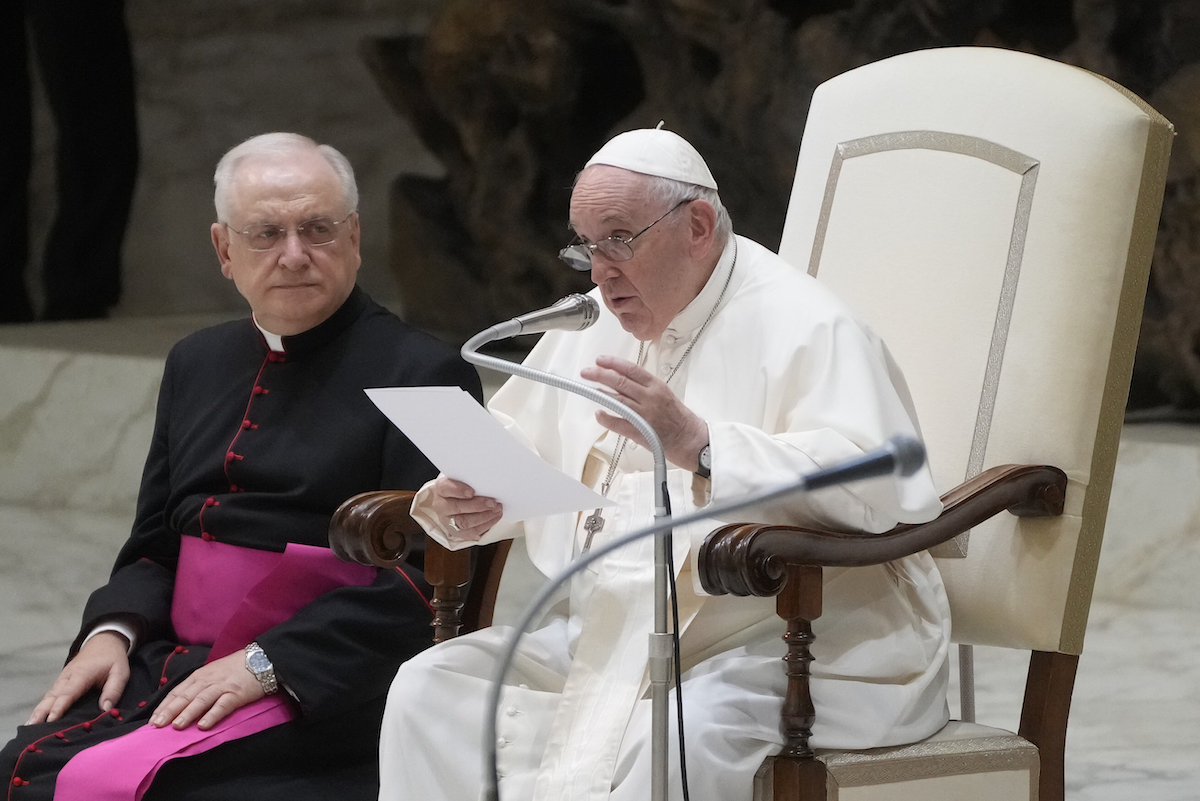
In a May 16 address to four new Vatican ambassadors, Pope Francis denounced the “cult of money” in today’s culture, stating that we are now living in a disposable society, where even human beings are cast aside.

Read more on What capitalists can learn from Pope Francis…

Sarah Stanley
posted by on Thursday, May 9, 2013

Does the free market encourage moral behavior? Virgil Henry Storr, Research Associate Professor in the Department of Economics at George Mason University, recently wrote a report called “The Impartial spectator and the moral teachings of markets.” He addresses critics’ concerns that the free market brings out and nurtures human vices.

Countless commentators have stated that “engaging in market activity can be corrupting.” Storr highlights two notable quotes. Aristotle “believed that there was something unnatural about the kind of wealth getting that occurred in the market.” Karl Marx “believed that the market could transform man into a ‘spiritual and physical monster.’”

Storr, who is also Director of Graduate Student Programs in the Mercatus Center, addresses these famous claims with quotes from those who have “made the point that markets are moral training grounds where virtues are rewarded and cultivated.” Michael Novak stated that engaging in trade “teaches care, discipline, frugality, clear accounting, providential forethought … fidelity to contracts, honesty in fair dealings, and concern for one’s moral reputation.” Deirdre McCloskey, Distinguished Professor of Economics at the University of Illinois at Chicago, says:

Capitalism has not corrupted the spirit. On the contrary, had capitalism not enriched the world by a cent nonetheless its bourgeois, antifuedal virtues would have made us better people than in the world we have lost. As a system it has been good for us.”

Read more on The Market is a Moral Teacher…

Conservatives need to stop shying away from principled, as opposed to merely utilitarian, defenses of economic freedom and its associated institutions, says Acton research director Samuel Gregg in an article for Public Discourse:

Read more on Conservatives and the Non-Triumph of Capitalism…

Jordan J. Ballor
posted by on Thursday, May 2, 2013

As Michael Novak observes in The Spirit of Democratic Capitalism, “A successful corporation is frequently based upon the principle of subsidiarity. According to this principle, concrete decisions must be made on the level closest to the concrete reality. Managers and workers need to trust the skills of their colleagues. A corporate strategy which overlooks this principle–and many do–falls prey to all the vices of a command economy, in which all orders come from above.”

Read more on No Executive Is An Island…

The Pavilion End pub with St. Paul’s Cathedral in the background

Last week following Acton’s seminar on morality, virtue, and Catholic social teaching with a group of financiers, bankers, and other business executives in London, I was invited to attend a private eulogy service organized by the Freedom Association for the late Lady Margaret Thatcher.

The eulogy service was organized in “proper British fashion” while sharing memories and more over ales at a pub—The Pavilion End—located right behind St. Paul’s Cathedral where Britain’s conservative elite gathered for formal prayer, hymns, and a sermon given by the Bishop of London at Margaret Thatcher’s elaborate state funeral.

A few hundred in attendance at The Pavilion End pub listen to the impressive speakers

A few hundred in attendance at The Pavilion End pub listen to the impressive speakers

I joined this unique opportunity, of course, to pay my own international respects as an adopted American son of Britain’s great Mother of Liberty. It was during my 1980s Catholic conservative upbringing that I gained immense respect for the Iron Lady, who joined forces with our own President Ronald Reagan and Rome’s John Paul II. In the end, this powerful triumvirate won the Cold War and effectively rolled back the Iron Curtain to inspire unprecedented economic growth and human flourishing in the modern world. Read more on Eulogies to Margaret Thatcher at the Pub (and the Cathedral)…

1. “Pennies don’t fall from heaven, they have to be earned here on earth.” (Speech at Lord Mayor’s Banquet, 11/12/79)

2. “If a Tory does not believe that private property is one of the main bulwarks of individual freedom, then he had better become a socialist and have done with it.” (Article for Daily Telegraph, “My Kind of Tory Party,” 01/30/1975)

margaret-thatcher-43. “I came to office with one deliberate intent: to change Britain from a dependent to a self-reliant society – from a give-it-to-me to a do-it-yourself nation. A get-up-and-go, instead of a sit-back-and-wait-for-it Britain.” (Speech, 1984)

4. “My policies are based not on some economics theory, but on things I and millions like me were brought up with: an honest day’s work for an honest day’s pay; live within your means; put by a nest egg for a rainy day; pay your bills on time; support the police.” (The News of the World, 9/20/81)

5. “The choice facing the nation is between two totally different ways of life. And what a prize we have to fight for: no less than the chance to banish from our land the dark, divisive clouds of Marxist socialism and bring together men and women from all walks of life who share a belief in freedom.” (Speech, 1983)
Read more on 10 Memorable Thatcher Quotes on Economics and Freedom…

A friend at church recently loaned me the New York Times bestseller Same Kind of Different as Me, which tells the story of how a wealthy art dealer named Ron Hall and a homeless man named Denver Moore struck up a friendship that changed both their lives. I’m only half way through it, but it’s already instructive on several levels that connect to the work of Acton.

Denver grew up as an illiterate sharecropper in Louisiana, an orphan who loses a series of guardian relatives while growing up and eventually finds himself in a class a notch below sharecropper—the field laborer who isn’t entitled to a share of the crops he works but simply works dawn to dusk for the food, clothing and minimal shelter he’s given on credit. In Denver’s case, since he couldn’t read, write, or do arithmetic, he couldn’t determine how much he owed, what the interest was, what his labor was worth, or even that he’d been denied his right to an education.

Economic conservatives talk a lot about the morality of the free economy, and the power of the markets to better the lives of the poor. It’s stories like Denver Moore’s that underscore why Acton spends so much time talking about a free and virtuous society, about the importance of ordered liberty. You see, in the book, at no point did anyone put a gun to Denver’s head and make him pick cotton dawn till dusk. At a superficial level, he was a participant in an un-coerced labor market (slavery had been abolished generations ago, after all). But any thoughtful look at Denver’s extraordinary story of struggle, despair, and escape will register the fact that Denver’s liberty had been violated in a host of subtle and not-so-subtle ways during his youth. These were like the strands of a spider web: individually they are of little consequence and hard to see, but taken together they have the power to bind. Read more on Ordered Liberty and Same Kind of Different as Me…

ForbesAlejandro Chafuen, president and chief executive officer of Atlas Economic Research Foundation and board member of the Acton Institute, recently wrote a piece for Forbes.com about crony capitalism.

Chafuen used to spend his summers in Argentina, so he begins his article with a story about a friend from Argentina. Enrique Piana, known to his friends as “Quique,” was heir to “Argentina’s oldest and most respected trophy and medals companies.”

Read more on Think Tanks Taking a Stand Against Crony Capitalism…

John Mackey, the well-known CEO of Whole Foods, sat down for an interview with Reason TV’s Nick Gillespie this week and I found a few quotes from their exchange particularly interesting. You can watch the full interview here: John Mackey Video

When asked what the original “higher purposes” of his business were when Whole Foods began, Mackey responded:

“Sell healthy food to people. Make a living for ourselves. Have fun. But our purposes have evolved over time…I would say one of our higher purposes now is to heal America.”

Mr. Mackey writes all about such things in his recently-released Conscious Capitalism. Citing familiar statistics regarding the millions of Americans who are overweight and suffering from diseases that “correlate directly with diet and lifestyle choices,” he feels that his chain of high-end groceries are a very real contribution to the betterment of the nation.

I applaud much of what Mackey says publicly when it comes to free enterprise and the moral case for capitalism (more on that in a minute), but the idea that ultra-expensive, cage-free items – in a store that is primarily frequented by already-healthy (and wealthy) patrons – will “heal America” is a bit over-the-top. Read more on John Mackey: Is Conscious Capitalism Enough?…

Samuel Gregg recently spoke with Marie Stroughter from African-American Conservatives. They discuss Gregg’s new book, Becoming Europe: Economic Decline, Culture, and How America Can Avoid a European Future. 

Stroughter asked Gregg about the dichotomy between “cuddle capitalism” (the European social model) and a dynamic market economy.  Gregg says that Americans are more and more choosing a ‘Europeanized’ economy favoring security over economic liberty.

Read more on Audio: Discussing ‘Becoming Europe’ on African-American Conservatives…

Acton PowerBlog RSS

Google Plus

Twitter Feed

Facebook Fan Page

Support the Acton Institute

The Acton Institute is funded through the generous contributions of individuals such as yourself. Learn more about how you can advance the cause of freedom and virtue.